Article

There’s more to surface finishing than meets the eye

There’s more to surface finishing than meets the eye

None

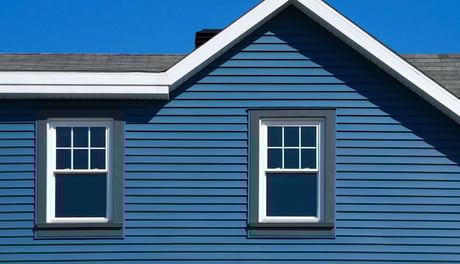
When you are dealing with fibre cement or cement-bonded products, one thing is the surface finish, another is what happens beneath the surface, to the structure of the product.

In the first case you will be looking at the aesthetic qualities, aiming for an attractive finish, for example for an architectural siding. In the second case you will be concerned with achieving structural characteristics that ensure your siding will stand the test of time. Each of these aspects is a fundamental requisite that the finishing process must cater for: surface enhancement and structural enhancement.

By taking care of the functional characteristics of your fibre cement product, you are effectively guaranteeing its value over time, setting the quality of your product at a higher level. Mould, hailstorms, pollution and even vandalism may affect the external surface, efflorescence is an issue for the internal structure.

Manufacturers and processors of fibre cement composite products are increasingly looking for water-repellent products that increase resistance to weathering and avoid the lamination of subsequent aesthetic layers, as well as preventing deterioration caused by extreme temperature fluctuations.

It is crucial to avoid the formation of mould, fungus, moss and rot, and last but not least, help resistance to external factors with products to ensure surface hardness against vandalism (incisions) and washable, anti-graffiti surfaces.

In the case of corrugated roofing sheets, products are needed that allow breathability so that normal thermal expansion due to climate change does not damage the aesthetics of the product, preventing water absorption, freeze-thaw damage, growth of fungi, algae and moss, and providing UV resistance.

Our experience at your disposal

All these issues are well known to us and we have the necessary experience to guide you in the choice of finishing technologies to enhance the value of your product. For sidings, flat boards, corrugated sheets, slates, tiles or other roof fittings and accessories, we have a tried and tested solution.

From the initial priming to the final coat, our solutions for fibre cement products such as roof tiles or sidings are numerous. Let’s discuss your needs and find the right combination of equipment to handle your product. But first, check out our experience in finishing cement-bonded materials.

If you make sidings, check out this page.

If you make other fibre cement or cement-bonded products, visit this page.

When you are dealing with fibre cement or cement-bonded products, one thing is the surface finish, another is what happens beneath the surface, to ...

Article

UBIQUO service opportunities

UBIQUO service opportunities

Ubiquo Service Cefla Finishing

What’s the advantage of having masses of data at your disposal if you can only implement a negligible amount of actions using those data? Data for data’s sake is more of a burden than a benefit.

Thanks to full remote access to installed machinery, UBIQUO experts use the data and turns them into service opportunities, giving end-users preferential access to technical support, spare parts, technology updates and training. Unlimited access to processing data at all times enables ongoing control of production, so whenever an issue arises, diagnosis and the appropriate solution are at hand.

Moreover, UBIQUO facilitates the connection between a customer’s different IT platforms and the data acquired by the software can be elaborated easily and shared to maximise its value. Data from a connected machine regarding overall productivity will always be of greater value than those of non-connected equipment. Further developments should soon see Artificial Intelligence contributing to broaden the range of services and the times in which they are readily available.

What’s the advantage of having masses of data at your disposal if you can only implement a negligible amount of actions using those data? Data for ...

Article

Hard to spot the difference? It’s all done on a digital printer.

Hard to spot the difference? It’s all done on a digital printer.

J-Print digital industrial print Cefla Live

There are a number of issues facing many furniture manufacturers, such as lead times unable to cope with the increasing demand for personalisation. Small production batches are also a growing phenomenon that requires substantial flexibility. Another issue, when it comes to a high degree of personalisation and variability, is the difficulty in matching edge patterns and colours with the flat panel surface. Some manufacturers are overcome with stockpiles of engraved rollers and colours or hundreds of rolls of decorative paper, plus the need for stock service ensuring a number of replacement items.

Overview of the benefits of digital printing

Many of the abovementioned problems can be overcome with industrial digital printing. Apart from the equipment and the inks, all you need are the skills needed to deal with digital images and initiatives to promote a service your customers will immediately appreciate, such as:

  • limitless customisation possibilities
  • very small production batches (10 – 100 sqm)
  • lead times go from a few hours to a few days
  • reduced stock requirements
  • virtually no stock service at all

And all of this can be said for both the decoration of a flat panel surface and the panel edge, so that the pattern and colours are perfectly matched.

Same image, same procedure, same inks if possible

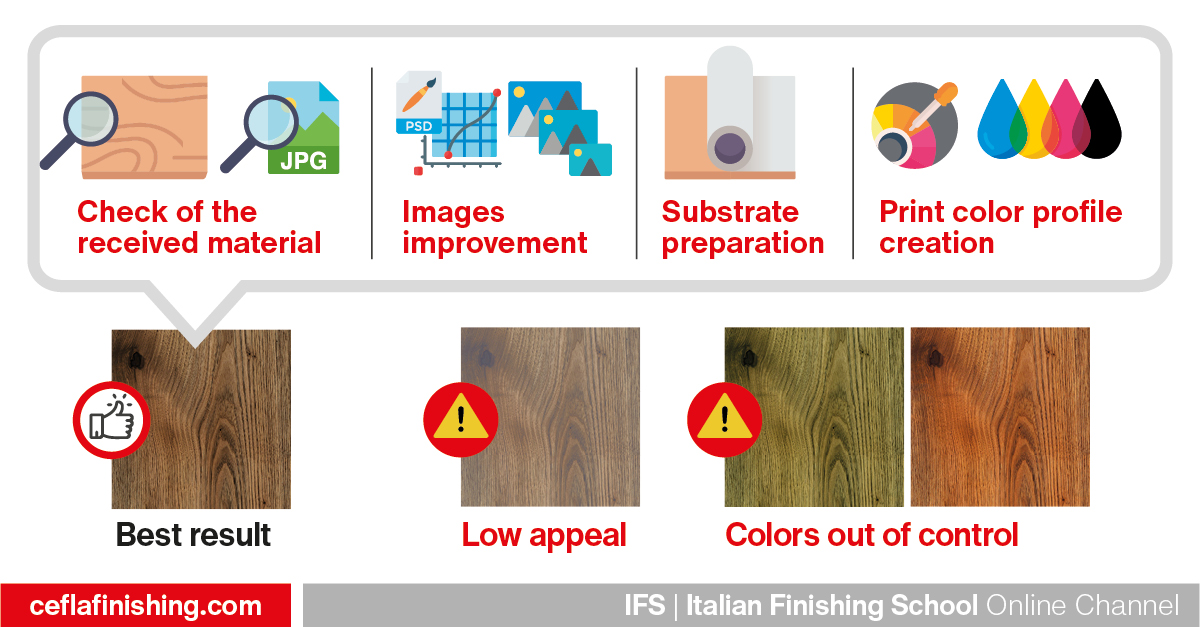
Although it may not be the same company handling the decoration of the flat panel surface as well as the edgebanding, digital printing allows for a perfect match between panel surface and panel edge on the finished piece. Elaborating the digital image for both tasks is the first step. Using the same inks optimises the match, but may not always be possible depending on which inks each company adopts. Overcoming metamerism with digital printing of the flat surface as well as the rolls of edgebanding material is also much easier if the procedure and the inks used are the same. 

The ideal integration to multiply your business opportunities

Industrial digital printing is a technique which fits seamlessly into a finishing line, speeding up the process, offering enormous flexibility and allowing companies to say “yes” to single pieces or minimal production batches. After sanding and primer application, the flat surface can be decorated with a digital printer followed by a transparent basecoat which precedes the finished effect that can be matt, glossy or even texturized (haptic effects), the latter also accomplished on a digital printer. 

So much faster, so much simpler

One of the key advantages of this technique is the speed. A recent example illustrates the huge opportunities and how simple it is to achieve results which are unheard of using traditional decorative techniques. For an international fashion show a renowned luxury Italian fashion brand wanted to customise the environment (flooring and walls) for a minimal surface area. Between the initial idea to approval of the panel samples for production it took one week. Handled between Milan and Bari, the former conceiving the digital image, the latter processing it and printing it. Regardless of quantities, the price per piece is virtually the same. Using another technique, such as rotary printing, this would have required a 30 to 60-day period and minimum quantities to cover the roller engraving costs. Using decorative paper, we would be more or less as quick, but decorative choices are limited and there is no chance for customisation. Either you produce large quantities to reduce unit costs or accept high costs and reduce the overall quantity. So why hesitate? Digital printing is faster, simpler and in line with market trends.

How to make the most of digital printing 

Implementing a Print Quality System based on daily print quality assessments and maintenance is one way of ensuring the highest quality at all times. Managed by our proprietary software, parameters are verified on a daily basis, checking for missing nozzles, deviated nozzles and running test pattern prints to adjust alignment and ink deposit density. Corrections are made electronically, and the use of redundant colour bars helps avoid the need to stop production when one colour nozzle clogs up because the second one copes adequately.

There are a number of issues facing many furniture manufacturers, such as lead times unable to cope with the increasing demand for personalisation. ...

Article

Let's see with Eduard Raffini how to perform a "simple cycle"

Let's see with Eduard Raffini how to perform a "simple cycle"

Spray coating simple cycle

(Cycle on spraying machine one arm – paper belt)

Substrate: solid wooden panel

Lacquer: catalysed acrylic primer and finishing coat

The phases of the cycle:

➀ Rough sanding
➁ Coating application: transparent acrylic primer (80-100 g/sqm)
➂ Air drying time 1 hour; in a hot room or vertical oven 35°C for 30 min.
➃ Manual sanding for the edges and automatic sanding for the flat surface
➄ Coating application: transparent acrylic finish (80-100 g/sqm)
➅ Air drying 1.5h - 2h; in a hot room or vertical oven for 60 min.

What's the purpose of sanding the rough piece?

Machine start-up is generally preceded by preparation of the substrate. This consists of sanding the rough piece, a process that can be done manually or by machine. Pre-sanding of rough pieces is performed in almost all coating cycles, on both wooden and non-wooden materials (e.g. fibre cement and some plastics), and its purpose depends on the specific substrate.
In the case of wooden materials, sanding is designed to smooth and remove wood fibres that have been lifted by damp. On non-wooden materials, it is generally designed to aid adhesion of the first coating layer.
Once the machine start-up procedures and relative pre-wash cycles have been completed, the nozzles are mounted on the spray guns. These are selected according to:
- the type of coating product (water/solvent-based)
- the g/m2 of product to be deposited on the product
- line speed in m/min

What's the best configuration for coating 80% of products?

For 80% of products (maximum thickness 35 mm) the ideal coating configuration is to set the two angles of each gun at 45° and set the height at 160 mm (as measured from nozzle tip to piece surface).

How do I prepare the coating?

Coatings are prepared in the proportions normally shown on the packaging or according to personal experience. As a rule, each customer has a customised blend.
The coating is loaded by running the pump, inserting the dip tube in the pre-readied coating tin and performing all the tasks needed to ensure the product reaches the spray guns and the machine is ready for production.

The purpose of the first sample: checking the weight.

The first sample, normally the weight verification one, is now fed through in order to calculate the amount of coating needed per square metre. Pressure is then adjusted as desired.

At this point the operator can start coating the doors.

Keyword: cleaning Whatever the coating cycle, even the simplest, operators must take meticulous care of the machine. They must clean the spray guns, avoid rejects caused by accidental dust falls and, the following day, thoroughly clean the nozzles, pump, circuit and product or suction filters. 

What does "end of shift cleaning" mean? And how much time does it take?
End of shift cleaning can be completed in 15 minutes and involves the following:

  1. Flushing of the multi-gun circuit
  2. Nozzle removal and subsequent manual cleaning
  3. Cleaning of the spray gun arm with solvent and brush
  4. Dusting of internal booth walls

Key word: quality. ◁

For each coating cycle, even the simplest, the machine and the operator determine the outcome. The machine must deliver in terms of performance, speed and coating uniformity, and the operator needs to keep it efficient, especially as regards the guns and nozzles (improves application quality), cleanliness, filters and air recirculation (ensures it stays dust-free).

This procedure considerably reduces end-of-shift cleaning times and significantly increases Transfer Efficiency, which means less coating consumption.


Eduard Raffini

LAB Application Manager

Test specialist and Coordinator of the Cefla Finishing HQ LAB

https://www.linkedin.com/in/eduard-raffini/

(Cycle on spraying machine one arm – paper belt) ▹ Substrate: solid wooden panel ▹ Lacquer: catalysed acrylic primer and finishing coat The phases of ...

Article

How can vacuum finishing technology reduce my cost per-piece on mouldings and linear profiles?

How can vacuum finishing technology reduce my cost per-piece on mouldings and linear profiles?

Shiplap Is Trending And Cefla's Vaccum Technologies Can Automate The Process

Vacuum finishing technology uses an automated process to convey parts through a multi-process finishing system. The system features a vacuum coating unit, also known as the application head, that controls the amount of coating applied on to up to four sides of each part. The control of the application head allows the operator to minimize the amount of spent coating, keeping costs low. Unused coating remains in the coating chamber to be applied to future parts entering the system. Not only does this reduce the cost of your finishing production, it is also environmentally friendly.

Shiplap is a great example of how vacuum coating can automate and optimize overhead cost of a finishing line. It is growing in popularity and increasingly available at retail stores for DIY (do-it-yourself) home remodeling projects. With a vacuum coating system, you can sand, coat, and UV cure up to four sides in a single pass, you can be ready to pack and ship in no time - you can quickly ramp up production for an order of almost any size. Read on for more ways that vacuum coating can help your business reduce cost and streamline the finishing process.

Another cost-reducing feature of vacuum finishing technology – specifically UV curing with the compact CVS Vacuum Finishing System – is the 100% solid UV coatings that are solvent-free and cure through polymerization rather than evaporation. This process emits no VOC’s (volatile organic compounds) that can negatively affect the ozone, meaning there are no overhead costs for permitting, insurance premiums, or government compliance fees. Without these additional operational costs, you will easily see your per-piece cost decrease and margin increase!

Lastly, with this system providing three processes in one, compact system – there is no need to purchase, house, power, and maintain multiple pieces of equipment and obtain the additional labor required to operate them. The CVS Vacuum Finishing System is comprised of sanding, UV Coating, and UV Curing units integrated by a 12-inch-wide conveyor, compatible with solvent-based coatings. If water-based coatings are what's in your wheelhouse, read more about the CVR Vacuum Finishing System here.

The features of vacuum technology are not limited to cost reduction. Other system features include:

  • No VOC’s, no emissions, no permitting
  • Small footprint
  • One system comprised of multiple processes – no need for different sets of equipment
  • Options for water-based and solvent-based coatings
  • Machine-side control panel is easy to use with a touch screen featuring large print and color graphics

These vacuum finishing systems are built exclusively to support the North American market by Delle Dedove technologies, also known as DV Systems. Contact us today.

Vacuum finishing technology uses an automated process to convey parts through a multi-process finishing system. The system features a vacuum coating ...

Article

How many ways can you think of to perform spray coating?

How many ways can you think of to perform spray coating?

Whether you’re into horizontal spray coating or vertical applications, we at Cefla Finishing have been building innovative spray coaters since the 1960’s, installing them around the world  and developing new solutions year after year to increase production efficiency, enhance the quality of the final product and enable lower operating costs.

None

Whether you’re into horizontal spray coating or vertical applications, we at Cefla Finishing have been building innovative spray coaters since the 1960’s, installing them around the world  and developing new solutions year after year to increase production efficiency, enhance the quality of the final product and enable lower operating costs.

And if we’re still here in 2018, something tells us we’re doing things right. 
At the Atlanta trade show this summer, we presented 3 of our spray coating solutions, but above all, learn of the singular benefits each one will provide.
 
For example, our ROCTRE machine ensures high output capacity and features 2 cleaning trolleys to enable non-stop coating even when you need to change color. If your current paint consumption appears excessive, you will be pleased to know ROCTRE, as well as another of our machines on show at IWF called MITO, features specific software allowing the operator to set a selection of parameters and keep consumption under control. This happens from the moment the panels cross the reading barrier as they enter the spraying area, by sending data to the spray guns to optimize coating performance.
 
Both ROCTRE and MITO are horizontal spray coaters, ideal for flat or raised panels, but you will also be able to check out iGiotto, our vertical spraying robot used for coating any kind of object, simple panels, window frames or with a complex shape such as flower vases, guitars and even cajóns.
You may be used to spraying panels vertically. We build solutions so that you can choose between vertical and horizontal. Just like baseball’s linear or rotational hitting, we let you try them both.

Go here for more general information on our range of spray coating solutions.

Whether you’re into horizontal spray coating or vertical applications, we at Cefla Finishing have been building innovative spray coaters since the ...

Load more articles

Articles: 126 / 157