Magazine

Automotive

Article

Automotive component production: finishing processes

Finishing has always been an essential part of the automotive component production cycle. The application of lacquers and protective layers ensure that sheet metal, plastic inserts and gaskets perform to their full potential, giving the vehicle outstanding visual appeal and ensuring parts are durable and high-performance regardless of the material used to make them.

Needless to say, a wide range of applications and technologies are used to manufacture automotive components. They vary according to the purpose for which the various parts are designed, but they all share the same need: they must be made and coated quickly and efficiently, without ever compromising quality, especially as regards surface finishes. This article explores the tools and processes that can be used to maximise results and also takes a look at the most ground-breaking methods.

Which finishing processes are used to produce automotive components?

Whatever the type of treated part - bodywork sheeting, gaskets, plastic inserts or mechanical components - an automotive component production line involves finishing processes of varying complexity. For example, finishing vehicle interior parts is usually a 3-stage process that might need to be repeated to achieve the desired final result.

Pre-treatment

The first step is pre-treatment. This involves cleaning and preparing the surface of the component. Popular techniques include deionization and micro-cleaning with plasma flaming.

Deionization involves blowing in ionized air and extraction to eliminate the static electricity: this is essential as it stops dust settling on the piece before coating. In addition to these technologies, Cefla Finishing has designed and developed the Mito CO2 cleaning station - which has a carbon dioxide snow cleaning surface preparation function - to help automotive component manufacturers perform this task to perfection. This solution is especially recommended for vehicle interior parts: approximately 90% of such products have, in fact, a shiny ‘piano black’ finish of the highest quality.
Cefla Finishing_Mito CO2_21-04-2016_003

Plasma applications are particularly useful for reducing surface tension. This facilitates lacquer adhesion and flow.

Moreover, flaming also improves adhesion on certain tricky materials and allows better wetting of liquids on smooth parts, minimising surface tension (which reduces piece wettability, making it difficult to coat).

Coating

The second step is coating. This involves applying primer, lacquers and any other coats of specific materials needed to perfect the finish. In this specific area, Cefla Finishing offers a vast range of solutions.

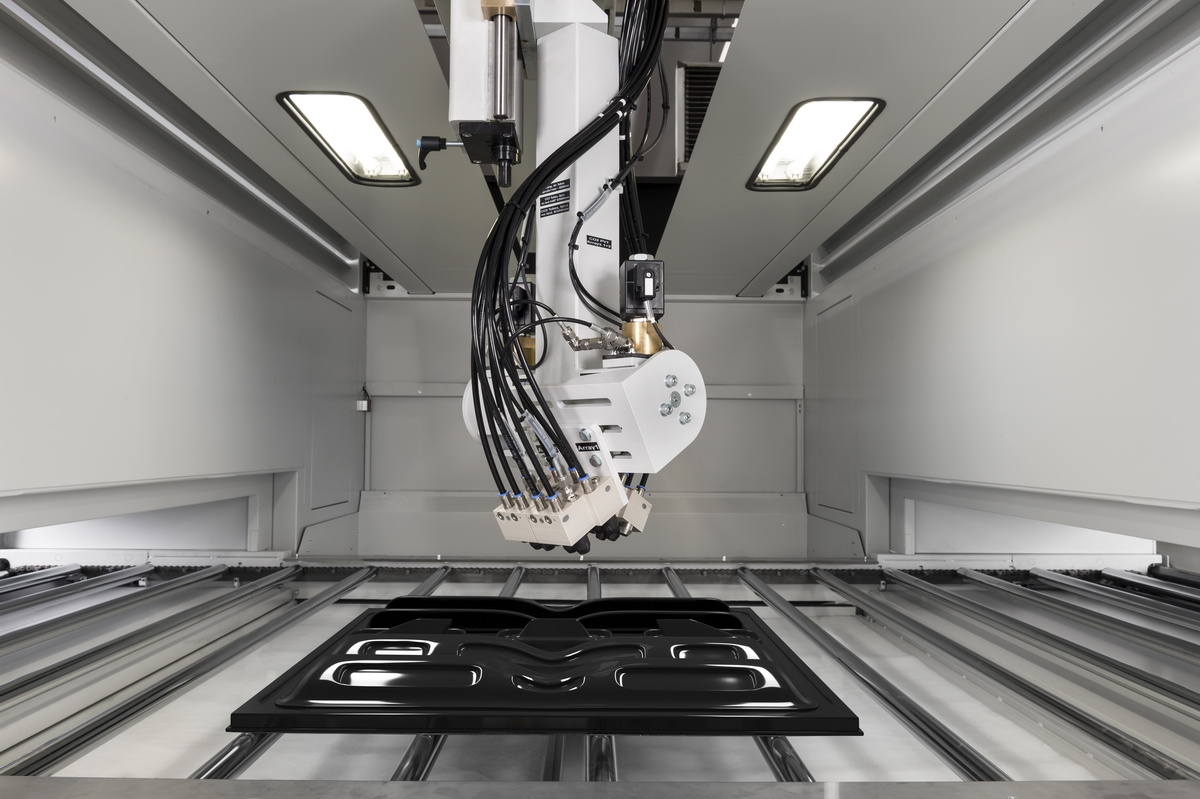
These span from the Prima oscillating spray coater, a machine for the continuous spraying of raised panels of any type, to Mito, the P and B versions of which also provide dry filtration, paper/belt conveying and overspray elimination.

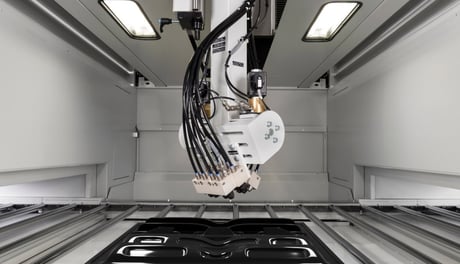
The iBotic machines are advanced robots with a sophisticated set of axes that ensure unrivalled productivity and absolute precision.
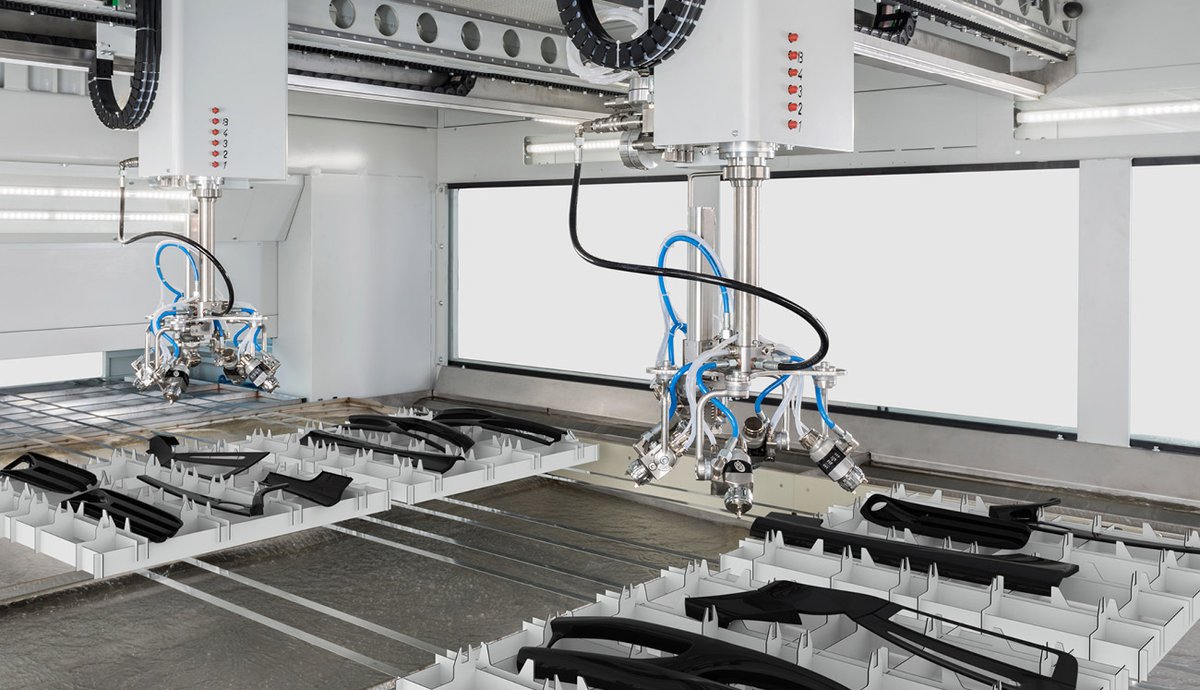
automotive-blogcover-2_jpg__1200x690_q85_crop_subsampling-2

Another jewel in the Cefla crown is the six-axis articulated iGiotto robot: this innovative integrated system for the automatic spraying of small-to-medium lots features the best vision and spraying technologies, applying them to large Cartesian dimensions.

Drying or flash-off

The final phase is drying. This aims to harden the applied coatings by evaporating the thinners and subsequently curing the resin contained in the lacquer. Drying usually takes place in ovens (often arranged sequentially along the finishing line in different configurations), cooling tunnels and hot air storage modules. The term ‘flash-off’ refers to a drying process that does not result in complete hardening of the lacquer so that the next layer can adhere better.

With the Ecogel line, Cefla Finishing provides laminar-air ovens with a slat or belt conveyor. In their combined (air/UV lamp) configuration, these machines are perfect for evaporating solvents from lacquers quickly, before they’re dried with UV rays.

Moving on to drum ovens, the Aquadry line is designed for companies that want fast flash-off and drying processes. What’s more, the technology associated with this type of solution constitutes the most efficient drying system for water-based dyes and lacquers. The Aquadry RLA range, instead, consists of drum cooling tunnels with high-speed air blades, with a belt or slat conveyor. The architecture is highly effective thanks to the high levels of heat exchange that stem from the high air speed.

Then there’s PIEFFE, the flexible multi-level hot air storage module designed for flash-off and/or drying cycles with laminar-flow hot air. Hold times vary according to the speed of the finishing line and the number of trays.

Completing the range are the Omnidry Rack and Belt vertical ovens - configured to minimise the required floor space and ensure excellent capacity - and tunnel ovens with UV irradiation for raised panels.

THE MOST INNOVATIVE FINISHING SOLUTIONS
Discover how highly advanced finishing solutions can enhance your competitiveness.

How to select the right type of finish

Choosing the right finish for the various types of automotive component means taking into consideration a wide range of factors: the material used to make the part, the setting it’s likely to be used in, plus the technical and aesthetic requirements of the vehicle on which it’s fitted.

Hence the need for a partner who does not have an excessively vertical approach to the functional-technological aspects of finishing processes but, rather, one who also knows how to assess the aims of the process and come up with properly tailored solutions.
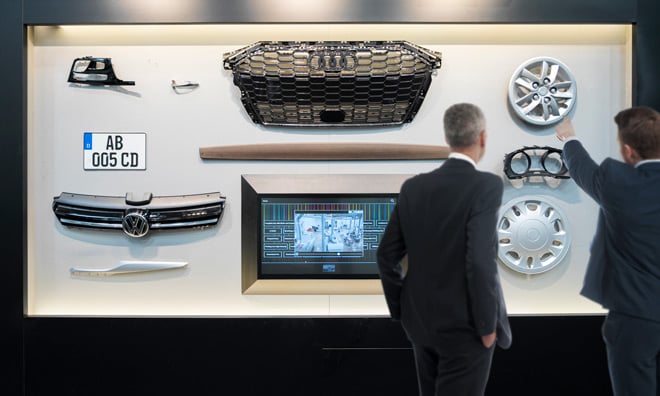
Automotive-Header

Finishing technologies for automotive components

Of course, the technologies themselves are fundamental. However, to obtain an excellent result it’s equally essential to know how best to combine them according to the type of material to be treated and, above all, the component to be produced. That’s why Cefla Finishing goes beyond the design and development of efficient, precision machines to focus on consultancy.

For example, we provided a German customer - who needed to set up a new coating line as part of their car dashboard/console production process - with a solution tailored to their stated needs: the components produced by the new line would have to be completely defect-free as, once ready, they would be shipped directly to the vehicle assembly lines.

To deliver the required performance, then, the line was configured as follows:

  1. Line loading with manual cleaning and air-jet/deionization
  2. Cleaning with CO2 and air-jet/deionization
  3. Spray coating with Cartesian robot
  4. Lacquer flow, flash-off
  5. IR and UV oven for first drying
  6. Vertical oven for final drying
  7. Line unloading and quality control

Automotive component production: the materials used in finishing

High-precision machines need to be matched with top-quality materials. Hence Cefla Finishing’s entry into strategic partnerships with the major lacquer and coating suppliers.

Thanks to an in-depth understanding of consumables and their characteristics, solutions provided to customers can be configured to optimise both the consumption and yield of the materials. In automotive component production, that means:

  • Lacquers (water-based and solvent-based): resin and pigment-based, available in different finishes and colours
  • Primers: used to improve adhesion of the lacquer to the surface of the component
  • Anti-rust coatings: to protect components from corrosion
  • Lubricant coatings: to reduce friction and wear

Future trends in automotive component finishing

This is the present. But what about the future of automotive component finishing? Well, one of the key trends in the sector is the use of low-bake lacquers, which can be dried at lower temperatures than their traditional counterparts. To be specific, about 80/90 °C as opposed to 140/160 °C.

Specialised producers of automotive components are also increasingly focused on systems that automate the coating process, such as systems with robotic stations that use dry-type lacquer filtration mechanisms.

Market developments aside, one thing is certain: companies operating in this extremely competitive sector must always ensure their customers - car makers - can count on productivity, quality and efficiency.

And that’s where flatbed systems - a Cefla-developed solution for the ultra-efficient finishing of automotive components - come into play.

Advantages of flatbed systems

But how do flatbed systems differ from traditional lines? The latter tend to be the right choice when you need to coat large 3D parts: bumpers are a good example of an item best treated using these lines.

However, when items are smaller (up to 30 cm high), flat lines, or flatbeds, are decidedly more flexible and efficient. The technology is therefore particularly suitable for vehicle interiors, which have numerous components that require a high-quality process.

The flatbed lines implemented by Cefla Finishing include a robotic system with a scanner to detect pieces that involve minimal programming. Each booth can host up to two different robots. This boosts the processing speed or the coating circuit, with users able to select between intelligent or continuous spraying, depending on the shape of the objects.

Flatbed lines can handle different, even mixed, parts on simplified masks: such masks only need to be rectangular with a flat frame and, of course, they need to hold the parts in position. This approach also makes manual cleaning faster and simpler during loading and quality control.

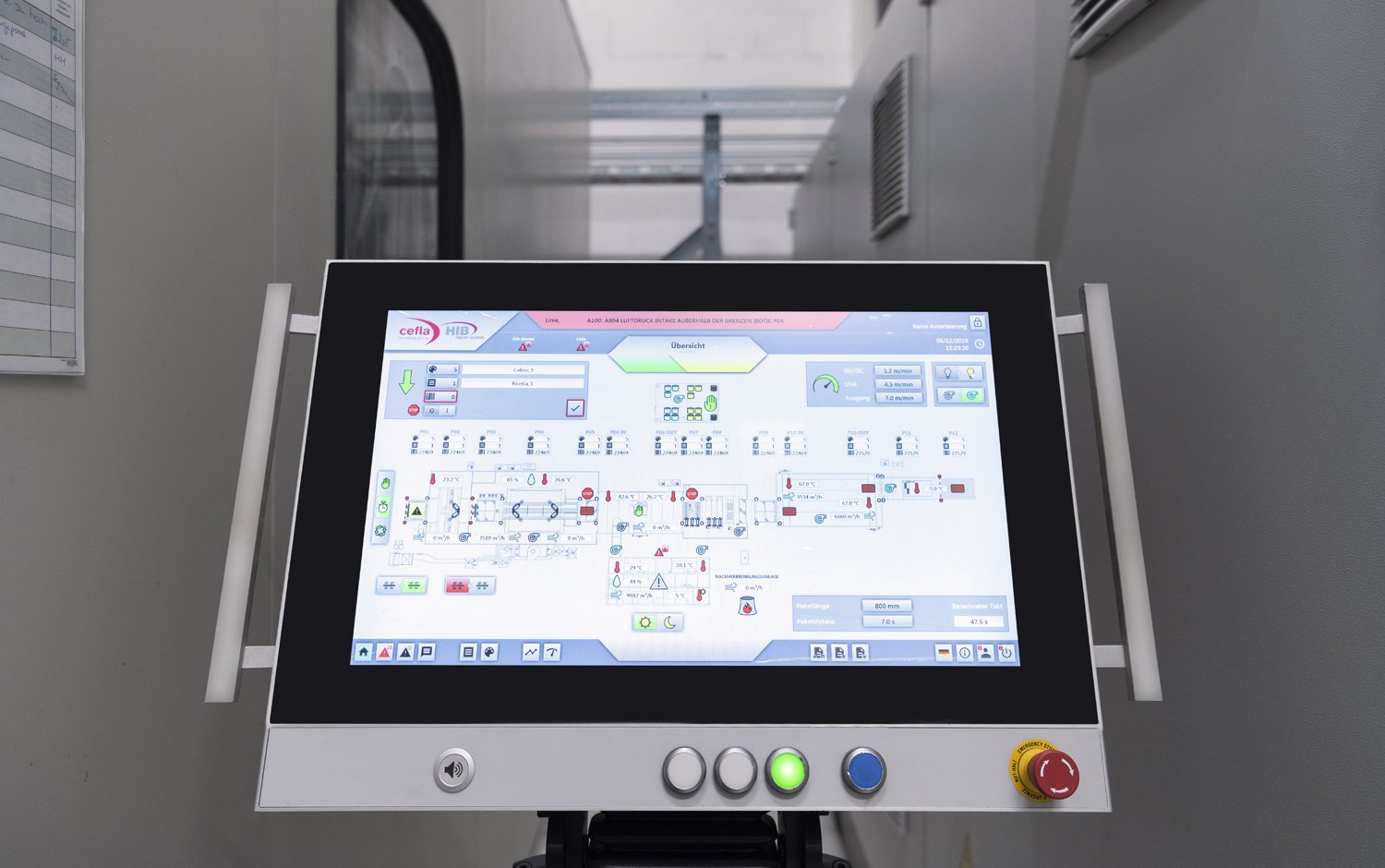
Note also that this is a modular system (also available with cTracker and cLink line supervision software): it can easily be expanded by adding other standard machines without having to make any substantial modifications. Yet another reason, then, why flatbed lines maximise conveyance flexibility: there's no need for step movements as on traditional lines because each machine can act independently.
cTracker_Panel control 02_Ceflafinishing

Adopting a flatbed solution provides tangible, measurable advantages:

  • Compact operation, resulting in less consumption and reduced exhaust air flow
  • An easier-to-manage process, with consequent labour and energy savings
  • Lower cost per coated part

Why choose Cefla Finishing to optimise automotive component production?

The automotive component manufacturing sector is constantly evolving: technology is progressing at a blistering pace, with digitalization paving the way for new, innovative finishing solutions.

Nevertheless, we’re still talking about a complex, delicate process that is crucial to vehicle quality and performance: so nothing can be left to chance. This is why it’s vital to team up with a technological partner with skills that go beyond the technology itself: a partner able to deliver high-performance products, continuous innovation, expert assistance and a commitment to joint research and development. That partner is Cefla Finishing.

If you’d like to see what we can do for your business, and experience the effectiveness of our solutions for yourself, contact us: we’ll put you in touch with one of our experts.

LOOKING FOR THE IDEAL SOLUTION FOR YOUR COATING LINE?

Finishing has always been an essential part of the automotive component production cycle. The application of lacquers and protective layers ensure ...

Article

Why flatbed lines ensure superior coating quality for automotive components

Why flatbed lines ensure superior coating quality for automotive components

spraying machine for co2

Two key issues in the automotive industry are productivity and flexibility. We have an answer which also delivers superior finishing quality. As the industry increases its use of plastics as a substrate for many components, the need to guarantee a high-quality finish is vital. Vertical spray coating lines offer flexibility for different parts, but gravity affects the coating quality as it leads to an uneven lacquer thickness especially on larger pieces.

Step by step to the best quality results

We have configured the most effective integrated solution to deliver consistent quality and a remarkable n increase in productivity. Prior to coating, we equipped our oscillating spray coater with dry CO2 snow-cleaning capability to prepare the surface. After deionisation, components move through a digital 3D reading barrier into our Cartesian spraying robot, which can work simultaneously on different pieces. Ensuring better isolation with flatbed solutions and subsequent drying equipment, coating quality improved as well as production efficiency. 

Learn more about our solutions for the automotive sector.

Two key issues in the automotive industry are productivity and flexibility. We have an answer which also delivers superior finishing quality. As the ...

Article

Flatbed lines: the future of auto component coating

Companies in the automotive sector are focusing on the concept of sustainable mobility and the development of lightweight vehicles. This is why coating and decorating the plastic components that make up the interior are increasingly important. Needless to say, automotive components need to be coated to the very highest standards. In this context, flatbed coating lines have a crucial role to play for companies in the industry.

What are flatbed coating lines?

Car interior components are usually spray-coated on overhead lines or floor-mounted lines with chain conveyors to which skids are attached. These lines use anthropomorphic robots, programmed point to point, inside horizontal airflow spray booths.

On flatbed lines, instead, coating takes place on the surface on which the support skids are laid without securing them; a system equipped with a conveyor belt and a downward vertical air flow is employed. This drastically improves quality. The line also uses a proprietary Cefla system that reads the shape and position of the parts and processes them without any need for programming.

The benefits of flatbed coating

While spray coating lines are more suitable for larger components such as bumpers, smaller components are best managed on flatbed lines as they ensure more consistent quality and higher production efficiency (+20 %). 

In addition to higher productivity, flatbed lines ensure higher quality because the overspray that could generate defects is withdrawn from below.

The Cefla Finishing solution with flatbed line demonstrates the advantages of the technique: it boosts productivity by up to 20% and delivers a superb piano black gloss finish on plastic components. 

THE MOST INNOVATIVE FINISHING SOLUTIONS

Discover new finishing solutions: more effective, more productive and more competitive than those currently used by the industry.

Download the White Paper

Integrated lines for a fully automated coating process

Entrepreneurs and plant managers are increasingly interested in integrated lines. These complete solutions include environmentally-neutral equipment for automatic cleaning with dry ice, flatbed Cartesian spraying robots (that can spray pieces of different shape and thickness simultaneously), and vertical or UV ovens for in-line drying to maximise flexibility.

At Cefla Finishing we specialise in the design of complete, turnkey finishing solutions. A Cefla flatbed coating line for automotive components includes the following processes:

  • Surface preparation: automatic carbon dioxide snow cleaning and deionization with the Mito oscillating spray coater
  • First coating application: the components pass through a 2D or 3D digital reading barrier in the iBotic cartesian spraying robot where colour, usually black, is applied. 
  • First drying: the coated components move into the Omnidry vertical oven for 20-30 minutes. 
  • Second coating application: a new layer of transparent coating is applied, possibly dual-polymerisation using UV rays, again with the iBotic cartesian spraying robot.
  • Final drying: transfer into the Omnidry oven for 45 minutes at 70°C and into the UV oven (UV-R M2) to increase the surface hardness of the coating.

Greater efficiency thanks to the line software

Some components require more coating layers than others. So how best to manage them automatically and intelligently? The answer lies in line software like cTracker.

cTracker is a line monitoring tool that automatically adjusts coating operations and sets the correct temperatures for subsequent drying. This ensures each component gets the most suitable treatment, without having to slow or interrupt production.

Yet that’s not the only advantage. With cTracker, users can monitor the pieces on the line, record data and analyse productivity. These functions mean manufacturers can perform production changeovers without emptying the line, tracking and managing individual pieces from a single workstation and regulating all the machines on the line.

Summing up

In the automotive sector, flatbed coating combines innovation with sustainability, allowing manufacturers to efficiently produce exceptionally high-quality plastic components for car interiors. Advanced Cefla Finishing technologies can boost production efficiency by up to 20% while overcoming the limits of traditional methods to deliver ultra-high-quality finishes. 

In short, adopting integrated flatbed lines is a strategically sound decision for companies looking to lead the market by combining first-rate production performance with impeccable quality.

Want to switch to a flexible, efficient, top-quality coating system? We’re here to provide all the professional guidance you need.

Talk to one of our experts.


Companies in the automotive sector are focusing on the concept of sustainable mobility and the development of lightweight vehicles. This is why ...

Article

Industrial production process: how to simulate and optimise it?

The expression “production process” contains a key concept related to business management and, more generally, modern economy. It is the set of procedures, activities and skills involved in the processing of raw materials into finished goods and services.

What is a production process?

According to its most exact definition, the production process – or production cycle – is a method by which inputs (raw materials, labour, technology and capital) are turned into outputs, i.e. products and services. There are different production logics: one is based on orders, another one on batches, one is mass-based and another one is continuous; each one is characterised by different phases, going from the initial idea of a product to its design, all the way to actual implementation and delivery of the output package to the end consumer. It follows that understanding how each stage works and incrementally identifying areas for improvement is essential for organisations seeking to optimise business efficiency, reduce costs, and meet customer requests.

Let's see in more detail, before analysing the approaches that can help improve overall management, what the different phases of the production cycle consist of.

Planning and design

The process starts with brainstorming sessions for the creation of new products and services or for the improvement of existing ones. The activity includes market research to focus on consumer needs, feasibility studies and prototype creation.

Procurement

Once the project is finalised, the next step is to purchase the necessary raw materials and components. This phase often involves negotiating with suppliers, assessing quality, and handling logistical challenges.

Production

The next step is the actual production phase. Depending on the nature of each product, there may be different production chain set-ups: the choice of the most suitable one impacts both process efficiency and output quality.

Quality Control

During the production cycle, companies implement quality control measures to ensure that products meet specific standards. Let's review the inspection, testing and regulatory compliance processes.

Packaging

After production, the products must be carefully packaged for distribution. The purpose of packaging is not only to protect goods, but also to play a critical role in marketing and branding.

Distribution

The final phase consists in delivering the finished products to retailers or directly to consumers. This involves managing logistics, inventory and transportation to ensure that products are available wherever and whenever they are needed.

THE MOST INNOVATIVE FINISHING SOLUTIONS
Discover how highly advanced finishing solutions can elevate your competitiveness.


Production process improvement

The matter is extremely complex - as all those working in the field are well aware of. However, not everyone is aware of the fact that analysing the data generated in each of phases listed above can significantly improve the production process.

A data-centric strategy, especially if implemented within a modular and flexible technological environment, results in greater efficiency, lower costs and improved product quality, enabling organisations to make informed decisions, even in real time, to proactively respond to critical issues, or to anticipate problems before they even occur. Organisations that adopt data analytics systems are also better positioned to adapt to changes and improve production capacity even in times of crisis.

Data analysis, however, is only the first step on the way to smart manufacturing. Today, companies can use simulation models that provide a “digital twin” of new or existing production scenarios by feeding to them data generated by existing processes (we will see an example below). This makes it possible to consider the adoption of different strategies and identify optimal workflows before implementing changes in actual practice.

The same approach can be applied to people management. Data analysis and simulation development help assess employee productivity and performance, identifying areas where staff may need additional training or support, and also improving shift scheduling. The result is twofold: labour costs are reduced and employee satisfaction is increased.

Finally, by evaluating customer preferences and feedback, a data-centric strategy allows companies to adapt their production processes in order to better meet requests and drive product development so as to responds to market trends and fill any gaps.

Optimisation of production processes

When performed correctly, these activities can help plan specifically targeted actions able to streamline costing policies related to labour, materials, and overheads - thereby increasing profitability.

A well-defined manufacturing process includes quality control measures, ensuring that the end product is up to the required standards while reducing waste. Fine-tuning these procedures can also lead to a significant improvement in the available offering.

A clear understanding of the production process allows companies to adapt their lines to changes in consumer demand, technology and market conditions, helping smoother supply chain management, improving inventory management and shortening delivery times.

Finally, optimising the production cycle is an essentially important choice for companies that aim to minimise possible bottlenecks in the supply chain, to cope with periods characterised by a shortage of qualified workforce and to comply with regulatory frameworks, which, given the increasingly stringent requirements in terms of environmental sustainability, may require significant investments.

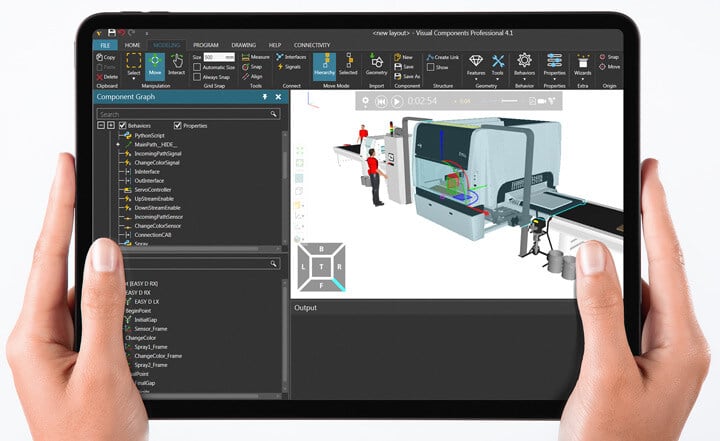
iPad-ccloner-ok

Tools for production process simulation: cCloner

How do you carry out, in actual practice, a simulation of the industrial production process and use it to make your process evolve to achieve your business objectives? Cefla Finishing has created cCloner, a line simulator with several advanced features designed to improve each phase of the production cycle and respond to specific market needs.

More specifically, the solution:

  • shows a realistic 3D configuration of the line layout, delivering an effective, reliable picture based on measurements, 3D imaging and objective data.
  • simulates real line operation. In this way, as early as in the design phase, it is possible to prevent critical issues, avoid machine downtime, and obtain more general information.
  • highlights actual productivity and helps identify the best line configuration.

The real strength of cCloner lies in its ability to offer a holistic view of the plant make-up and production process functioning: if used systematically, the software helps to configure each section, thus ensuring that the value chain as a whole complies with production requirements.

Companies that adopt a solution like the one designed by Cefla Finishing can therefore develop skills to not only minimise inefficiencies along the line, but also predict the ROI for plant upgrades.

LOOKING FOR THE IDEAL SOLUTION FOR YOUR COATING LINE?

The expression “production process” contains a key concept related to business management and, more generally, modern economy. It is the set of ...

Article

Working for the automotive industry?

Working for the automotive industry?

Quality of plastic objects finishing

With a wider use of plastic substrates, the need to enhance the look and feel of the surface of a component depends on the painting quality.

Quality can be achieved in many ways, the coatings you use, the production standards you implement, but also the choice of equipment that goes to make up your line.

Consistency and repeatability achieved by controlling technical parameters are factors that cannot be ignored. So what advice can we give you based on our experience in this industry?

Luigi Franzoni

Industry Development Manager

Product development, technologies and systems for finishing 

https://www.linkedin.com/in/luigi-franzoni-704b1615/

With a wider use of plastic substrates, the need to enhance the look and feel of the surface of a component depends on the painting quality. Quality ...

Article

Painting of Car parts: Innovation and Precision

Painting car components requires machines and procedures able to combine innovation, efficiency and precision. Plastic parts are increasingly popular in the automotive industry and the finishing process should not only improve their perceived quality but also guarantee their durability over time. In this regard, being able to control the processing parameters with extreme precision and to perform completely automatic paint finishing is essential to optimise end results, regardless of whether the parts are inside or outside the passenger compartment.

What are the available coating techniques for automotive parts?

Usually, finishing of car parts and components is done by spray coating on overhead lines. However, there are also systems that allow parts to be processed at ground level, inside painting booths with horizontal air flow integrated with chain conveyors and anthropomorphic robots with point-to-point programming.

IMG-Automotive-03

Then there are finishing lines known as flatbed lines. These use a different approach: parts placed on supporting jigs (which are not fixed to the line in the solution designed by Cefla) that lie on a horizontal conveyor while being painted.

Thanks to a conveyor belt and a vertical air flow blowing from top to bottom, this solution drastically improves end product quality. The machines of the most advanced lines are also able to detect the shape and position of the parts and, consequently, process them without requiring any specific programming.

Importance of lacquer and paint quality

Vertical spray coating lines are best suited to larger parts, such as bumpers. 
Smaller parts - generally used in the passenger compartment and therefore requiring flawless precision and quality - are instead ideally processed on flatbed lines. In addition to ensuring greater productivity, flatbed lines also allow output efficiency to be improved - thanks to the machinery's ability to minimise defects caused by overspray, as the special machine architecture allows any overspray to be removed from the bottom.

The flatbed line proposed by Cefla Finishing, for instance, ensures up to 20% more productivity than other solutions, guaranteeing an excellent quality glossy piano black finish, ideal for parts designed for key dashboard sections and for the internal finishing of car doors.

This kind of performance is also achieved through partnerships that Cefla has initiated with several paint suppliers: in-depth knowledge of the technical characteristics of the best products available on the market allows production lines to be configured with the greatest precision, so as to optimise the consumption and efficiency of all the paint types used.

Mockup-SelectedInnovations_ENG-V3

THE MOST INNOVATIVE FINISHING SOLUTIONS
Discover how highly advanced finishing solutions can enhance your competitiveness.

The steps required to paint automotive parts

It is thanks to this approach that the benefits we offer to customers in terms of quality, productivity and cost-effectiveness are easily measurable throughout the value chain. For each type of processing, Cefla Finishing develops bespoke techniques, solutions and processes.

When it comes to coating car components, a high efficiency line should include, based on our expertise, the following steps:

  • Surface preparation: automatic cleaning with carbon dioxide snow and deionisation with our Mito oscillating spray coater.
  • First coat application: Parts are fed through a digital 2D or 3D reading barrier to the iBotic Cartesian spraying robot for (usually black) paint coating.
  • First drying: the painted parts are moved to the Omnidry vertical oven for a 20-30 minutes' hold time.
  • Second coat application: a new coat of clear lacquer is applied, possibly double-cured using UV rays, again by a iBotic Cartesian spraying robot.
  • Final drying: Omnidry oven hold time of 45 minutes at 70°C then UV oven (UV-R M2) drying to increase the surface hardness of the paint coat.

IMG-Automotive-02

Painting of internal parts

Any solutions should be adapted to the type of product to be painted. When it comes to a car’s internal components (listed below), the main priority is to obtain a finish that ensures the best result in terms of aesthetics and excellent durability of the materials.

  • control panel
  • dashboard
  • air vents
  • central console
  • door panels and controls
  • car seat upholstery
  • boot bottom panel (highly resistant coating)

IMG-Automotive-01

Coating of external parts

As for external parts, quality coating must guarantee, in addition to a pleasant surface feel, a layer of protection against weathering and minor impacts.

  • door protector strips
  • wheel rims
  • wheel covers
  • brake shoes and brake pads (adhesive coating)
  • radiator grille
  • window frames
  • side view mirrors
  • headlamps: transparent scratch-resistant coating
  • fuel tank door
  • parking sensors
  • spoilers
  • bumpers
  • side skirts
  • engine gaskets (special coating)

Automation in the paint finishing process for automotive parts

The painting process of parts and components in the automotive sector is particularly effective when integrated and automated lines are used. We are referring to complete, turnkey solutions, which in addition to robots and drying ovens also include, for example, dry ice cleaning equipment, capable of minimising the environmental impact.

Automation is also essential for smart, efficient handling of parts that require multiple coats of paint. To rise to this challenge, users can now rely on specially designed line software such as cTracker, a line monitoring tool developed by Cefla Finishing that automatically regulates painting operations and sets the correct temperatures for the drying phase. Each component can thus receive the most suitable treatment without any need to slow down or stop production.

The platform also monitors the parts on the line, records data and analyses performance in terms of productivity. Thanks to these advanced features, it is possible to implement production changes without having to empty the line, tracking and managing individual parts and adjusting all the machines from a single control point.

The adoption of integrated lines, especially of the flatbed type, ultimately represents a strategic choice for companies aiming to position themselves on the automotive market as cutting-edge players, achieving a competitive edge thanks to superior production performance and excellent quality levels.  

LOOKING FOR THE IDEAL COATING LINE SOLUTION?

Painting car components requires machines and procedures able to combine innovation, efficiency and precision. Plastic parts are increasingly popular ...
Articles: 6 / 6