Articles: 6
/
6
Article
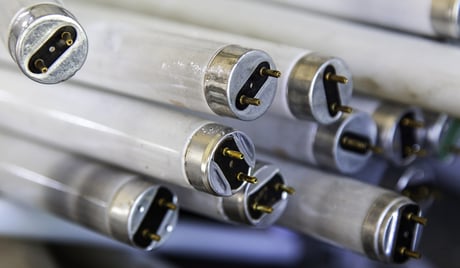
Time is running out to replace curing lamps containing mercury. Starting in just a few months, the EU will gradually introduce a ban on the manufacture, import, export and use of UV lamps with mercury. You may even find it already hard to procure replacement lamps for your drying equipment and the situation certainly will not improve as we near the end-of-year deadline.
Let’s start by saying that the news is good! Developed at our LAB, also supported by our LED technology experts from C-LED, we have developed different innovative solutions that will comfortably replace your mercury lamps.

These new LED lamps have been tested by independent paint manufacturers, all successfully. We have already set up a number of solutions in our laboratory, so that you can test your products and verify the results.
WHITE PAPER: FROM UV-R TO UV LED
A practical guide to replacing traditional mercury vapor UV-R ovens with high-efficiency, sustainable UV LED solutions.
In just a few months it may be too late to conveniently replace your mercury lamps. First because they will become difficult to obtain, second because it’s always a good idea to arrange things in advance. The replacement that our technicians take care of will be customised to suit your line.
We are here to help you avoid lost production and we are here to provide you with a highly efficient solution that will:
Article
Industrial ovens are essential components of the finishing process. These machines ensure the drying of paints and coating materials applied to substrates.
There are in fact several types of industrial ovens, each designed not only according to the desired finish, but also in relation to the lacquer required to achieve it: in order to generate high-quality, long-lasting results, the industrial oven must meet specific curing parameters.
It is therefore essential to understand in detail what the production requirements are and to choose solutions that meet them, ensuring the right balance between costs, efficiency and performance.
Here are Cefla Finishing’s suggestions for evaluating the technologies currently available on the market.
What, first of all, is an industrial oven, and what features must it have to perform its role in the finishing process? We are talking about a specialised heating device, designed to process large quantities of materials or products in controlled thermal environments.
Unlike domestic ovens used for cooking or baking, the industrial oven, which operates in much more demanding environments, must guarantee long operating life and high heating capacity while ensuring precise temperature control and sustainable energy consumption.
The basic operation of industrial ovens involves heat generation via electric resistances or fuel-powered systems, though there are also hybrid approaches and more advanced technologies. Once produced, the heat is transferred to the workpieces mainly by convection or radiation, depending on the type of oven. For example, convection ovens circulate hot air to distribute temperature evenly, while radiant ovens use infrared or ultraviolet elements to alter the state of surfaces.
Regardless of the heating system, temperature control remains fundamental. This is why industrial ovens are equipped with sophisticated sensors and monitoring and control systems, allowing operators to maintain constant operating conditions, which in turn ensure uniform results.
In some cases, the machines incorporate programmable logic controllers, enabling optimal execution of processes based on specific stages (such as drying, baking, curing or heat treatment), where even small temperature variations can affect the final result.
THE MOST INNOVATIVE FINISHING SOLUTIONS
Discover the most advanced finishing solutions to boost competetiveness.
Industrial ovens can be classified according to a multitude of parameters: from heating methods to energy sources, to design configurations. Let us take a closer look, highlighting the characteristics of the main categories.
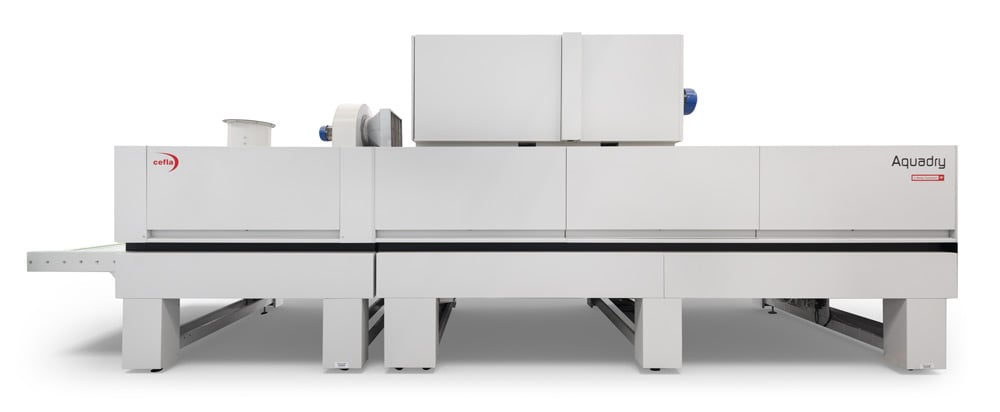
Linear industrial ovens feature a horizontal configuration that enables continuous processing of workpieces along a production line. Thanks to the constant, controlled flow of hot air, they guarantee perfect drying and curing uniformity, reducing processing times and optimising energy consumption. This type of oven is ideal for applications on wood, glass and composite materials, where continuous production cycles and high-quality finishing are fundamental requirements for consistent, top-level results.
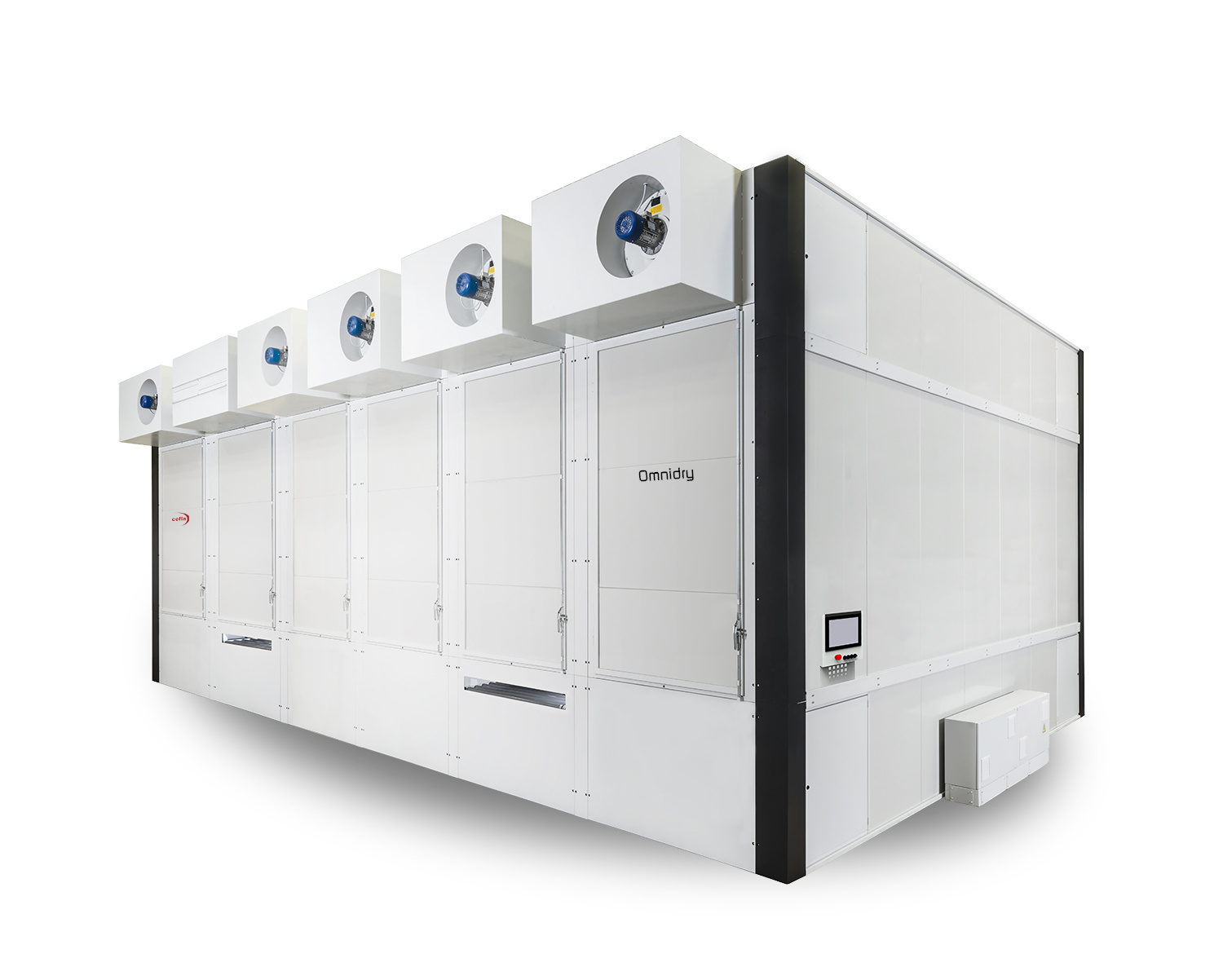
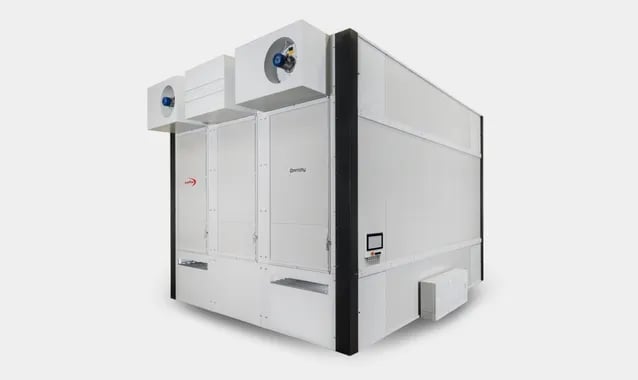
Vertical industrial ovens are characterised, as the name suggests, by their design, with a chamber that extends vertically. This system increases operational efficiency thanks to better space management, ease of loading/unloading and uniform heat distribution. This is why vertical industrial ovens are widely used in sectors such as ceramics and glass, where vertical orientation makes product handling easier and increases overall process consistency.

When UV lacquers are used, an appropriate curing system is needed, namely a UV oven. This technology ensures extremely precise processing and an eco-friendly process, since it requires far less energy than traditional systems.
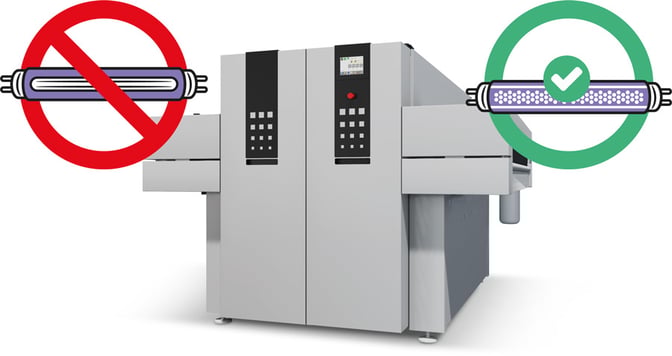
In addition, with the new UV iCure technology, presented by Cefla at Ligna 2025, the use of mercury in UV oven lamps has been completely eliminated, in full compliance with European environmental and safety regulations. A solution that combines top-quality finishing results with a strong focus on sustainability, enabling companies to upgrade their lines without changing the lacquers in use.
Learn more on our page dedicated to replacing mercury lamps and in the white paper "From UV-R to UVl LED."
WHITE PAPER: FROM UV-R TO UV LED
A practical guide to replacing traditional mercury vapor UV-R ovens with high-efficiency, sustainable UV LED solutions.
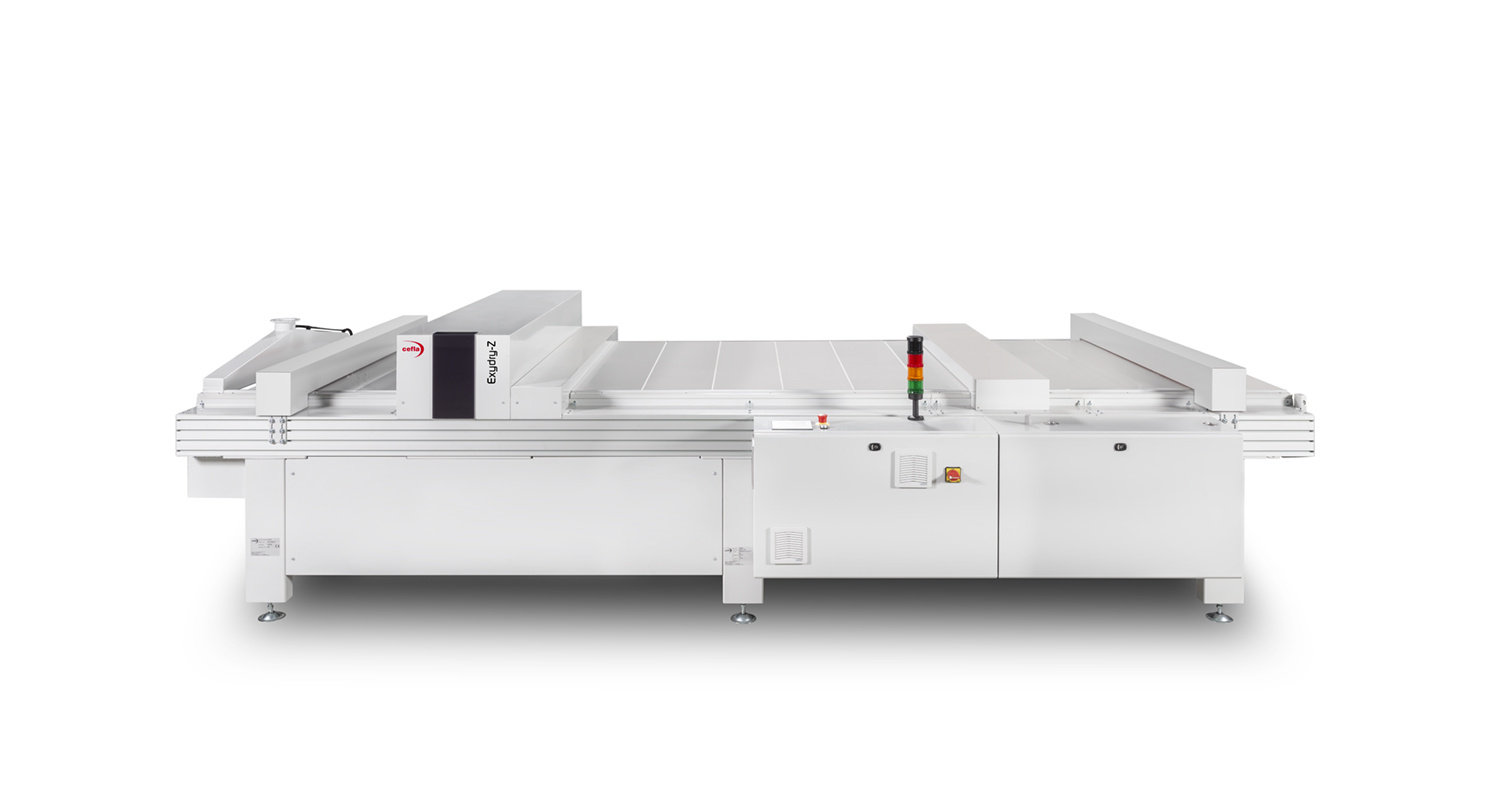
Excimer Ovens represent the new frontier for manufacturers aiming to obtain ultra-matt surfaces, thanks to excimer technology.
Thanks to these technologies, capable of meeting highly diverse needs, industrial ovens have become indispensable in numerous sectors, including those with highly specific processing requirements.
In metallurgy, for instance, ovens are used for heat treatments such as annealing, tempering and hardening of steel and alloys to improve their mechanical properties and durability. In ceramics and glass processing, by contrast, they are mainly used for firing clay products and for glass tempering and annealing.
Companies in the electronics sector rely on industrial ovens for curing coatings, soldering and assembling components made from extremely delicate materials, which therefore require total temperature control.
It should also be remembered that in the food industry, processes such as cooking, drying, roasting and sterilisation are managed by specialised ovens that guarantee safety and preserve the organoleptic properties of processed products.
Finally, for those working in paints and coatings, these machines facilitate the drying and curing of paints, enamels and powder coatings to improve finishing quality and increase product durability. But the curing of composite materials is also essential in aerospace, automotive, sporting goods and furniture production.
Cefla Finishing has extensive experience serving all these sectors, continuing to develop advanced, integrable solutions to meet specific process requirements and evolving industry standards.
Investing in a modern industrial oven, on the other hand, offers numerous benefits. In summary:
Precise temperature control, uniform heat distribution and programmable cycles ensure consistent, high-quality results, reducing defects and rework.
In addition, careful management of cleanliness and air quality in the processing environment helps protect treated materials, ensuring flawless and consistent finishes in every production run.
Advanced ovens with automation features enable faster cycle times, higher production capacity and reduced downtime.
By integrating thermal insulation mechanisms, heat recovery systems and efficient burners, these machines significantly reduce energy consumption and operating costs, helping companies align with sustainability goals and market expectations.
The implementation of intelligent controls, sensors and data recording allows meticulous process monitoring, which can be optimised in real time.
New-generation solutions are designed to last: they exploit components that require less frequent maintenance and leverage modularity to facilitate part replacement.
Updated safety features and compliance with industry standards safeguard worker safety and ensure compliance with environmental and safety regulations.
Maximising these benefits means making a wise investment: choosing the most suitable industrial oven for your production requirements requires careful assessment. Several key factors determine a successful implementation. Cefla Finishing has identified eight, covering the full range of parameters to consider before investing in these solutions.
First of all, it is necessary to establish what the oven will be mainly used for: evaporation, drying or curing? Substrates, coatings and processes all imply specific requirements in terms of temperature, atmosphere and cycle handling.
Next, it is necessary to determine the maximum temperature required for processing, as well as the tolerance needed to maintain process consistency. Some applications demand minimal tolerance, while others can allow for a wider temperature delta.
It may sound obvious, but it is essential to assess the volume of products to be processed daily and the useful load capacity. Machine footprint, internal oven dimensions and the number of items it can handle per cycle must therefore be considered.
Different materials (wood, metals, ceramics, polymers) have specific thermal properties and sensitivities. It is therefore necessary to select an oven that takes into account the characteristics of the material and the required finish.
Based on the above considerations, one must choose between different heating systems: hot water exchangers, electric, gas or hybrid, depending on energy costs and supply availability, but also taking into account environmental regulations and the plant’s sustainability objectives.
This may seem like a reiteration of the previous point, but assessing the energy efficiency of an industrial oven is actually a subject in its own right. When choosing a solution that represents a long-term investment, it is strategic to consider all operating costs, including energy supply.
What, finally, is the desired level of automation throughout the process? Advanced oven models integrate PLC controls, sensors and data recording systems that help optimise operations and ensure repeatability.
Last but not least, the matter of financial resources. It is necessary to balance initial investment with operating costs, maintenance and expected service life: in this sense, high-performance ovens may involve a higher initial outlay, but a lower total cost of ownership.
Starting from the analysis of these factors to make an informed decision is essential when choosing an oven in line with production goals, budget and company growth plans.
That said, flexibility remains a fundamental characteristic in a market that requires the ability to manage small production batches without sacrificing the ability to scale when necessary. At Cefla Finishing we know this well, which is why we design and manufacture a wide range of finishing systems where modularity is a critical success factor: this is the only possible way to create solutions that can be extensively customised in relation to all the parameters just highlighted.
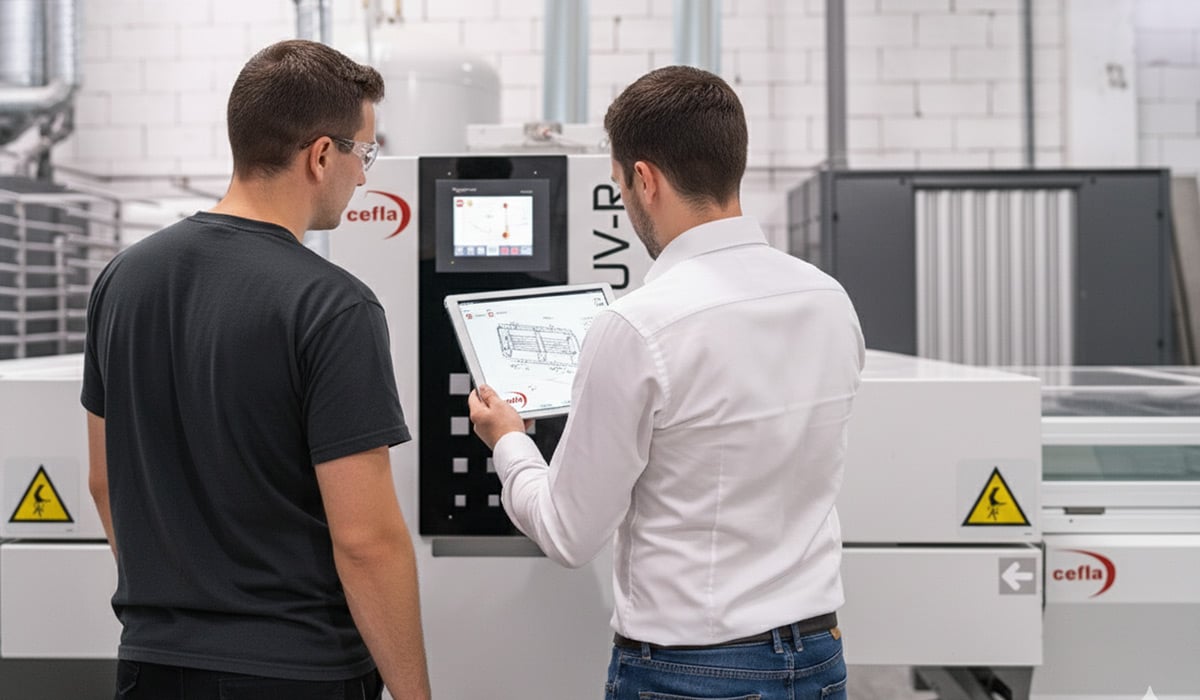
Choosing the most suitable solution for your needs is important, but so is a correct approach to maintenance. Compliance with safety protocols is also crucial to maintaining high efficiency and extending the service life of industrial ovens.
Regular preventive maintenance includes routine checks of electrical connections, heating elements, fans and insulation. Cleaning filters, replacing worn components and verifying control systems help maintain optimal performance and prevent failures, which inevitably lead to costly downtime.
Ovens, moreover, must be equipped with advanced safety devices, starting with emergency shutdown systems, thermal switches and over-temperature alarms. Adequate ventilation of the production areas is also essential.
At Cefla Finishing, we are committed to supporting customers even after the initial installation: we offer comprehensive after-sales services, including scheduled maintenance sessions, remote diagnostics and rapid technical assistance. It is therefore a genuine long-term partnership, ensuring that the purchased solutions remain reliable, efficient and safe throughout their operational life, minimising downtime and safeguarding workforce safety.
LOOKING FOR THE IDEAL SOLUTION FOR YOUR COATING LINE?
Article
UV technology is an innovative paint drying solution guaranteeing shorter drying times and greater energy efficiency. However, one of the main obstacles to the widespread adoption of this technology is the use of photoinitiators, which can be harmful to the environment and to human health. Fortunately, UV technology and sustainability can now be combined by minimising the use of photoinitiators.
UV drying can be made more sustainable by minimising the amount of photoinitiators used, as well as by decreasing energy consumption or reducing the use of mercury (present in UV lamps).
Thanks to UV technology, it is possible to obtain much faster drying times than traditional solvent-based or water-based drying systems, and it is for this reason that this solution is now increasingly popular.
Reducing the use of photoinitiators implies a number of advantages for both the environment and human health. Photoinitiators are chemical compounds that can damage human health if inhaled or in contact with the skin. Additionally, once released into the environment, they can persist for a long time and cause pollution.
By using 100% UV paints with a reduced amount of photoinitiators, the risk of exposure to harmful substances is significantly reduced. This is particularly important for workers in the painting industry, who may be exposed to these substances on a daily basis. Reducing the amount of photoinitiators needed also contributes to preserving the environment, reducing pollution and the potential damage to ecosystems.
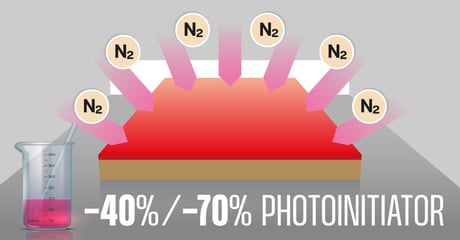
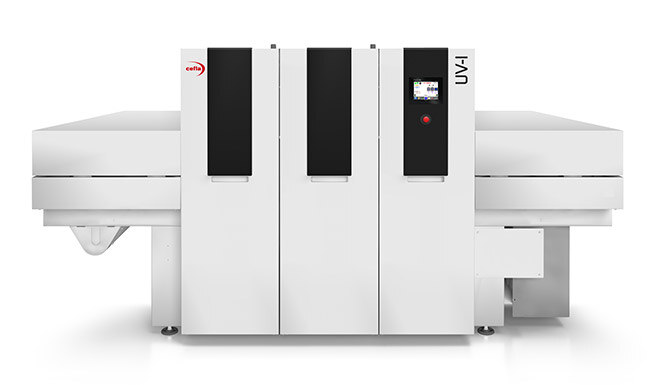
A major breakthrough in UV drying: use of nitrogen. Our UV-I oven allows nitrogen to be used to reduce the environmental impact. In this way we can reduce the amount of photoinitiators used, reduce the energy requirements of the cross-linking oven and minimise the impact of mercury by using fewer crosslinking lamps.

In each of the previously listed cases (or combinations of them), while reducing the amount of oxygen inside the oven, we are still able to guarantee perfect (and in some cases even superior) drying of the workpieces.
Sustainable UV drying is a growing trend in the painting industry. Companies are increasingly aware of the importance of reducing their environmental impact and improving the health of their workers. Environmental regulations are becoming increasingly strict, encouraging companies to seek sustainable solutions for their paint-finishing processes.
In conclusion, UV-I drying is a valuable, eco-friendly solution for reducing mercury and photoinitiators requirements, improving environmental sustainability in the painting industry. Thanks to the use of nitrogen, it is possible to protect operators' health and safety with a lower impact on the environment.
Looking to future scenarios, further development of increasingly sustainable and high-quality UV drying technologies and materials is to be expected.
Article
What is UV curing and what advantages does it provide in the delicate drying phases - essentially important to complete product finishing processes? The first consideration to make is that - regardless of the type of lacquer to be applied and the items to be processed (flat or raised panels, or panel edges) - new curing solutions keep appearing on the market, based on fast-evolving innovative technologies.
Understanding which winning combination could help you build the most efficient curing system to suit your needs - based on the substrates to be treated, your type of process and your production volumes - is essential in order to maximise the advantages offered by the new machines.

An analysis of the current curing scenario can only begin by mentioning LED technologies, which are playing an increasingly leading role in UV curing processes. After their introduction, LEDs have rapidly gained ground in several industrial applications, replacing traditional systems based on gallium or mercury lamps.
Some industry players are particularly interested in the opportunities offered by UV LED lamps. However, the general market has not yet fully grasped the potential benefits of LED technologies. These can offer significant advantages, particularly to companies active in specific areas:
Obviously, each one of the three applications mentioned above has specific requirements, but it is still possible to identify a number of common benefits:

Going into more detail, there are five factors underlying the clear superiority of LED curing compared to curing with traditional lamps. Let's review them:
In traditional UV curing, the lamps require a warm-up period and have a relatively short lifespan, requiring more frequent replacements.
LED UV curing uses light-emitting diodes specifically designed to emit UV light, typically in the UV-A range. LEDs turn on and off instantly, providing instant curing without needing any warm-up time. They also last longer and are much less energy-intensive.
Traditional UV curing is not only more energy-intensive but also requires the disposal of hazardous materials, resulting in environmental risks. Additionally, traditional lamps will expose the coated films (and consequently, the substrates) to considerable heating.
LED systems are more energy efficient, as they convert a greater amount of electrical energy into usable UV light and will produce less heat. This level of efficiency reduces energy costs and improves sustainability by minimising the carbon footprint associated with curing processes.
In traditional UV curing, the broader light spectrum emitted by mercury vapour lamps can cure a wide variety of product formulations, including some that might not work well with narrower UV wavelengths. However, this versatility comes at the cost of increased heating, which can limit the types of substrates that can be used.
While if LED curing is compatible with a limited range of materials designed to respond to specific wavelengths, advances in product formulations are continually expanding the range of resins and coatings that can be cured.
The initial investment needed for mercury vapour UV curing systems is lower. However, this cost tends to increase due to maintenance and lamp replacement requirements and increased energy consumption.
LED systems tend to have a higher initial cost, but long-term energy savings, low maintenance needs and longer life often make them a more economical option over time.

THE MOST INNOVATIVE FINISHING SOLUTIONS
Discover how highly advanced finishing solutions can enhance your competitiveness.
The differences listed here above lead to very different outcomes when it comes to the effectiveness and efficiency of production lines. First of all, it is impossible to achieve the required curing process stability with mercury lamps without having to frequently measure their intensity and constantly monitor their operation. This often leads to downtime and loss of production capacity. Additionally, a mercury lamp has a life span of 1500/2000 hours, while an LED lamp lasts approximately 30,000 hours without suffering any significant UV intensity losses.
Panel overheating caused by traditional UV lamps should also be considered. MDF panels and resinous woods are significantly affected, as they can exude resin at high temperatures. UV LED lamps, by contrast, are much cooler and have no adverse effects on these substrates.
And what about environmental sustainability? Disposing of mercury lamps requires a lot of red tape in addition to causing ecological concerns (the RoHS directive prohibits mercury lamps for home use, and this rule could easily be extended, in the future, to industrial applications), and UV LED lamps are so much easier to handle in terms of separate waste collection.
As mentioned, standard UV lamps are energy-intensive (which also increases production costs and makes setting up lines difficult wherever the energy supply is insufficient). UV LED lamps' consumption is between 50 and 60% lower than traditional systems based on mercury lamps.
As we mentioned before, cooling systems are required for mercury lamps and they release ozone, which is conveyed out of the facility via an air-cooling system. All this has economic and environmental costs, especially for large production sites, which could partially be avoided with UV LED technology.

The aspect that ultimately tips the balance in favour of UV LED technology is technological innovation. A UV LED curing system is managed electronically, which means that only the actually required lamps are switched on, also setting the exact intensity needed. The UV LED lamps send information to the PLC, allowing system managers to achieve significant savings on energy costs. This makes the process truly sustainable from an ecological and economic point of view.
As mentioned above, a UV LED system requires virtually zero maintenance. The lamps last approximately 30,000 hours and without interruptions, production efficiency is boosted allowing for non-stop processing without any downtime and ensuring constant quality levels over time.
In a market scenario that is increasingly interested in UV LED curing techniques, the strategic elements in favour of this technology are mainly:
SUSTAINABILITY – operating and environmental safety is a key issue for future business success.
ADAPTABILITY – thanks to a wide and constantly evolving range of solutions, machinery manufacturers can now effectively customise their proposed solutions.
Cefla Finishing installed its first UV LED oven back in 2014, and has therefore been able to acquire and analyse technology-specific data for many years. With an installed base of around 200 units between wood panel coating lines and digital printers, the experience we have acquired to date is second to none in today's marketplace.
As a partner of Phoseon Technology, leading manufacturer based in Oregon, we can share our expertise based on 120,000 systems sold so far and 300 technology-specific patents. This makes our offer extremely flexible, but also allows us to provide consulting services based on our solid knowledge of different use cases and above all, on our systematic analysis of the data generated by countless implementations.
After all, this has always been Cefla Finishing's approach: listening to customers, understanding their business objectives and defining the most appropriate solution based on the key factors involved:
The range developed over the years is so wide that it allows us to select the right UV LED lamps from a pool of different models, with different wavelengths and dimensions - catering for every need.
In particular, our UV-R LED ovens can be integrated into three types of lines:
Find out how we can help you make your business more efficient and innovative.
LOOKING FOR THE IDEAL COATING LINE SOLUTION?
Article
Incredibly matt surfaces, pleasing to the eye, pleasant to the touch and resistant to scratches and light: this is what excimer technology and UV finishing make possible. After looking in depth at the benefits of UV LED curing, in this article we explore the new frontiers for the treatment and finishing of flat and raised panels.
These are extremely innovative solutions, and it is no surprise that many, even within the industry, are not familiar with the meaning of the very term excimer.
The first goal of this article is therefore to explain what excimer finishing means. It will then be easier to describe its characteristics and benefits, before reviewing the machines that enable this process.
Etymology first: the term excimer derives from “excited dimer”, that is, an excited dimer, a molecule composed of two sub-units (atoms or simpler molecules) that exists only in an excited electronic state and not in the ground state.
In the context of finishing and, in particular, in curing processes, these molecules are used to create high-quality coated products. How? By means of short-wave ultraviolet (UV) light sources inside a specially designed environment, typically an oven.
Unlike conventional UV lamps, which emit a broad spectrum of UV radiation, excimer lamps produce highly focused monochromatic UV light at specific wavelengths, generally between 172 and 222 nanometres.
When the UV light of an excimer lamp irradiates a liquid lacquer layer, it triggers rapid surface photopolymerisation of the resin, creating a resistant and durable surface. The specific wavelength of excimer UV radiation produces controlled energy transfer, enabling modifications at a superficial level without affecting the underlying substrate.

It is precisely this capability that makes excimers particularly suited to curing processes. With excimer finishing, it is possible to create matt finishes, textured effects, or surface ripples with minimal heat generation.
The machines that exploit this curing technique, in particular UV ovens, are also suitable for evenly matting three-dimensional products, typically doors and panels.
THE MOST INNOVATIVE FINISHING SOLUTIONS
Discover how highly advanced finishing solutions can enhance your competitiveness.
Excimer technology offers several benefits: first of all, it meets the need to reduce energy costs and the environmental impact of processing. This is thanks to the efficiency ensured by short-wave UV curing, which requires limited electricity and does not involve the use of traditional matting agents. In addition, UV lamps generate fewer volatile organic compounds and reduce ozone formation to a minimum. Moreover, the rapid surface curing reduces production times, resulting in lower process and labour costs.
The high-energy monochromatic UV light of excimer lamps ensures complete curing of the lacquer layer, producing uniform surfaces that are entirely free of gloss or shine.
Then there is the matter of resistance: excimer curing transforms the resins used for coating into fine networks that increase product longevity, protecting them against scratches and chemical aggression. A key advantage for manufacturers of furniture and interior design elements that must combine aesthetics with durability.
More generally, excimer UV techniques are ideal for creating high-end furniture, interior panels, and customised decorative surfaces: the precision of the technology makes it suitable for processing objects with complex designs and structured textures, products where uniform finishing and tactile qualities are a key selling point for end customers.
So how does the excimer matting process actually work, and what stages make it possible to obtain attractive, durable, abrasion-resistant surfaces without the need for additional chemical agents?
The excimer finishing process consists of several stages, each designed to achieve, as an overall result, a perfectly matt finish with distinctive sensory properties.
Excimer liquid lacquer is usually applied using roller techniques: after being coated, the products are transported into specially designed ovens and subjected to a short-wave UV curing procedure in an oxygen-free environment. This condition is essential, as oxygen would inhibit the curing process.
At this stage, UV photons penetrate the surface of the lacquer: this is the step that triggers the surface curing process of the excimer liquid, which, as it dries, reduces its volume. The rapid exposure minimises heat build-up. The effect is usually the creation of micro-folds of varying thickness, which in turn deform the surface.
The final appearance of the surface depends on the paint formulation and process parameters: this transformation is invisible to the naked eye, but sufficient to deflect light instead of diffusing it, generating a matt visual effect and a very pleasant tactile sensation.
The process ends with the hardening phase of the lacquer layer, usually achieved again by irradiation with a UV dryer.
We know that the market increasingly values the sensory aspects of home décor items. The tactile component, in particular, is becoming crucial in choosing furnishings. Soft-touch finishes are therefore gaining prominence: not only do they make contact with the object more pleasant, but they also increase surface resistance to scratches and wear.
To achieve this type of finish, manufacturers need a solution that effectively treats all sides and edges of their products, maximising quality and reducing costs wherever possible. Excimer ovens, capable of processing more complex objects than simple flat panels, are therefore ideal for producing high-quality matt surfaces.
Let us be more specific and analyse the results that can be achieved with conventional excimer ovens: the machines, as mentioned, work on flat panels through a short-wave UV curing process in an oxygen-free environment.
To produce high-performance soft-touch surfaces, the lacquer must be treated in such a way as to reach a very high level of mattness, no more than 5 gloss (on a scale ranging from 0 to 100 gloss). This step is essential to achieve another increasingly popular effect, the so-called "fingerprint-proof" effect: thanks to the light rippling of the surfaces, excimer technology effectively prevents fingerprint marks from forming.
This is exactly what Cefla Finishing’s line allows, dedicated to companies wishing to harness all the advantages of excimer technology.

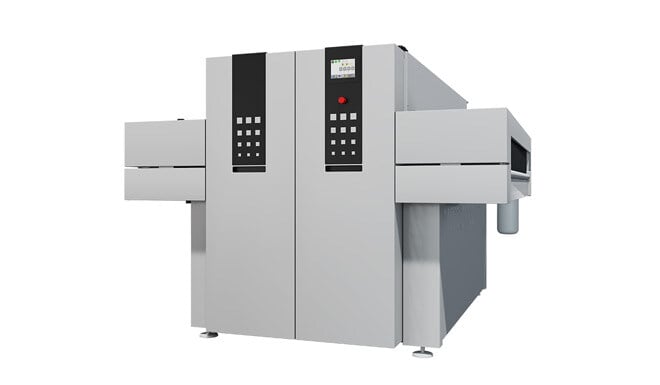
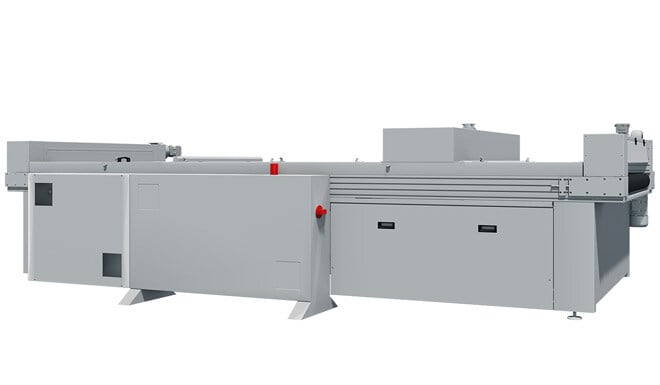
UV-R for instance, is a UV curing oven that integrates into a single body all the machine’s elements: conveyor, UV body, and electrical panel. It represents the ideal solution for those seeking versatility and ease of use, without compromising on guaranteed quality of the final result.

For those aiming even higher, there is Exydry, perfect for working on 3D products, which typically must feature matt, resistant edges as well as surfaces. The result of an in-house R&D project, Cefla Finishing’s Exydry is an innovative solution that achieves the matt effect thanks to treatment before full cross-linking, easily reaching values below 5 gloss.
Despite these characteristics, the surface resistance of panels treated and cured in Exydry is extremely high. Furthermore, the nitrogen used to remove oxygen from the X, Y, and Z axes of a shaped panel is significantly less than that required by conventional excimer ovens.
Exydry: How does it work?
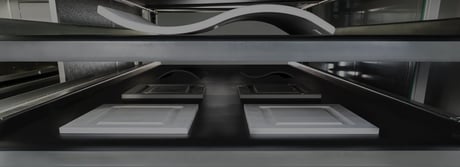
With several patented technologies, this innovative system can process, for example, doors coated by oscillating sprayers or robots. The design enables a continuous flow of shaped panels through the oven, removing all oxygen without ever stopping production.
The key benefits, as mentioned, go beyond better finishing quality and the ability to achieve it on three-dimensional objects: they also include reduced production costs, especially thanks to optimised nitrogen consumption.

On the path towards increasingly sustainable finishing, UV-I represents a technological breakthrough. A solution that combines high performance with environmental awareness: UV-I merges UV curing and sustainability.
This innovative oven uses UV curing in an inert environment, significantly reducing oxygen during the curing phase. The result is more efficient cross-linking even with fewer photoinitiators, improving operator safety and reducing the environmental impact of the chemicals used.
UV-I also minimises the use of mercury-containing UV lamps, while maintaining high curing performance. Thanks to controlled use of nitrogen, the process becomes more energy-efficient, bringing tangible benefits in terms of consumption and sustainability.
This technology perfectly matches today’s market needs, offering a compact, safe, and eco-friendly solution, in line with the latest European regulations and the expectations of environmentally responsible companies.

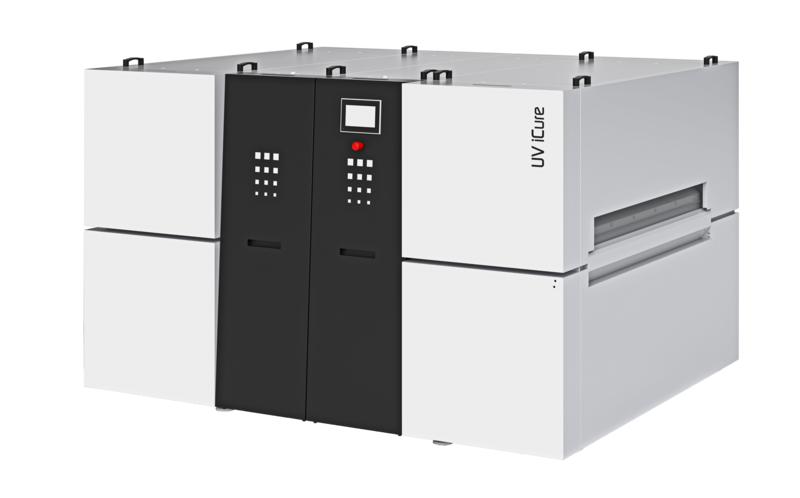
Finally, still in the field of sustainable innovation, Cefla Finishing’s latest development is UV iCure, the first completely mercury-free UV curing technology, capable of maintaining the same performance as traditional solutions.
The system is designed to comply with European directives on hazardous substances and to effectively replace lamps containing heavy metals, without requiring manufacturers to change the types of lacquers currently in use.
UV-iCure combines excimer and UV LED lamps with optimised wavelengths, in an inert environment, ensuring excellent curing performance without the use of mercury. The absence of fans and the use of water cooling prevent heat transfer to coating and substrate, while the immediate on/off effect reduces start-up times and simplifies system management, eliminating the need for mechanical shutters.
The result is a more compact, safe, and accessible solution compared to electron beam technologies, ensuring top quality and maximum sustainability, making UV-iCure a strategic choice for those wishing to innovate while respecting the environment and regulations.
Learn more on our page dedicated to replacing mercury lamps and in the white paper "From UV-R to UVl LED."
WHITE PAPER: FROM UV-R TO UV LED
A practical guide to replacing traditional mercury vapor UV-R ovens with high-efficiency, sustainable UV LED solutions.
With 60 years of experience in the design and manufacture of finishing systems, Cefla Finishing is the partner of hundreds of companies worldwide. We provide tailor-made solutions, designed to integrate seamlessly into existing production processes, with a particular focus on the most innovative technologies such as excimer finishing.
We offer customers the expertise of a team of specialists able to identify the most suitable technologies to meet each need, working above all to integrate new machines into existing processes. After analysing the product, requirements, and business goals, we collaborate with our clients to define a customised roadmap for system development, which can also be tested beforehand at one of Cefla Finishing’s finishing laboratories.
LOOKING FOR THE IDEAL COATING LINE SOLUTION?
Article
OMNIDRY, the final frontier in vertical drying oven design, provides the revolutionary capability for fully automatic management of piece height, while retaining all the outstanding characteristics of a standard Cefla vertical oven. It can carry out all three stages (flash off, drying and cooling), even for coatings that need longer drying times, while minimising the use of floor space. The number of trays can be varied from 16 to 168.
FLEXPRO (patented), is the revolutionary feature of the new vertical drying oven Omnidry, which allows you to manage the loading thickness completely automatically. It represents the perfect compromise between productivity and flexibility. Thanks to FLEXPRO, the system recognizes inbound objects, independently adjusting the load height. The oven handles the entire cycle without operator intervention and never stops the production. This innovative solution is perfect for robotic applications that allow the finishing of pieces with different sizes.
Cefla’s expertise enables us to take another major step forward: the new generation of
Omnidry vertical drying ovens provides automatic management of piece variation.
Belt or rack trays can be incorporated facilitating the handling of workpieces entering and exiting the oven: a roller conveyor combined with rack trays or a belt conveyor using motor-driven belt trays.
Extreme modularity: Omnidry can be expanded with an additional 2 or 4 sections according to the actual production volumes or those envisaged if an increase in productivity is required or an increase of the drying time.