Magazine

Industry 4 0 and digitization

Article

Industrial automation systems: advantages and applications

Industrial automation systems have transformed modern production lines by leveraging cutting-edge technologies such as robotics and AI and by using the Internet of Things to incorporate sensor networks and data analysis platforms.

How many times have you wondered how you can reduce production costs and boost your company’s productivity? The automation revolution offers just the answers you’ve been looking for: lower labour costs, less human error, streamlined operations and improved precision.

Industrial automation systems are designed to work continuously. They can also be reprogrammed to meet changing production requirements and so ensure optimal use of resources at all times. Companies that implement them properly experience higher productivity and efficiency and obtain higher output volumes per unit of time, without compromising quality. This doesn’t just reduce overall operating costs: it also sharpens the company’s competitiveness on an increasingly challenging global market.

How do industrial automation systems work?

Modern industrial automation is a union of mechanical manufacturing and IT systems. Known as Computer Integrated Manufacturing (CIM), this industrial model unites - within a unified infrastructure - all the production processes with the automation equipment and with the IT management systems. This is where data sharing - on which each function depends - occurs, using a pyramid-like, hierarchical communication logic.

At the base of this ‘pyramid’ is the so-called ‘field’, that is, the processes to be controlled, where all the execution data measuring sensors are located. The next level is ‘control’. This is the realm of the regulators and actuators that, via the PLC (Programmable Logic Controller) and DCS (Distributed Control System), process the field-generated data and assimilate it with production goal parameters. Moving up, we come to the ‘supervision’ layer. Using computers and remote SCADA (Supervisory Control And Data Acquisition) monitoring systems, this level coordinates the underlying operations. At the tip of the pyramid we have the ‘enterprise’ level where we find management teams and other decision-making corporate bodies.

While each level requires that industrial automation systems perform data acquisition, processing and transfer functions, the CIM pyramid model has a vertical framework: commands are transmitted from top to bottom, information is transmitted from bottom to top.

And it’s on the basis of this integrated, interdependent logic that Cefla Finishing has created automation solutions for advanced coating and finishing lines.

THE MOST INNOVATIVE FINISHING SOLUTIONS
Discover how highly advanced finishing solutions can sharpen your competitiveness.

ordinarydesigner_environment_modern_furniture_factory_clean_and_398e152e-2d9b-4128-b4c8-b0cb2694e772

Types of industrial automation systems

In the coating sector, automation processes can be divided into two main families:

  • Automation of the technological process (sanding, cleaning, application, drying)
  • Automation of the line or the handling of the items to be coated (loading/unloading, overturning, conveying and transfer systems, etc.)

A further classification can be added to these two categories. Industrial automation can, in fact, be rigid or flexible. The former usually deals with process, assembly and verification tasks, while the second concerns control of materials and products (i.e. logistics and machines that are free to move). Then there’s the third way: programmable automation.

At present, Cefla Finishing is able to help manufacturing companies set up automated lines by providing internally developed machines and patented technologies to meet all their finishing requirements; while this does not directly include loading/unloading systems, the development of customised end-to-end solutions is ensured by close collaboration with highly qualified partners.

Before going into a detailed analysis of the advantages of industrial automation systems, let's focus for a moment on the opportunities offered by the market and the product ranges Cefla Finishing has developed for each one of them.

Rigid automation

Rigid automation systems are ideal for large-scale production with fixed operating sequences. These solutions are mainly used in the Packaging sector, especially the ‘pick and place’ sector.

Flexible automation

Flexible automation, instead, concerns highly configurable systems that are well suited to managing the diversified production scenarios that finishing and coating companies habitually manage.

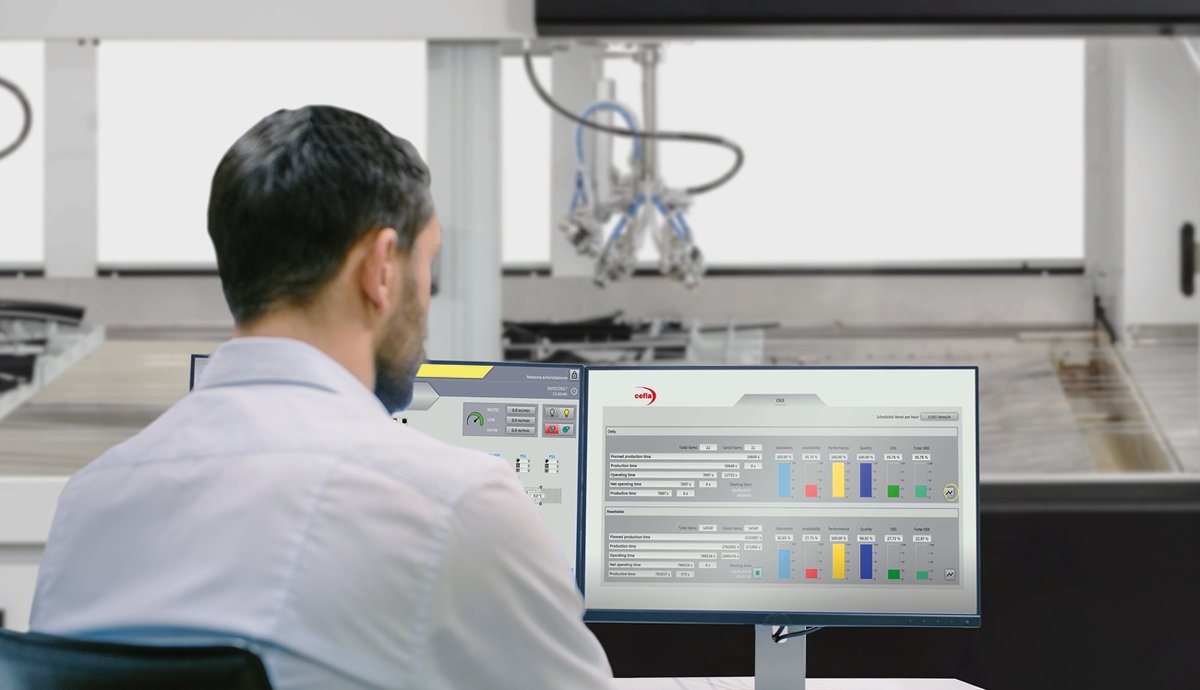
In this area, Cefla provides comprehensive line automation solutions (cTracker, Smart thick, cViewer) that allow end customers to reconfigure the entire line easily and effectively to match the required type of processing.
ictech-ctrackerblogcover_jpg__1200x690_q85_crop_subsampling-2

Programmable automation

Last but not least, programmable automation involves the implementation of batch production systems, which require frequent reconfigurations.

This is a Cefla Finishing speciality: the machines designed to automate the finishing and coating processes control local set-up recipes that allow easy reconfiguration according to the type of product the customer wishes to finish.

For example, if the sprayers operate according to specific coating recipes, so too will the ovens during the different drying phases.
In essence, manufacturers can - based on the type of product to be finished - set and save all the machine set-up parameters to guarantee optimal final results, with the advantage of being able to recall each setting to speed up line reconfiguration as production lots gradually change.

READ ALSO:
Cefla technologies that deliver industrial energy savings
Industrial Energy Efficiency: the key is in the finish

Advantages of industrial automation

Automation provides the finishing sector with a host of benefits. First of all, it makes production safer. Where work involves dangerous materials or is physically taxing, the toughest tasks can be performed by robots, exposing workers to less risk.

However, as everyone knows, the main reason why manufacturers invest in automation is that these technologies reduce operating costs significantly. A well-designed system that automates coating and finishing processes reduces downtime, speeds up deliveries and minimises unexpected breakdowns/stops in production and logistics processes.

Nothing clarifies the concept better than a practical example: Cefla Finishing sprayers are, for instance, equipped with vision and air intake systems that reduce the amount of wasted lacquer. Customers can also take advantage of further mechanisms that retrieve the portion of product not actually applied on the piece during spraying and, where possible, reuse it to perfect the work. These solutions, then, increase coating uniformity and consistency, improving final results and generating significant savings by reducing product consumption and waste disposal costs. Furthermore, automating such tasks leads to clearly better plant safety by preventing workers from coming into contact with potentially harmful substances.

Workers’ quality of life also benefits from greater personal satisfaction: introducing industrial automation systems lets companies free their personnel from monotonous, repetitive tasks and employ them in more strategic or higher-added-value activities.

Key technologies in industrial automation

To deliver the above-illustrated advantages, it’s essential to properly orchestrate all the technological components onto which industrial automation systems are grafted. As mentioned, in the field it will be necessary to leverage IIoT (Industrial Internet of Things) solutions that allow real-time collection and distribution of data from the production lines: data essential for enabling monitoring and control via human-machine interfaces (HMIs) and more complex solutions such as SCADAs.

Cefla Finishing has developed a machine pool that’s controlled by PLC and HMI. This lets customers interconnect an entire line or individual machines with IoT systems. Where required, it’s also possible to export data directly to the cloud.

Practical applications in industry

More specifically, the aforementioned cTracker offers the best solution on the market for automatic control of both the technological process and line automation. The solution lets you programme batch processing cycles - such as colours, number of passes and line speed - directly from the office. Thanks to an internally developed algorithm, cTracker collects information on batches, simplifying machine settings to match production needs. This happens without having to empty or stop the line at each batch changeover and without having to use physical on-piece tracking systems.

A concrete example is provided by our client Finver: thanks to the finishing line we implemented, it is possible to anticipate colour changes, resulting in an annual savings of 25,000€ on paint costs while also reducing disposal costs.

To conclude, with today’s state-of-the art technologies, the opportunities that industrial automation systems offer the finishing sector are virtually endless. The best way to fully understand how your company can benefit from the industrial automation systems developed by Cefla Finishing? Simply visit us and see the potential of our technology for yourself. Just contact us and ask one of our experts for advice!

LOOKING FOR THE IDEAL COATING LINE SOLUTION?

Industrial automation systems have transformed modern production lines by leveraging cutting-edge technologies such as robotics and AI and by using ...

Article

cTracker tracking and monitoring software

cTracker tracking and monitoring software

cTracker management and supervision industrial line 4.0

Today’s focus looks at a software solution rather than a machine or finishing technology.
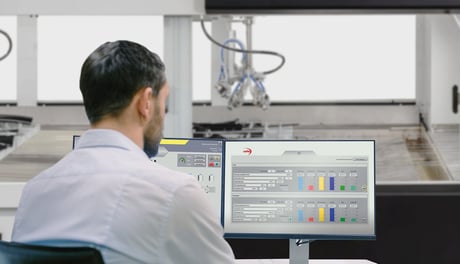
Part of our cSuite software solutions, cTracker is a tracking and monitoring SCADA software which helps operators keep a close eye on production from a single monitor and also assists as part of a service offering by managing alarms and triggering a service request and solution.
 
cTracker is a powerful tool that provides companies with valuable data regarding processes, recipes and production efficiency and also tracks single pieces on a line, helping maintain excellent productivity. 

Who we are talking to:
▸ Companies with finishing lines consisting of several machines
▸ Companies with highly automated finishing lines
▸ Companies requiring tracking capabilities on finishing lines with a high degree of flexibility
▸ Companies wishing to benefit from fast-lane access to remote technological advice
 
Benefits:
✓  Set up and control the entire line via a single monitor for Cefla and 3rd party equipment
✓  Track single pieces to be able to implement changeovers without emptying the line
✓  Gather production data and analyse productivity
✓  Obtain fast assistance with remote service pack enabler
✓  Share production data with company ERP (with cLink) to optimise processing

Learn more about our digital tools and software solutions.

Today’s focus looks at a software solution rather than a machine or finishing technology. Part of our cSuite software solutions, cTracker is a ...

Article

Advanced industry 4.0 tools to drive your performance beyond the future

Advanced industry 4.0 tools to drive your performance beyond the future

Industry 4.0 is the biggest revolution since the industrial revolution and is happening at such a speed that today’s businesses and factories that fully grasp the importance of efficiency, supervision and personalized service will be the ones who exploit the technological opportunities offered by our new suite of digital tools.

None

Industry 4.0 is the biggest revolution since the industrial revolution and is happening at such a speed that today’s businesses and factories that fully grasp the importance of efficiency, supervision and personalized service will be the ones who exploit the technological opportunities offered by our new suite of digital tools.

Have you ever wanted to assess exactly what would happen before implementing a new production line?

Our cCloner software will enable you to check line logistics, assess loading and unloading stations, analyze the production flow and decide how to handle servicing operations. Our experts use this tool to clone your imagination in 3D, so to speak, and with the magic of modern-day mechatronics it’s possible to tweak all the details of up to 100 different machines, adjusting parameters to optimize production efficiency before you start, when things change or when you need to simulate a sequence of working days.

Learn more about our digital tools and software solutions.

Industry 4.0 is the biggest revolution since the industrial revolution and is happening at such a speed that today’s businesses and factories that ...

Article

How satisfied are you with the way your operators are trained on new machinery?

How satisfied are you with the way your operators are trained on new machinery?

Good question. And the answer usually points to not enough time, not everyone got trained and we had to do it while the machine was being installed, which meant it was not complete or was not fully functional.

Simulator Cefla Finishing

Good question. And the answer usually points to not enough time, not everyone got trained and we had to do it while the machine was being installed, which meant it was not complete or was not fully functional. How satisfactory is this? Not enough. So paying for a technician to come out and train staff after installation is one way of improving training. Alternatively you could exploit your fully-trained operators to pass on their skills to less competent staff, but will they pass on all the information required? And how will you know what aspects are covered correctly? Neither of these options are ideal and the second option may lead to unnecessary downtime if training has not dealt with all aspects.

Why not exploit the advantages of Virtual Reality to train staff whenever you need to?
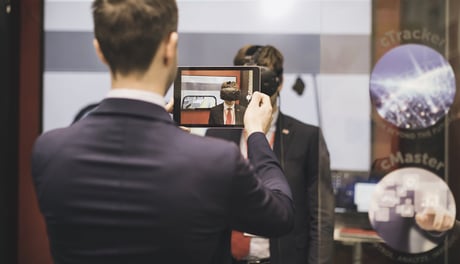
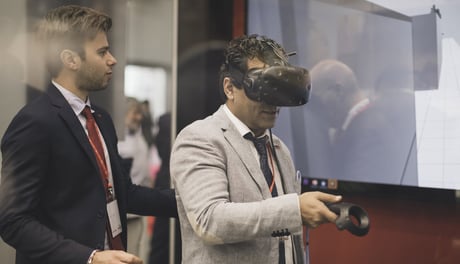
This is an even better question and the answer is: why not? Our cCloner simulation software combined with a VR visor allows you to undergo preliminary training in Cefla long before the equipment is installed, acquiring the primary skills to operate confidently. Together with machine-side training sessions, which remain a fundamental requirement, this means your staff will be ready to operate the machine correctly the day it is installed. A third step of training can be accomplished once the line is functioning, again using the opportunities provided by Virtual Reality. The benefit is that operators can train as required without interrupting production.

Learn more about our digital tools and software solutions.

Good question. And the answer usually points to not enough time, not everyone got trained and we had to do it while the machine was being installed, ...

Article

UBIQUO software solutions

UBIQUO software solutions

Solutions software UBIQUO industry 4.0

Remember the Road Atlas in the car’s glove compartment? Pages and pages of maps in a strange sequence. Driving from page 58 to page 104 was logical only to the person who printed the maps and assembled them. Then someone used a GPS satellite to help us navigate from A to B without stopping to read the map. And today, the SatNav even tells you where the traffic issues are and how to avoid them.

UBIQUO does not map the entire planet, but it is the equivalent digital support tool for your production areas and business universe. Once you try the software solutions available, it will be like driving from A to B almost with your eyes shut.

Our software solutions

Even before you install a new finishing line, UBIQUO provides the functions of cCloner, a simulator which establishes the ideal layout and line configuration based on objective data. Operational simulation goes a step further by foreseeing problems, downtimes and avoiding them. Accurate simulation of productivity and consumption enables realistic forecasting to evaluate costs and productivity. Such a degree of simulation is at an advanced stage in our development programme and will undoubtedly be unique within the finishing industry today.

Supervision of a line or a single piece transiting production is also possible from one location with cTracker. This minimises the risk of bottlenecks, downtime and any factors generating inefficiency. Data is channelled into one tracking point, analysed and actions are taken to adjust parameters in real time, enhancing production efficiency on the fly.

Monitoring production line status, any time of day, anywhere in the world, is possible with our web-based tool, cMaster. All you need is an internet connection and connected device to monitor one or more plants or production lines, providing real-time data or broader statistics for preventive maintenance. The difference between cMaster and similar software solutions is that we have developed it around our own equipment and technologies. It is designed to advise actions aimed at improving quality and efficiency, for coating, finishing and digital printing, that commercial software is not prepared for.

Our software solutions undergo regular updates and evolve in line with the needs of our customers. In the future, our focus will be on optimising lacquer and energy consumption, elaborating meaningful ROI calculations, and we will embrace new technologies only when they can benefit the end-user.

Quality comes from quality

UBIQUO software solutions are designed to ensure quality. If your equipment is able to provide you with quality feedback on each process, you can count on implementing quality actions which will lead to top-quality results.


Remember the Road Atlas in the car’s glove compartment? Pages and pages of maps in a strange sequence. Driving from page 58 to page 104 was logical ...

Article

Why not make sure everything is under full control and thereby reduce your operating costs?

Why not make sure everything is under full control and thereby reduce your operating costs?

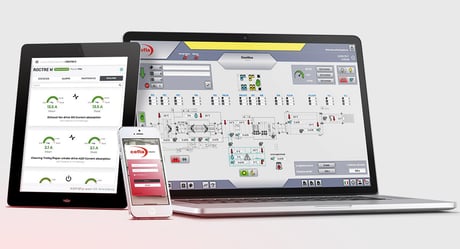
That is precisely why we released our cMaster web-based monitoring tool. It allows operators to keep an eye on both output and production line status, any time of day, anywhere in the world. With an internet connection, all you need is a smartphone or a tablet. With a user-friendly interface and intuitive functions, you do not require any specific software or hardware. It’s as simple as that.

None

That is precisely why we released our cMaster web-based monitoring tool. It allows operators to keep an eye on both output and production line status, any time of day, anywhere in the world. With an internet connection, all you need is a smartphone or a tablet. With a user-friendly interface and intuitive functions, you do not require any specific software or hardware. It’s as simple as that.

So cMaster opens your eyes onto one or more plants or production lines, giving you real-time data or selected information and statistics for period-focused research and preventive maintenance. 
Further opportunities based around Virtual Reality and other Industry 4.0 solutions can be seen at our LAB. 

Contact us and arrange a visit to the LAB.

That is precisely why we released our cMaster web-based monitoring tool. It allows operators to keep an eye on both output and production line ...

Load more articles

Articles: 6 / 12