Magazine

Edge coating

Article

Smartedge and Smartvacuum: the winning combination for flat panels


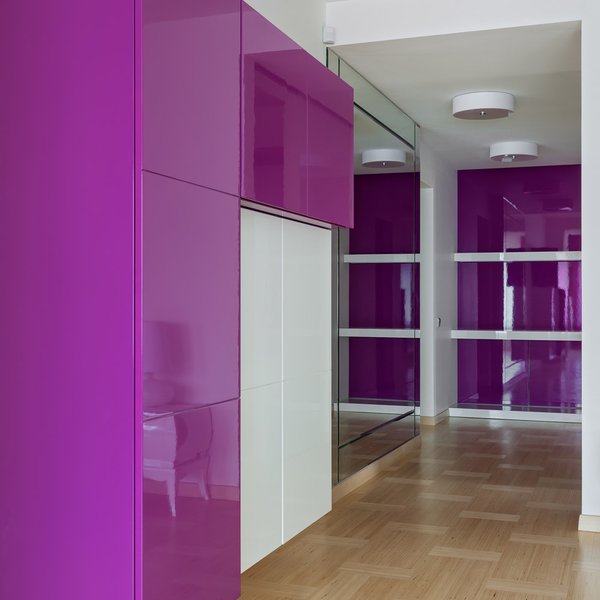
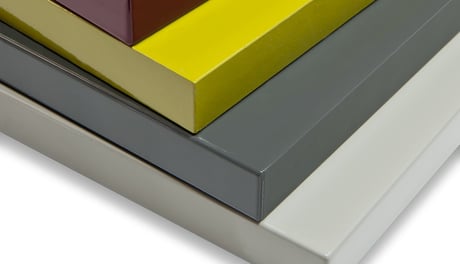
Finding a way to match the finishing quality of your flat surface with the edge, especially when the market is looking for rounded edges and flat surfaces as part of the latest furniture trends, means you need to consider using the same paint and the same technique. Until today, this was just theoretical, but since we introduced Smartvacuum to combine with Smartedge, our vacuum coating solution for edges, it is now a reality.

Vacuum coating: sustainable and cost-efficient

Depending on the production volumes, with vacuum application technologies there are different solutions to coat the surface and edge of a panel. Outputs up to 1500 cabinet doors/shift can be handled with an island-type process dealing with:

  • melamine sanding
  • flat surface coating (Smartvacuum)
  • edge coating (Smartedge)
  • sanding prior to finishing

In-line processes are better for outputs exceeding 3000 cabinet doors/shift and can be either:

  • melamine sanding
  • panel surfaces coated in the Smartvacuum area
  • panel edges coated in a 2-step process with Smartedge
  • sanding prior to finishing

or for 6000 cabinet doors/shift as follows:

  • melamine sanding
  • in-line flat surface coating (Smartvacuum)
  • all 4 panel edges coated using Smartedge
  • sanding prior to finishing

ante

Both Smartvacuum and Smartedge use 100% UV acrylic paints, avoiding release of solvents into the atmosphere. Processing times are reduced compared to alternative application technologies and less space is taken up by these machines.

Focusing on the edge coating process, we have developed patented solutions for Smartedge which are unrivalled on the market. EDGE&GO enables line operators to switch from one edge geometry/thickness to the next in no more than 15 seconds.

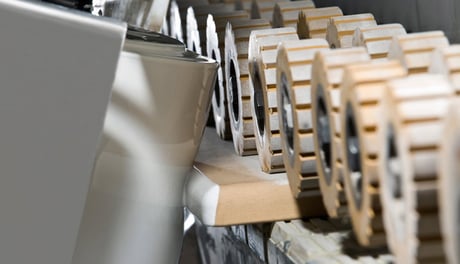
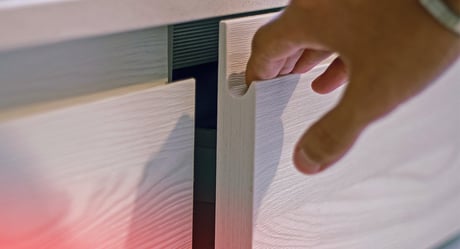
The dual function sanding unit for vertical corners with a radius and the flat section of a J-pull ensures compliance with the original radius and sanding of the excess product at the leading and trailing end of the handle.

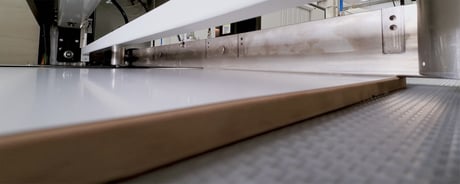
The paint removal and panel cleaning unit seals the melamine between the flat part and the edge, recovers excess applied product and creates a perfectly flat panel surface. This prolongs the life of the abrasive paper in contact sanding machines, as wear is homogeneous over the whole surface.

The winning duo

The combination of Smartvacuum and Smartedge finally allows companies to streamline their coating process using the same technique and delivering the same top quality all round. It avoids pollution compared to spraying lacquers with solvents, it speeds up the process, reducing the handling necessities and, above all, cuts costs significantly.

Learn more about Smartvacuum in this webinar

Finding a way to match the finishing quality of your flat surface with the edge, especially when the market is looking for rounded edges and flat ...

Article

Edge coating: increase your productivity with Edge&Go

Edge coating is relatively simple when the geometries of the workpieces never change: but when batches of products largely different in terms of edge shape and size have to be processed, things become definitely more complicated. Whenever the type of product changes, the machine needs to be stopped to reset the application head.

How many times in a day can this happen? How much machine downtime is generated, and for how long? Is there a way to make line setup changes more efficient and speed up production?

These are the questions asked by finishing plant managers: so far, however, the answers have been less than encouraging. Removing application heads and realigning components according to the shape or size of the edge of the next product to be processed is a complex, time-consuming operation, which must be carried out by skilled workers.

However, thanks to the application of new technologies to the edge coating process, finishing lines can now achieve a degree of flexibility that was unthinkable up until just a few years ago.
 

Mockup-EdgeCoating-ENG

EDGE COATING
Discover how to solve edge processing issues

Technological innovations in edge coating

Automated systems are effectively revolutionising edge coating techniques, minimising human intervention and maximising process efficiency. Robotic arms guided by sophisticated algorithms can apply lacquer to edges precisely, reducing overspray (and the resulting material waste) and adapting to different component shapes and sizes - which leads to more flexible production lines.

New spraying solutions such as High Volume Low Pressure systems and others based on electrostatics have significantly improved the application of edge coatings, allowing for more homogeneous finishes and reducing environmental impact.

Integrating smart sensors into edge-coating processes means enabling performance monitoring to ensure real-time feedback: sensors can detect coat thickness, surface temperature and environmental conditions, allowing for automatic adjustments in order to maintain optimal application standards.

Finally, digital inkjet printing technologies should also be mentioned as emerging valid alternatives for specific applications. Compared to edge coating, this process allows for high-resolution images and patterns to be printed, enabling high levels of customisation without any significant changes to the line setup.

FOR MORE INFORMATION:
Coating of panels and edges: digital printing offers a new alternative
TestaEdge&Go

Edge&Go: a revolution in edge coating productivity

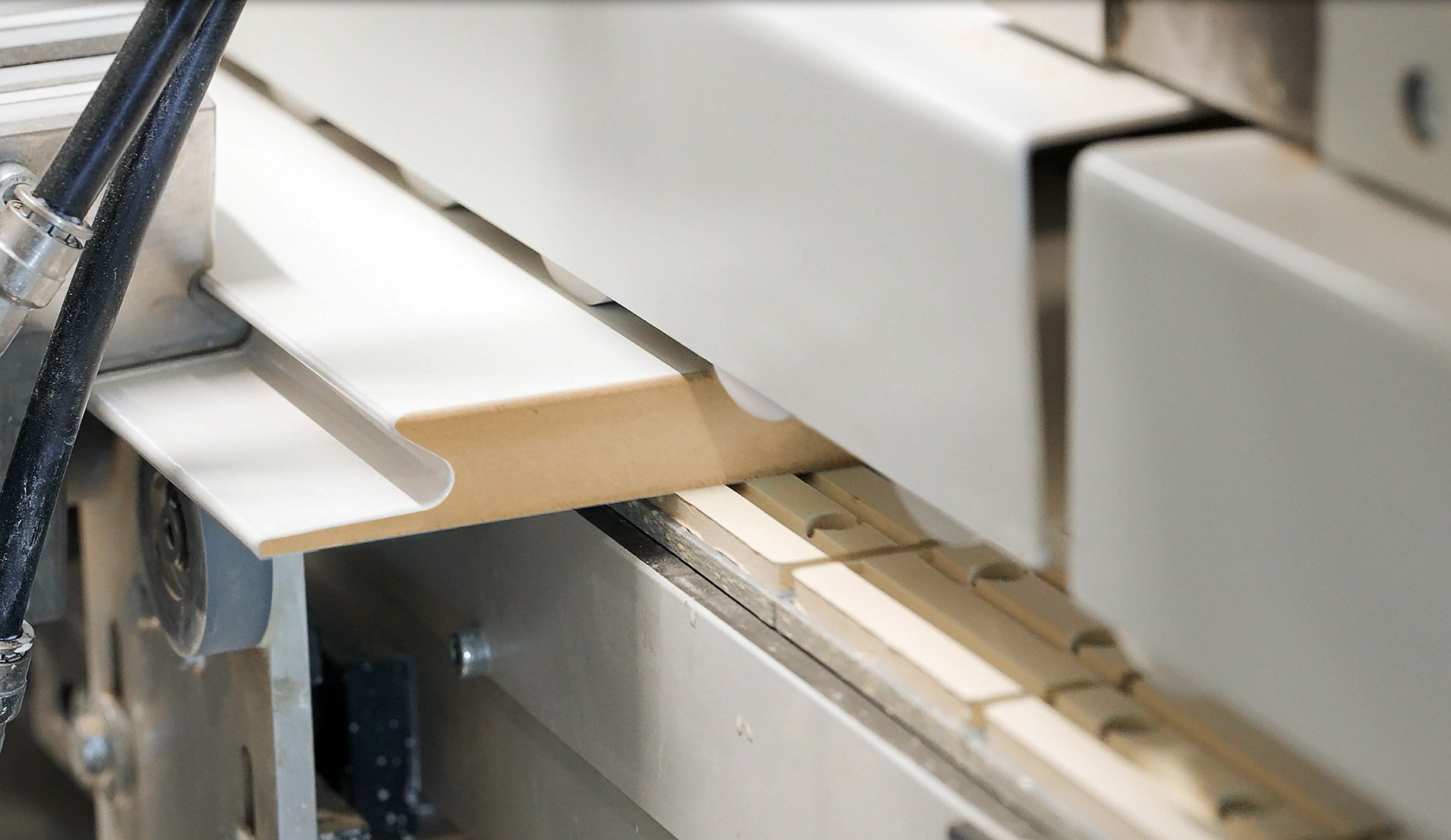
It is by combining the characteristics of some of these technologies that Cefla Finishing has developed Edge&Go, a simply revolutionary, patented system for edge coating. The device combines flexibility and user friendliness, automatically adapting to the different edges that reach the finishing line and allowing, where necessary, quick changing of the workpieces.

Integrated in the Smartedge system - the complete solution from Cefla Finishing for coating and sanding flat and raised panel edges - Edge&Go can boost the productivity of any type of line beyond all expectations, maintaining high quality standards for all edge types.

Advantages of automated coating over manual coating

One of the most significant advantages of using automated coating systems lies in the line's ability to ensure quality consistency. Unlike manual processes, which can by influenced by human factors including operator skills and levels of tiredness, robotic systems will follow predefined paths and parameters precisely. This ensures that each product is processed consistently - resulting in higher-quality finishes and fewer defects.

Obviously, robotic processes can be carried out continuously and at higher speeds than human-controlled processes, resulting in increased productivity and improved workplace safety.

Automatic systems are also designed to optimise the use of materials, thus reducing waste and (economic and environmental) costs related to consumables. Advanced edge coating techniques, such as electrostatic spraying, result in more efficient lacquer application, minimising overspray and the need for touch-ups.

Last but definitely not least, the flexibility and scalability ensured by robotic finishing and coating systems allow production lines to be easily modified with minimal downtime whenever production processes need to be adapted. This also means being able to quickly scale up or down production capacity based on demand without excessive costs.
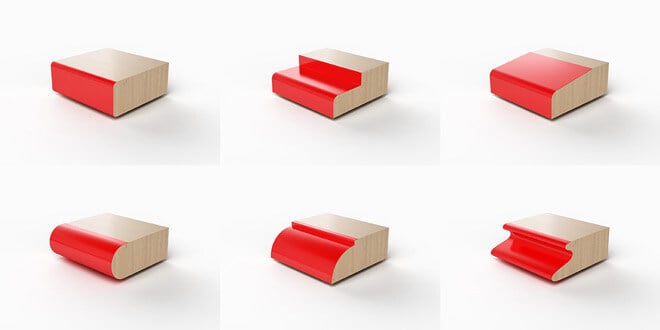
ProfiliSmartedge

Customised solutions for different types of edges

Edge&Go is just one of the innovative solutions that Cefla Finishing has created to help companies improve their edge coating processes. These components' ability to adapt to different production needs is ensured not only by the flexibility typical of systems natively designed to handle different types of panel, but above all by Cefla's industry-specific expertise.

Tuning in to customers, understanding their needs, an in-depth knowledge of the materials and tools used: these are the assets underlying Cefla Finishing's consultancy, which results in the supply of tailor-made solutions, with customised functions, capable of supporting streamlined processes, essential to successfully adapt to new, competitive scenarios. Come and test Edge&Go in our LAB.

LOOKING FOR THE IDEAL COATING LINE SOLUTION?

Edge coating is relatively simple when the geometries of the workpieces never change: but when batches of products largely different in terms of edge ...

Article

Real sealing goes deeper than the surface

Real sealing goes deeper than the surface

Sides sealing

A sealed edge may look sealed when you observe the surface, but what happens beneath the surface is what makes the difference. Cefla Finishing has submitted a patent for a new solution to a critical problem using vacuum application technology to protect edges from external elements such as humidity.

Hybrid implements dual cure edge-sealing. Edges are hardened and impregnated with a special UV polyurethane glue, which penetrates beneath the surface so as to resist the test of time and guarantee the overall quality of your product.

Tomorrow the technology should be extended to chipboard items, thus covering a broader range of applications.

Contact us and discuss your needs with a finishing expert.

A sealed edge may look sealed when you observe the surface, but what happens beneath the surface is what makes the difference. Cefla Finishing has ...

Article

Smartedge: automated edge coating and sanding for high-quality panels


Automated edge-coating and sanding with Smartedge

To ensure high-performance edge-sanding and coating processes while maintaining top-quality standards, Cefla Finishing has developed Smartedge. This integrated system includes Edge&Go, a patented technology that automates key panel finishing functions. This allows for seamless processing of different edge types without switching between automatic and manual operations, eliminating production downtime.

When performed manually, edge sanding and coating are time-consuming and often reduce overall finishing line efficiency. In contrast, automation transforms production and quality. Thanks to its patented components, Smartedge increases productivity while ensuring consistent quality.

For instance, Smartedge performs edge sanding and vertical rounding of panel corners with a radius of 1 to 4 mm. This process, typically carried out manually, is now fully automated, significantly improving uniformity and accelerating edge finishing.


What is Smartedge and how it works?

What exactly is Smartedge, and how does it function? This machine is the ideal solution for those looking for a complete edge-finishing system, integrating coating, filling and sanding in a modular configuration that can be tailored to different quality and productivity needs.

Coating for straight or rounded edges (radius: up to 3 mm) can be performed using a traditional vertical roller, a soft vertical roller or using vacuum injection technology, a patented Cefla solution that can be used for all edge types, ensuring precise, uniform passes regardless of edge shape.

Drying is performed with an integrated oven implementing UV lamps for 100% acrylic lacquers or alternatively IR lamps for water-based or solvent-based coatings.

EDGE COATING
Solve your edge finishing challenges

The advantages of automation with Smartedge

In general, automating edge coating and sanding significantly improves productivity compared to manual techniques. However, using an intelligent, integrated solution like Smartedge brings additional quality advantages.

Smartedge, with its range of sanding tools, is designed to process even J-Pull edges and eliminate the seam between the rounded edge and the flat panel surface - on one or both sides if needed. The result? A more uniform finish, enhancing both quality and aesthetics.

Manual sanding often creates production bottlenecks, slowing down the entire process. By switching to an automated system like Smartedge, you achieve a more efficient and productive finishing line, lower operational costs and you eliminate repetitive tasks, allowing operators to focus on high-value activities.

Practical applications of Smartedge

The real strength of Smartedge lies in its adaptability. Its modular design allows for quick and easy configuration to process a variety of panels, including:

  • Medium-density fibreboard (MDF) – used for furniture, wardrobes, wall panels, and insulation coverings
  • Solid wood – for furniture and high-end decorative panels
  • Veneered panels – requiring precise sanding and finishing

Each material and its intended application have specific requirements, and Smartedge is designed to meet them all, leveraging Cefla Finishing’s extensive industry expertise.

Smartedge isn’t just a stand-alone solution; it is designed for seamless integration with other Cefla Finishing technologies to enhance its performance even further. Paired with Smartvacuum, for example, Smartedge can execute high-quality coating and sanding on both flat and curved surfaces, thanks to vacuum application technology. When working together, Smartedge and Smartvacuum deliver:
  • consistent application quality
  • reduced lead times
  • optimised factory floor space
  • minimised panel handling
  • lower costs per linear metregreater sustainability, thanks to optimised material use and waste recovery

    LOOKING FOR THE PERFECT EDGE FINISHING SOLUTION?

    Edge coating Patent Verniciatura bordi

Automated edge-coating and sanding with Smartedge To ensure high-performance edge-sanding and coating processes while maintaining top-quality ...

Article

Upper and lower panel surface cleaning group

Upper and lower panel surface cleaning group

Upper and lower panel surface cleaning group

When coating the edges of a flat panel, the operation gives rise to a coating seam which overlaps and extends about 1 mm over the flat panel surface. With a curved radius on one edge, the coating seam will be on one side, but in some cases the radius is present between both the corresponding upper and lower sides of the panel, meaning you will need to deal with 2 overlaps. In simple terms, this overlap is an excess of paint covering a peripheral section of the flat surface, which is often in melamine. This coating seam needs to be removed, but how?

Machines can either be equipped with the necessary sanding belt, even a wide belt spanning the full panel width, or can be sent through a sanding machine after curing. Now, because melamine is relatively soft compared to the cured UV coating seam, this generates uneven wear on the sanding belt, which will have to be replaced before it is fully consumed. Furthermore, to counteract the resistance of the harder UV coating seam, companies may be obliged to use a special sanding device with pads, at extra expense. Whatever the solution, sanding in order to remove the overlap is a problem and incurs unwanted costs.

The simplest way to avoid the use of a special sanding device or run the risk of poor sanding belt optimisation is to remove the UV coating seam before curing. This is managed by our patented surface cleaning group. Complete with a steel roller, turning in the opposite direction with respect to the panel as it transits through the machine, this patented system removes the excess varnish enabling sanding to be performed without any problems. The sanding belt is consumed homogeneously and no extra tooling is required to sand the overlap after curing. Absence of a device removing excess varnish after curing helps avoid potential damage such as superficial micro-cracking, which then leads to infiltration problems.

Moreover, one of the key benefits of this approach are the savings obtained in terms of coating consumption. By removing the overlapping seam before curing, and recycling the coating, users can accumulate significant savings, without mentioning the inferior costs related to all the sanding operations avoided.

Contact us and discuss your needs with a finishing expert.

Upper and lower panel surface cleaning group When coating the edges of a flat panel, the operation gives rise to a coating seam which overlaps and ...

Article

Straight or flexible? The answer is both!

Straight or flexible? The answer is both!

Cefla Finishing Smartedge

Edges may be straight, but flexibility is what makes the difference when processing them. The more flexible your edge processing solution is, the more straightforward your production will be.

Smartedge copes perfectly with an increasing tendency for small batches and frequent demands for customisation, avoiding production bottlenecks and unprofitable downtime. Smartedge will finish any type of edge - sanding, coating, drying - from start to finish. No need to stop machinery for time-consuming adjustments according to edge shape or thickness. Disassembling the application head, re-aligning the components to handle a different edge can repeatedly hold up production. Our patented Edge&Go head for vacuum application technology enables continuous processing of different edges.

Same shape thickness adjustments between 16 and 50 mm take between 5 and 10 seconds. Edge shape changeovers using Edge&Go in no more than 15 seconds; for example, from a straight edge with a 3 mm radius to a J-Pull.

Contact us and discuss your needs with a finishing expert.

Edges may be straight, but flexibility is what makes the difference when processing them. The more flexible your edge processing solution is, the ...

Load more articles

Articles: 6 / 7