Article

How can I obtain remote assistance right now?

How can I obtain remote assistance right now?

Remote assistance UBIQUO

"How can I obtain remote assistance right now? And how do I know if my production process is working well?"

These are just some of the most frequently asked questions about digital technologies, made of software, skills and our people.

We’re talking of UBIQUO, a carefully selected combination of service packs and software solutions designed to enhance your business by acting on all its aspects with a tailored mix of expert consultancy and digital tools.
A 360° package devoted to efficiency, reliability, competence, predictability etc.

Thanks to the tools which constitute UBIQUO, all spheres come into play: digital, virtual and physical.
In whatever circumstances, we support you wherever and whenever you need our services, anywhere in the world.

"OK, but how?"
Thanks to the software, the cTracker and cMaster tools, the Service Packs and remote assistance provided by our professionals.
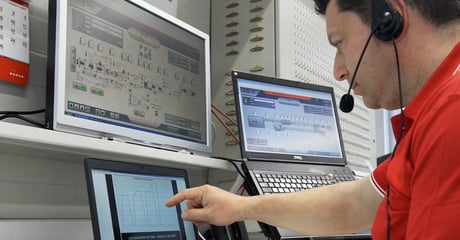
We can connect quickly and check the operating parameters, the correct interaction with other machines on the line, verify the settings and intervene quickly.


Andrea Mattioli

Global Service Manager

Management of Products and Services for After Sale Processes

Linkedin Profile

"How can I obtain remote assistance right now? And how do I know if my production process is working well?" These are just some of the most ...

Article

Would you like to learn more about industrial digital printing processes?

Would you like to learn more about industrial digital printing processes?

Everyone can start amused, amazed or a mess, we make sure the finish is amazing.
The innovation is about an amazing effect on all material with a high definition finish both in terms of sight and touch. 

Cefla Finishing Industrial Digital Printing White Paper

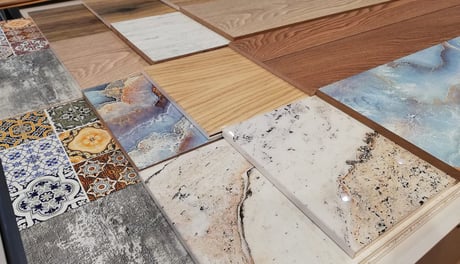
In the décor market, the goal is to obtain prints that reproduce natural materials in a true-to-life manner. Industrial digital printing solutions are increasingly popular in response to rapidly evolving market demands, especially for furniture, packaging and flooring specialists.

Suited to all floor surfaces, furniture and skirting to glass, laminates or plastics, digital printing techniques enable exciting alternatives. Whether it’s wood, MDF or cork, you can digitally print and emboss with exceptional 3D quality. 

We are ready to show you the solutions will make the difference.

Learn more about our Industrial Digital Printing solutions?

Everyone can start amused, amazed or a mess, we make sure the finish is amazing. The innovation is about an amazing effect on all material with a ...

Article

Upper and lower panel surface cleaning group

Upper and lower panel surface cleaning group

Upper and lower panel surface cleaning group

When coating the edges of a flat panel, the operation gives rise to a coating seam which overlaps and extends about 1 mm over the flat panel surface. With a curved radius on one edge, the coating seam will be on one side, but in some cases the radius is present between both the corresponding upper and lower sides of the panel, meaning you will need to deal with 2 overlaps. In simple terms, this overlap is an excess of paint covering a peripheral section of the flat surface, which is often in melamine. This coating seam needs to be removed, but how?

Machines can either be equipped with the necessary sanding belt, even a wide belt spanning the full panel width, or can be sent through a sanding machine after curing. Now, because melamine is relatively soft compared to the cured UV coating seam, this generates uneven wear on the sanding belt, which will have to be replaced before it is fully consumed. Furthermore, to counteract the resistance of the harder UV coating seam, companies may be obliged to use a special sanding device with pads, at extra expense. Whatever the solution, sanding in order to remove the overlap is a problem and incurs unwanted costs.

The simplest way to avoid the use of a special sanding device or run the risk of poor sanding belt optimisation is to remove the UV coating seam before curing. This is managed by our patented surface cleaning group. Complete with a steel roller, turning in the opposite direction with respect to the panel as it transits through the machine, this patented system removes the excess varnish enabling sanding to be performed without any problems. The sanding belt is consumed homogeneously and no extra tooling is required to sand the overlap after curing. Absence of a device removing excess varnish after curing helps avoid potential damage such as superficial micro-cracking, which then leads to infiltration problems.

Moreover, one of the key benefits of this approach are the savings obtained in terms of coating consumption. By removing the overlapping seam before curing, and recycling the coating, users can accumulate significant savings, without mentioning the inferior costs related to all the sanding operations avoided.

Contact us and discuss your needs with a finishing expert.

Upper and lower panel surface cleaning group When coating the edges of a flat panel, the operation gives rise to a coating seam which overlaps and ...

Article

Roller coating: the pressure is on!

Roller coating: the pressure is on!

Roller coating Cefla Finishing

As the finishing sector evolves, end-user companies appear to have an increasing list of priorities, often expressed with familiar concepts of flexibility, ease of use, cost reduction, process control, compact design, sustainability, productivity, consistency… Indeed, the list is long. Manufacturers are feeling the pressure of so many equally important demands, so we decided to put the pressure on our roller coater solutions, making it possible to process raised panels on Smartcoater PRO.

Thanks to the equipment’s ability to exert significant pressure on the application system, Smartcoater PRO applies the base coat to raised panels prior to sanding. Panels are then spray coated to complete the surface finish. Reaching the grooves with a roller coater in the past was unheard of, but now brings the benefits of extra flexibility and reduces the application costs.  Moreover, Smartcoater PRO implements innovative systems able to closely monitor the process and thereby minimise operating costs. Process control also enables operators to make immediate corrective actions to optimise quality and improve production efficiency.

The solutions we provide today combine enhanced performance with simpler finishing line concepts and a smaller overall footprint. Their impact on the environment is substantially reduced thanks to a drop in emissions by virtue of the roller coating process as opposed to spraying, plus it saves money! By combining different processes, for example with the addition of edge coating solutions, the entire production cycle acquires greater stability and delivers more consistent results in an easier, automatic way. Automation also plays a role in reducing production costs by monitoring lacquer weight, temperature, etc.

Future development will further limit production costs and add benefits in terms of environmental sustainability, as well as broadening the scope of potential applications. Today it will be interesting to see how Smartcoater PRO handles the base coat application and sanding tasks on raised panels prior to surface finishing on a spray coater.

As the finishing sector evolves, end-user companies appear to have an increasing list of priorities, often expressed with familiar concepts of ...

Article

How to make the pots look good when the flowers have faded

How to make the pots look good when the flowers have faded

Plastic flower pots may look like simple objects, but when decorating them, you need to make sure nothing gets left behind. We tested a few solutions before devising the most efficient and effective way of coating them, minimising operator intervention and delivering the best results. This is our advice for an integrated finishing line, but we remain available to adapt with tailored solutions to suit specific customer requirements.

Our in-line spraying solution is composed of an iGiotto high-performance anthropomorphic robot with 2 consecutive process steps. Flower pots are fixed to rotating swivel pins running along a floor-mounted line.

The first step has to be flaming. This is vital for the following coating steps to be really effective. If not, the lacquer will not adhere correctly to the plastic substrate. Performed by the first robot featuring a flame burner, the product then moves along the line to the spraying station, where the rotating pots are coated with 80-100 g/sqm water-based 2K pigment. Drying is then performed in a hot air tunnel.

This fully automatic solution saves time, limits lacquer consumption to what is essential and ensures the exterior of each pot receives a quality finish that will last over time.

Contact us and discuss your needs with a finishing expert.

Plastic flower pots may look like simple objects, but when decorating them, you need to make sure nothing gets left behind. We tested a few solutions ...

Article

What makes a digital print good or bad? Well, it’s not just a question of chemistry.

What makes a digital print good or bad? Well, it’s not just a question of chemistry.

Quality industrial digital printing

Throughout the digital print process, between the cycles and tests we’ve performed in our LAB while expecting the next customer to come along and test the print quality, amongst the many factors that exist, we have optimised the key phases which ultimately lead to a top quality print.

What is required to produce the desired outcome?

There’s a huge difference between those who have no time to prepare things properly and those who take the time to organise each step’ of the process correctly. Let’s take a look at these steps:

  1. Check your materials, both the image and the substrate which we will need to prepare, print on and texturize.
  2. Process the image, either digital or acquired via a scan, so as to set the appropriate characteristics we wish to obtain with the print and texture operations.
  3. Check the substrate by testing the most practical cycle for digital printing in view of customer expectations. This step is critical and depends on our expertise and professional approach. This represents a key step for Cefla Finishing and is a team effort comprising the competence and experience of our LAB Manager, the skills of our Product Manager, our partnering lacquer suppliers and the customer’s own knowledge in view of their consolidated processes.
  4. Create the right colour profile by carrying out the entire process including texturization. This is the only way to achieve effective printer calibration and obtain faithful reproduction of the desired colours. This step does not avoid the need for the right image preparation expertise, but it’s a perfect starting point for the fine-tuning that will be needed further on.

This sequence enables us to obtain a product thanks to a specific cycle, prepared and developed, knowing precisely what the attainable outcome will be.
This becomes the basis for all further fine tuning and any adjustments we wish to make.

For more about the digital printing process download the White Paper

None
Throughout the digital print process, between the cycles and tests we’ve performed in our LAB while expecting the next customer to come along and ...

Load more articles

Articles: 120 / 157