Article

Eco-friendly drying with UV-I to minimise photoinitiator requirements


UV technology and sustainability: a viable combination

UV technology is an innovative paint drying solution guaranteeing shorter drying times and greater energy efficiency. However, one of the main obstacles to the widespread adoption of this technology is the use of photoinitiators, which can be harmful to the environment and to human health. Fortunately, UV technology and sustainability can now be combined by minimising the use of photoinitiators.

UV drying can be made more sustainable by minimising the amount of photoinitiators used, as well as by decreasing energy consumption or reducing the use of mercury (present in UV lamps).

Thanks to UV technology, it is possible to obtain much faster drying times than traditional solvent-based or water-based drying systems, and it is for this reason that this solution is now increasingly popular.

Reduced photoinitiator use: environmental and health benefits

Reducing the use of photoinitiators implies a number of advantages for both the environment and human health. Photoinitiators are chemical compounds that can damage human health if inhaled or in contact with the skin. Additionally, once released into the environment, they can persist for a long time and cause pollution.

By using 100% UV paints with a reduced amount of photoinitiators, the risk of exposure to harmful substances is significantly reduced. This is particularly important for workers in the painting industry, who may be exposed to these substances on a daily basis. Reducing the amount of photoinitiators needed also contributes to preserving the environment, reducing pollution and the potential damage to ecosystems.

Innovation in UV drying: use of nitrogen

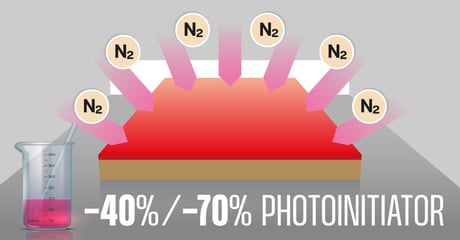
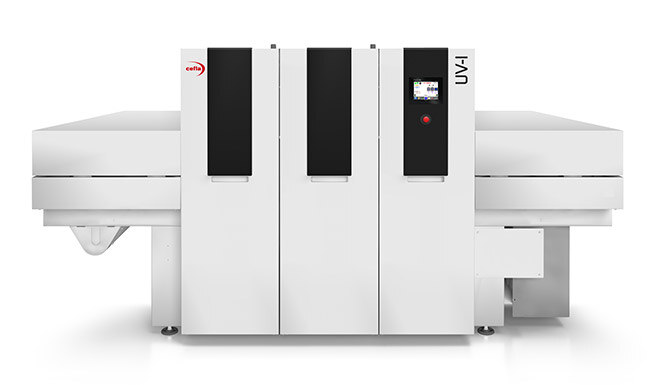
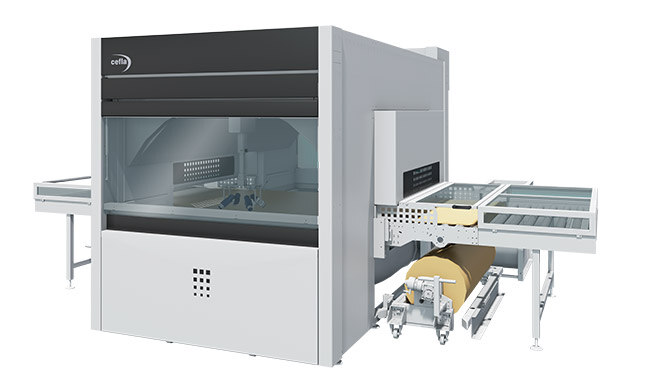
A major breakthrough in UV drying: use of nitrogen. Our UV-I oven allows nitrogen to be used to reduce the environmental impact. In this way we can reduce the amount of photoinitiators used, reduce the energy requirements of the cross-linking oven and minimise the impact of mercury by using fewer crosslinking lamps.

UV-I-oven

In each of the previously listed cases (or combinations of them), while reducing the amount of oxygen inside the oven, we are still able to guarantee perfect (and in some cases even superior) drying of the workpieces.

Future outlook: trends and developments in sustainable UV drying

Sustainable UV drying is a growing trend in the painting industry. Companies are increasingly aware of the importance of reducing their environmental impact and improving the health of their workers. Environmental regulations are becoming increasingly strict, encouraging companies to seek sustainable solutions for their paint-finishing processes.

In conclusion, UV-I drying is a valuable, eco-friendly solution for reducing mercury and photoinitiators requirements, improving environmental sustainability in the painting industry. Thanks to the use of nitrogen, it is possible to protect operators' health and safety with a lower impact on the environment.

Looking to future scenarios, further development of increasingly sustainable and high-quality UV drying technologies and materials is to be expected.

UV technology and sustainability: a viable combination UV technology is an innovative paint drying solution guaranteeing shorter drying times and ...

Article

Cefla technologies that promote industrial energy saving

 
From an energy-saving perspective, manufacturing is a strategically crucial sector.

The reason is simple: a growing awareness of the impact energy production and consumption have on the environment and on climate change means that the most energy-intensive businesses will have to take the lead in implementing a series of solutions to drive through the required changes in society and the economy. But what’s the situation in Italy, and where is manufacturing headed overall in terms of industrial energy saving?

Let's start with some data gathered by the Confindustria Study Center: in 2022 industrial companies decreased gas consumption by 13.2% compared to the three-year average of 2019-2021. Electricity consumption also fell, by 5.6% (compared to 2021), resulting in a much larger reduction than that achieved by the Italian economic system as a whole (-1%).

What’s more, an analysis of electricity consumption in Italy shows that industry is by far the biggest user. As the Digital Energy Efficiency Report 2022 (published by the Energy & Strategy Observatory of Milan Politecnico) points out, 44.1% of national expenditure is absorbed by the industrial sector, with 39% of Italian electricity consumption attributed to manufacturing alone (2020 data).

The report highlights that in 2021 spending on industrial energy efficiency reached 2.2 billion euros, with 90% of investment involving hardware upgrades.

Things are, then, changing: but there’s still a long way to go. This article examines which steps can be taken today (and in which direction), mainly with a view to maximizing the efficiency of surface finishing processes, which are among the most energy-intensive.

Read also:

●    Industrial Energy Efficiency: the key is in the finish


Energy saving challenges in the manufacturing industry

Let's begin with the challenges to be faced: the first concerns the high levels of capital investment needed to upgrade equipment and implement energy-efficient technologies. We then need to factor in the complexity of the production processes and the variety of equipment used, which can make it hard to identify the most effective consumption control/reduction solutions

Then there’s the issue of cultural and organisational change: implementing energy saving measures may require major modifications to operations and employees’ tasks; workers may express reluctance or even resistance to new measures. Last but not least, note the increasingly stringent regulations and standards, compliance with which often requires further cost and effort in addition to those already analysed.


What are the strategies for industrial energy saving?

ordinarydesigner_interior_of_a_green_modern_metallurgical_indus_61db70fb-46b1-4ebd-9c2f-0dd8d68a3653

In general, lower energy consumption per unit of product can be obtained via three strategies. These can be applied individually or in combination. Again, according to the Confindustria Study Center, these respectively involve:

  1. an increase in energy efficiency, with technology, plants and machines remaining equal
  2. a sector-based reorganisation of production, towards sectors of lower energy intensity
  3. a change in production technologies and/or plants and/or machinery.

On a purely practical level, manufacturing companies can generally reduce their energy consumption by, above all, adopting LED lighting in their plants, introducing high-efficiency motors and focusing on ‘smart’ energy management (e.g. by using their own photovoltaic and energy recovery systems).

More specifically, when it comes to finishing processes, it’s essential to access technologies and patents that allow manufacturers not only to reduce consumption but also stand out on international markets through the quality of their products and achieve ever-greater production flexibility. This is exactly what the Cefla Finishing range lets you do.

Industrial energy saving technologies and solutions

The Cefla Finishing portfolio of solutions, designed to help companies achieve their industrial energy saving goals, consists of three branches: automation and control, low-temperature drying systems and energy recovery systems. Let's look at these in more detail.

Automation and control

Optimising processes and consequently reducing energy consumption means implementing a series of automated operations that, on the one hand, minimise waste and, on the other, increase control over the efficiency of existing procedures.

In this context, small and medium-sized companies can reap the biggest rewards from the introduction of automated solutions like Prima Evo, an oscillating one- or two-arm spray coater, ideal for making the switch from manual to automatic spraying.

R-Prima-EVO

Low-temperature drying systems

As said, drying processes are a major contributor to high energy consumption in manufacturing companies. That’s why we need to start here if we want to substantially shrink the environmental footprint.

R-UVR

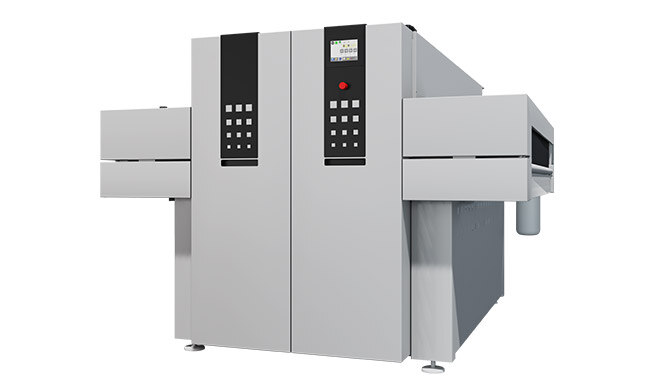
By adopting UV LED gelling and drying ovens made by Cefla Finishing, for example, it’s possible to reduce energy consumption by around 50%; this is because the LEDs that replace the traditional UV lamps are much more efficient. Furthermore, since these lamps are cold, substrate heating is limited, drastically reducing the number of rejects and the need for reprocessing; that means both energy savings and a reduction in the environmental impact of processing. Other sustainability enhancers include the absence of mercury - a pollutant not present in LED technology - and the fact that the production process involves zero ozone emissions.


Energy recovery systems

Last but not least, let’s look at the Power Back energy recovery systems that Cefla has implemented on its iBotic robotic spraying lines. Conceptually, the working principle is similar to the one that allows electric car motors to recover energy during braking, with the vehicle's wheels transferring kinetic energy to on-board systems. Similarly, the Cefla Finishing Power Back system enhances control of arm movement, ensuring less electrical ‘expenditure’ and, above all, retrieving energy during the machine deceleration phase.

What are the benefits of industrial energy saving?

Several tangible, measurable advantages can be obtained by implementing industrial energy saving strategies: manufacturers will naturally imagine the possibility of increasing margins while simultaneously becoming more competitive compared to those who have yet to take the same development path. Yet we should remember that reducing consumption also means reducing the carbon footprint: an excellent way of bolstering your reputation with partners, customers and end consumers.

Of course, the obstacle of the initial investment remains and this can be costly, especially for an SME. Luckily, today we can count on a range of incentives for investment in innovative technologies: tax relief, grants and subsidised financing linked to ESG goals now allow almost any organization to cope with an expense which, in any case, guarantees an extremely fast ROI.

Want to know how quickly in the specific case of your company? Contact a Cefla expert and visit the Cefla Finishing Lab to experience, first-hand, all the solutions and technologies that help reduce energy consumption in your finishing processes.

From an energy-saving perspective, manufacturing is a strategically crucial sector. The reason is simple: a growing awareness of the impact energy ...

Article

Industrial steel coating: everything you need to know

 
Industrial steel coating is an essential process that protects components and products, ensuring they are time- and weather-resistant, and aesthetically pleasing.Contemporary designers and architects are increasingly demanding and need to be able to count on finishes that are qualitatively and aesthetically perfect. This is why the best metal coating technologies have become essential for companies in the industry.


Why coat steel?

The main purpose of surface protection treatment is to separate the metal from direct contact with the environment and thus prevent the chemical reactions that would otherwise lead to corrosion. Industrial steel coating allows the formation of a waterproof layer that insulates and protects the metal, preventing it from coming into contact with ambient humidity and other corrosive substances. This might seem like a simple metal surface coating task. Nevertheless, we’re talking about an extremely delicate process: remember, even small defects can compromise the barrier function. Therefore, to ensure proper treatment it’s essential to take every necessary precaution.

This article leaves aside the cleaning, degreasing and sandblasting operations that may or may not be necessary to ensure better adhesion and durability of the film as these tasks are highly dependent on the type and quality of the material used. Instead, we’ll be focusing on the coating application process - the process that has the biggest impact on the final appearance of the product and its characteristics - and highlighting Cefla Finishing's innovative solutions for coating steel and metals in general.


THE MOST INNOVATIVE FINISHING SOLUTIONS
Discover how highly advanced finishing solutions can elevate your competitiveness.


Industrial steel coating: types

Protective coatings used on steel can be divided by their surface film drying method or by function. The durability of on-steel coating depends on several factors. These include the design of the structure, preparation of the surface and, above all, the quality of the application and proper drying of the applied layer.

Steel coating can involve several different techniques. Liquid coating and powder coating are significantly different.

Powder Coating

In powder coating, the powder is applied to the substrate by way of an electrostatic charge. This technique subsequently involves a melting process in an oven: this allows the powder to fuse into a homogeneous layer and harden once cooled. Powder coating typically consists of a single layer.

Liquid coating

In liquid coating, polymerization can take place physically, simply through evaporation of the solvent or water (single-component coatings), or chemically, with the aid of a catalyst mixed with the coating resin to make it stronger (bi-component coatings). In both cases, coating curing temperatures are typically lower than those used in powder-based processes and less time is needed, resulting in energy savings for the company.

Liquid metal coatings generally consist of two layers: one that acts as a primer/corrosion inhibitor and the finishing layer that will be visible on the product. Compared to powder coating, liquid coating is generally easier to restore if damaged or if there are signs of corrosion.

Duplex systems

There are other methods. For example, ‘duplex systems’ involve hot-dip galvanizing followed by application of a coating film; this is a precise sequential procedure and is therefore less flexible from a production perspective.

Cefla Finishing steel coating solutions

Cefla has a broad portfolio of coating solutions that include both flatbed lines - with automatic spray, roller or curtain coating systems - and vertical lines (floor-mounted or overhead lines) with automatic spray coating systems.

Spray coating lets you apply coating to all the areas of complex, typically three-dimensional parts. Roller coating and curtain coating are optimal for essentially flat surfaces and optimise consumption of the coating itself.

How is industrial coating of steel performed?

Applying the coating

As illustrated in the preceding paragraph, different technologies can be used. With spraying, one or more spray guns apply the coating mist on the surface to be treated. Increasingly, companies need to guarantee uniformity of application, boost their plant productivity and reduce coating consumption. The systems produced by Cefla Finishing identify the position and shape of the parts to be coated and can therefore apply a more uniform coating layer in less time, increasing production while optimising coating consumption.

Application systems may consist of a single axis that moves the guns back and forth as the parts to be coated are fed continuously under the spray guns; alternatively, they may involve multiple interpolated axes perpendicular to each other (Cartesian or gantry robots) that allow the guns to follow the shape of the piece and, for example, perform continuous edge coating. Where parts have markedly curved surfaces or are particularly thick, Cefla systems can incorporate articulated robots capable of recognising and coating even complex shapes without programming.

Drying and curing

For steel coating purposes, single-component and bi-component products are generally used.

In the former, the applied coating layer is cured via evaporation of the solvent and the binding together of the coating molecules, making it a physical drying process.

For the latter (i.e. bi-component products), curing is a chemical-physical process requiring a catalyst which combines and chemically bonds the coating molecules once the solvent has evaporated.

To speed up curing and reduce drying times - which can vary from a few minutes to several hours - hot air and, in some cases, infrared lamps are used with both single-component and bi-component products. Energy input during drying eliminates the solvent in less time and provides the coating with the energy needed to activate the catalyst.

Some products can be cross-linked by using ultraviolet rays to activate chemical curing. Where these products have 100% solid residue, there is no solvent evaporation phase and drying can be completed extremely quickly, in a matter of seconds.

Cefla Finishing and industrial steel coating: the CROMATICA case study

Did you know that coating isn’t the only steel finishing solution? Recent years have seen innovative technologies reshape the industry and create new market opportunities. Metal finishing technologies include, in fact,alternatives such as industrial digital printing or vacuum coating, alongside tried and tested techniques like spray coating, roller coating or powder coating.

cromatica_COIL1

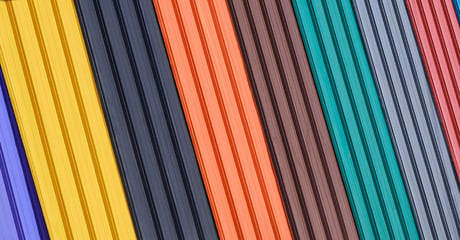
A good example of how new industrial steel coating techniques are already being used successfully is CROMATICA, part of the COATEEL range by the Marcegaglia Group’s pre-painted steel products division; this system aims to extend the use of steel products to new sectors, such as architecture and design. CROMATICA lets manufacturers print customised patterns and images on surfaces made of steel and other materials, with a near-infinite range of colours, hues, degrees of opacity and processes. This one-of-a-kind application was developed through investment in research, innovation, experimentation and the partnership with Cefla Finishing.

More specifically, the plant designed by Cefla Finishing has allowed CROMATICA to become fully operational, rendering its output fully customisable in terms of both ‘look’ (colours, textures, images and patterns) and ‘feel’: the result of a range of extremely hard-wearing finishes that create multiple tactile effects. This means the final product can meet a vast range of creative and technical needs in various fields of application: from residential and commercial buildings to infrastructure, transport and automotive. Read the Case Study and learn more about CROMATICA

The application developed by the Marcegaglia Group is just one of a limitless number of possibilities that stem from the use of innovative steel coating techniques. Contact us and a Cefla expert will illustrate all our latest-generation products and services.


LOOKING FOR THE IDEAL SOLUTION FOR YOUR COATING LINE?

Industrial steel coating is an essential process that protects components and products, ensuring they are time- and weather-resistant, and ...

Article

Spray-coating vases: a quality finish with spray coating

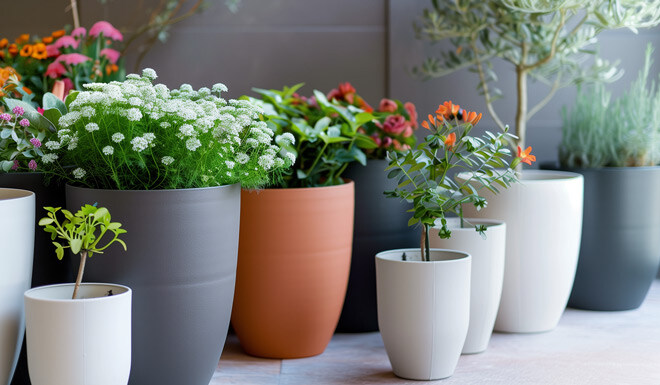
More and more, terracotta flower vases are being replaced by plastic vases.

At first glance they might seem like simple objects, but they nevertheless require production processes that are anything but simple. Market operators engaged in the finishing of plastic objects know this only too well.

This article refers to manufacturing contexts, to those companies that make or finish the vases. It also refers to the many companies involved in processing three-dimensional objects that work within a wide range of sectors.


The best vase coating solution

To obtain objects with impeccable aesthetic and surface performance, nothing must be left to chance in the vase coating process. 

With years of experience in finishing, in numerous industries and with a broad range of materials, we’ve had the opportunity to test a wide range of solutions. Through this experience, we’ve now identified the most efficient, effective way of producing great, high-quality vase decoration while minimising the manual workload. 

This is spray coating: a finishing line technology that allows for customised use and configuration. 

Spray-coating: the perfect vase coating solution

Let's now look at the ‘made in Cefla’ spray-coating line set-up. One possible solution sees a line that includes a high-performance articulated robot, such as iGiotto. The vases in question are attached to rotating swivel pins that slide along a floor-mounted line.


The vase coating process

Let's briefly analyse the stages of the process on the type of line described above.
 
Stage 1: flaming
The first stage of vase coating is flaming. This is essential as it ensures proper adhesion of the coating film. At this stage we see the iGiotto robot in action with the relevant flaming tool. 

Stage 2: spraying

Subsequently, the product moves down the line to the second phase, spraying, where the vases remain positioned on rotating stations. In this step the vases are coated by a second iGiotto (80 -100 g/m2, single-component pigmented water-based finish). 

Stage 3: drying

The last phase uses sophisticated drying technology. On this type of line, vases are dried in a hot air tunnel with high-speed forced ventilation, the optimal solution for drying water-based coats. 

PlasticVases4

Customisation of finishing lines

The above-described solution is fully automatic. It therefore saves time, minimises coating consumption and ensures that the inner and outer part of each vase have a long-lasting, high-quality finish.

In addition to these advantages, it’s possible to customise every aspect of the line to meet customers’ specific needs, whether they’ve already established a process and simply wish to improve it, or whether they’re still looking to identify the solution that best suits their business.
 
Talk to one of our experts to find out how we can help you achieve your goals.
More and more, terracotta flower vases are being replaced by plastic vases. At first glance they might seem like simple objects, but they ...

Article

Window finishing: efficient, customisable production lines


In sectors such as construction and furnishing, innovative, high-efficiency finishing processes are essential to ensure high-quality products. This article is intended for industrial window manufacturers looking for cutting-edge solutions to improve the quality and efficiency of their window production and coating processes. We’ll explore innovative techniques for finishing already-assembled windows (focusing on solutions such as overhead lines and cutting-edge Cefla Finishing technologies) and unassembled windows (analysing the potential of horizontal, vertical and hybrid lines).
 

What techniques are used in industrial window finishing?

In talking about window finishing, it’s vital to address the issue of tool and process customisation. Regardless of whether the windows are already assembled or whether operations are performed on individual components prior to assembly, it’s essential to have machines that can be integrated into a finishing line that meets the specific needs of the production chain. Only by adopting this approach can we boost production efficiency, providing not just economic benefits but also, above all, greater final product quality.
 

Industrial finishing of assembled windows

Let's start by looking at options for finishing already-assembled windows. Overhead lines offer one of the most effective solutions for treating assembled window frames. With this configuration, in fact, the chain has a closed-loop design, development of which depends on productivity and the required coating cycle. The lines are connected to each other via switching points that are automatically activated during the cycle, creating standard and/or alternative circuits.

More specifically, with regard to the Cefla Finishing range, we suggest a configuration built around two key elements: iFlow to control the impregnation phase and iGiotto to complete the finish with spray coating.

The iFlow unit is mounted on rails, without any connections to the overhead workpiece hooking line: for this reason it can easily be placed offline for cleaning and maintenance purposes. It features a sole high-capacity pneumatic pump for loading, unloading and recirculation to ensure even impregnation on the pieces.

iGiotto, instead, is a complete coating system consisting of a high-performance articulated robot, specially designed to coat large items. This is a state-of-the-art window and door frame coating system: moreover, it can be used to coat any complex shape.
 
Both machines can be integrated into a line that includes, for example, elevator systems, reading barriers, and drying solutions, giving rise to an extended ‘ecosystem’ that can draw on all the window finishing solutions Cefla Finishing has to offer.

Finishing unassembled windows

For not-yet-assembled frames, the process can, instead, be performed on horizontal, vertical or even hybrid lines. Depending on window finishing requirements, Cefla Finishing provides machines specifically designed to enable impregnation and drying processes that will meet the needs of any production plant.

The advantages of horizontal lines

Let's start with manufacturers who prefer to finish their windows on horizontal lines. An integrated line that handles parts horizontally offers a specific advantage: sanding is performed efficiently by the equipment and no manual intermediate sanding is required when the pieces are subsequently positioned on the vertical line for spray coating.

The horizontal line proposed by Cefla Finishing uses Lineflow and Dryflow, in addition to sealing solutions such as Talent.

Lineflow is a machine for the horizontal application of impregnating or intermediate coatings. Compared to an overhead line, horizontal execution lets the pieces remain on the line for the subsequent brushing and coating stages. The pieces can be assembled at a later time: this means the weight can be lifted with ease and only a light brushing of the profile is needed. In this process, the wood grain is better stabilized, improving subsequent spray coating stages on the overhead line.

Used in combination with LineFlow, the DryFlow oven improves the drying efficiency of water-based coatings and significantly reduces evaporation times: this is thanks to the high-speed hot air flow and product modularity, which allow for flexible selection of holding times, with short maturing/drying phases and extremely easy control.

Last but not least comes Talent. a patented vacuum-type sealing solution that uses fast-drying water-based products and is suitable for application on various types of materials.

Why choose vertical lines?

However, some manufacturers prefer to use vertical lines for unassembled frames. This is a space-efficient solution, as it lets you hang more workpieces-in-progress on the line than would be possible with pre-assembled frames.

To start the process, iFlow controls the impregnation phase using the ‘flow coating’ application system, essential for in-depth wood protection and colouring. This is followed by a drying phase in a high-airspeed oven with controlled temperature and humidity. Subsequent applications are performed by iGiotto, the articulated robot that uses pre-set spraying trajectories, either programmed or automatically established by a 2D or 3D reading barrier. The iGiotto consistently applies the desired coating quantity; this is then dried in a high-airspeed oven with controlled temperature and humidity. Manual sanding usually precedes application of the transparent water-based finish.

Cefla Finishing and window finishing solutions

Modularity, flexibility, efficiency and high performance are the hallmarks of a range designed to meet every window coating requirement. What’s more, years of experience gained all over the world have allowed us to respond to extremely diverse, highly specific needs: just think of the different climates in the countries where Cefla Finishing operates, and the level of knowledge needed to treat the huge variety of woods with which windows are made on different markets.

Hence our mission: to customise our machines down to the last parameter so we can meet the specific needs of every single company. Come and test your products and coatings on our machines at the world’s largest finishing lab, here in Imola, Italy. This will help us define the ideal characteristics of the lines to be developed and installed, ensuring perfect processing:  just what your business needs.
In sectors such as construction and furnishing, innovative, high-efficiency finishing processes are essential to ensure high-quality products. This ...

Article

Why choose an industrial digital printing machine?

 
Today, anyone looking to produce high-performance, affordable, attractive furniture and furnishing accessories simply has to have an industrial digital printing machine
End consumers, in fact, have increasingly high expectations, so finished products need to guarantee the highest quality, which also means resistance to abrasion and scratches. On the other hand, coating and finishing trends are generating new ‘cross-contaminations’ and material mixes, so those manufacturers who can leverage flexibility (i.e. respond quickly to changing trends) will be the ones to gain the greatest competitive advantage in this scenario.
But how best to combine aesthetics, practicality and strength while delivering a multiplicity of opportunities, even with small batches? What’s needed is an integrated, comprehensive, flexible solution. That’s why, today, an industrial digital printing machine should be central to coating processes, not just on furniture, furnishing components and frames, but also edges, skirting boards and profiles.  

More specifically, introducing an industrial digital printing machine delivers 5 key advantages:
  • Flexibility in the face of changing aesthetic trends and fashion
  • Less time, less stock and fewer semi-finished goods are needed
  • Less equipment is required on your production line
  • Fast line set-ups and a rapid response to market demand
  • A highly customised, high-quality, durable product range
 

Which industries benefit the most from installing a digital printing machine?

It should come as no surprise that industrial digital printing technology is currently in the spotlight across multiple manufacturing sectors. Entrepreneurs all over the world are discovering its potential in their specific fields: and those who have yet to adopt it risk being left behind. 
Wood, plastic, packaging, metal, ceramic, fibre cement: digital printing can be used on a vast range of materials to create new outlets and open up new frontiers, all thanks to the flexibility and customisation provided by industrial digital printing machines.  
For example, this solution is particularly appreciated by furniture makers, door and window manufacturers and companies that provide wall linings and floorings, yet also producers of plastic, aluminium and fibre cement skirting boards, profiles and sidings/claddings.

Industrial digital printing machine: a major advantage in the furniture sector

For furniture manufacturers in particular, an industrial digital printing machine lets them:

  • Program production of panels, furniture components, doors and floors in an extremely competitive, flexible manner.
  • Reduce stock of both finished and pre-finished products, and equipment.
  • Quickly produce edges that perfectly reproduce the patterns of the panels to which they will be applied.
  • Produce skirting boards/profiles with outstanding flexibility, reproducing the patterns present on the floors to which they will be coupled.
  • Produce sidings or claddings and decorate them, allowing you to make, ever-more economically, modular solutions on building sites, products that are highly appealing and suitable alternatives to other types of coverings.

Such opportunities translate into three clear advantages of digital printing in the manufacturing sector. To be specific, installing an industrial digital printing machine in the company lets you:

  1. Obtain flexible, increasingly competitive production cycles.
  2. Respond quickly to aesthetic/fashion trends thanks to the fast set-up of the various lines.
  3. Produce aesthetically appealing, economically sustainable products.
Lavandino_1577042755_652

Selecting the most suitable industrial digital printing machine

Individual companies have their own specific needs and requirements. This depends not just on the markets where they operate, but also their own entrepreneurial and strategic decisions. This is why it’s essential to choose an industrial digital printing machine with characteristics that are consistent with your aims.
The best choice? Go for a highly configurable product and set it up to match your business goals. 
And that’s exactly what you can do in the Cefla Finishing Lab, an ‘innovation incubator’ that creates a customised vision... and the solution to match. In the Imola facility - as in Charlotte, USA, and Tianjin, China - customers and industrial partners can personally run dozens of tests on new products. They can test the latest technologies and verify the performance of the proposed machines via in-the-field trials, allowing them to identify the configurations that best suit their needs.

This Cefla Finishing service means that, even before purchasing an industrial digital printing machine, potential buyers can:

  • Assess their own needs
  • Define the available budget
  • Compare the different technologies
  • Evaluate the technical characteristics of the machines

J-Print SP and the other Cefla digital printing solutions 

Cefla Finishing customers looking to focus on advanced digital printing can count on several solutions, the most representative of them perhaps being J-Print SP.

This series of single-pass printers integrates seamlessly with all Cefla Finishing machines and systems for the coating/decoration of various materials, from wood and its derivatives to ceramic, fibre cement, plastic and glass.

Equipped with industrial print heads, J-PRINT SP can deliver UV-curable inks and is designed for integration into either fully digital or hybrid single-pass printing environments. The modular print bars can be configured up to virtually unlimited print widths. The adopted technology lets J-PRINT SP operate at speeds of 50 linear meters per minute and more.

RENDER-SP-1800--8C-UV_652

Why choose Cefla Finishing?

There are, therefore, several reasons for turning to Cefla Finishing when looking for an industrial digital printing machine. Cutting-edge, constantly-evolving solutions, decades of experience serving a global clientele and plenty of scope for product customisation are, in fact, crucial success factors when it comes to assessing and deciding on a strategic partner.

But that’s not all: Cefla Finishing provides an additional service component that makes the range unique.
Cefla is, in fact, ready to:

  • supply a complete line, from preparation of the bare substrate to the decorated, finished product.
  • fine-tune the complete technological process, from reception of the original samples to be reproduced to worker training.
  • provide customers with close support so they can acquire the expertise and experience needed to prepare the definitive print files.

Choosing Cefla Finishing, therefore, doesn’t just mean purchasing a cutting-edge solution. It also means gaining an understanding of the most advanced skills on the market and having the opportunity to put then into practice for your business. 

Talk to one of our experts to find out how we can help you achieve your goals


Today, anyone looking to produce high-performance, affordable, attractive furniture and furnishing accessories simply has to have an industrial ...

Load more articles

Articles: 30 / 157