Article

Turning concrete into attractive flooring slabs with cutting-edge finishing technologies

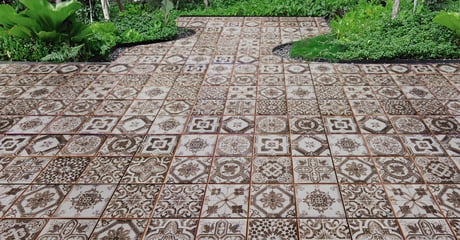
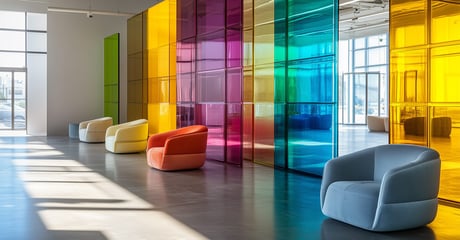
Resistant, versatile and a cost-effective solution, concrete can be used as a long-lasting alternative to any other flooring, whether indoor or outdoor. But if you are thinking of dull grey slabs that look suited to a factory floor or polished concrete flooring that may be ideal for large interior environments, then take a close look at the photograph in this article.

Personalised decorative designs can be achieved for small or large volumes, resulting in impactful flooring for spaces that deserve greater aesthetic value without losing the resistant qualities of concrete.

Diverse techniques for decorating concrete

Concrete has many qualities: durability, versatility, its cost is limited and it offers satisfactory thermal isolation. There are several ways to finish concrete, implementing a polished non-slip surface, making it watertight with epoxy resins, using acid or water-based stains, and industrial digital printing. While monochrome finishes can be achieved on standard finishing machines, a custom design or pattern is easy to obtain using a digital printer. This finishing process is perfect if you need to decorate small surfaces: a patio, a hotel foyer, a school.

CalcestruzzoIMG

Benefits of industrial digital printing

Beyond its ability to generate personalised patterns, imitating marble or natural stones as well as wood is possible. You can also reproduce a digital image such as a photograph or be fully creative and design your own decoration. The coating applied to protect the pattern generated by an inkjet printer will also provide an abrasion-resistant surface and will withstand UV ageing to keep your colours vivid for many years.

Not just flooring

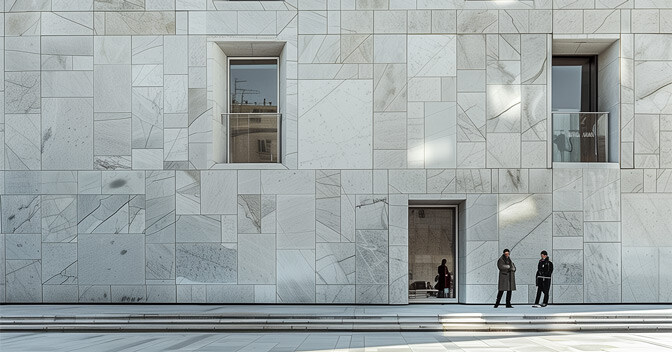
Of course, there is no reason why a concrete panel cannot be used to cover a vertical surface. This means that even interior walls or exterior facades can be decorated and customised using an industrial digital printer.

For more ideas and information on our solutions, contact us and speak to a finishing expert.

Resistant, versatile and a cost-effective solution, concrete can be used as a long-lasting alternative to any other flooring, whether indoor or ...

Article

Coating of thin PMMA sheets: innovative and long-lasting solutions

Coating PMMA (polymethylmethacrylate) is an extremely delicate operation: manufacturers of items made of this material must ensure that the finished product is not only aesthetically pleasing, but also – regardless of its intended use – resistant over time. This is especially true for thin sheets of PMMA - among the most versatile, most in demand items in the marketplace.

What are, then, the best techniques to manage the finishing process of this material, and what technological solutions are available today to help the most demanding manufacturers?

What are the possible finishing options for thin PMMA sheets?

Before going through the range of possible solutions, it is helpful to analyse the main finishes that can be obtained by coating PMMA. Since PMMA sheets are generally used to cover panels, a glossy (or mirror) finish is often required. For specific applications, however, these sheets can also be used with different finishes: from satin to deep matt going through embossed and metallic.

High-gloss and mirror effects are more aesthetically appealing, but over time they are more prone to scratches and chipping. Conversely, satin and matt finishes in particular are better at “hiding” any signs of ageing.

Regardless of the type of finishing chosen, however, the surface of PMMA sheets leaving the factory must be of high quality, resistant and totally free from defects.

THE MOST INNOVATIVE FINISHING SOLUTIONS
Discover how highly advanced finishing solutions can enhance your competitiveness.

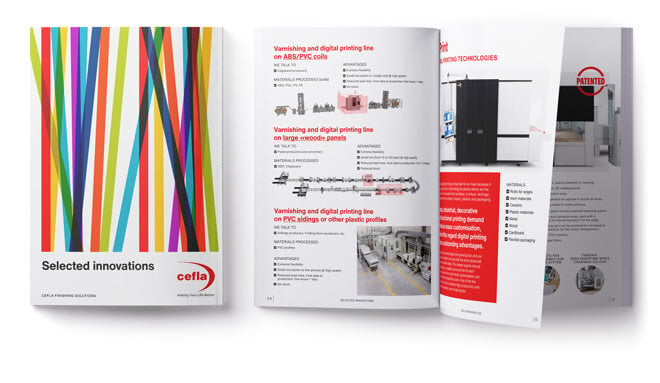
Mockup-SelectedInnovations_ENG-V3

What are the available coating techniques for PMMA?

Although PMMA is generally associated with paint coating, finishing techniques for this material also include printing and lamination. 
Mainly used in the furniture industry, lamination turns sheets of polymethylmethacrylate into thin plates that create a surface effect reminding of bright glazed surfaces.

As for the digital printing process, it allows the back of PMMA sheets to be printed with any desired image which, thanks to the transparency of the material, appears perfectly visible with a charming reflective effect. This technique is often used to give the same visual impression as shiny marble or inlaid wooden floors.

What factors should be considered when choosing a finish?

In order to choose one approach or the other, therefore, a number of factors should be taken into account: aesthetics, durability and budget are primary considerations. Choosing the finishing technique for thin PMMA sheets that best suits your needs means finding each time the right mix of these factors and aiming for solutions that guarantee the right degree of flexibility to always obtain the best possible result in different use conditions.

PMMA coating: How does the application process work?

Created to provide a lasting finish and an appealing surface effect, thin extruded PMMA sheets are, as we mentioned above, semi-processed items particularly delicate when it comes to coating them. This prompted Cefla Finishing to develop a specifically tailored process, which is based on a roller coating machine operating in a controlled and dust-free environment.

Prior to PMMA coating, thorough surface cleaning operations are performed to ensure spotless finishes.

Once this phase has been completed, the sheets are fed into the machine. More specifically, the application unit consists of two rollers (a top roller for coating application, and another roller below the sheets to provide physical support) which firmly act on the PMMA sheets leaving no space for sheet warping. A scraper blade which removes excess lacquer from the lower application roller also contributes to optimising the coating process of such thin sheets.

When a deep matt finish is required, excimer matting technologies not only ensure the best possible result, but are also a “green” option, as they use less nitrogen than standard solutions.

Line integration for a complete solution

In addition to the specially developed roller coating equipment, the line can be completed with pressurised booths including air filtration and conditioning systems to avoid dust pollution and guarantee a controlled processing environment.

After the coating stages, the PMMA sheets can be dried in different ovens. Our UV-I inert curing solution maximises physical resistance and also dramatically reduces the need for photoinitiators, making the process more sustainable and reducing the related costs.

Exydry is a good example: it is an oven designed to process flat surfaces and will ensure a fingerprint -proof, soft-touch, deep matt finish, even on slightly raised panels.

H2 – Tailor-made solutions: which machines are used for PMMA coating?

Cefla Finishing - which has the widest available range of finishing technologies and machines designed to carry out specific processes such as PMMA coating - is now able to offer its customers the first roller coating solution specifically designed to process thin sheets. This is a dedicated line integrating a combined upper application roller and a lower support roller that work in synergy, as well as a cleaning system and a working environment designed to prevent dust pollution.

More specifically, the machinery that can be integrated into an advanced line for PMMA coating includes:

Each machine has specific features for completing the PMMA coating process and can be configured to meet actual requests from customers. However, in the event of even more challenging specific requirements, with tailor-made details to be expected or processing steps that imply customer-specific variables in terms of types of lacquer, production volumes or available space, feel free to visit our Cefla Finishing LAB in Imola or one of our satellite laboratories in China and the United States to identify possible solutions with our Cefla experts.

Contact us to arrange an appointment with Cefla Finishing specialists or run a live test.

LOOKING FOR THE IDEAL COATING LINE SOLUTION?

Coating PMMA (polymethylmethacrylate) is an extremely delicate operation: manufacturers of items made of this material must ensure that the finished ...

Article

Glass processing machinery: a guide to coating

When it comes to finishing processes, glass coating machinery meets a wide range of needs. These needs may be purely aesthetic or functional. And it's on the basis of this distinction that the right choices need to be made, allowing you to build a line that’s consistent with your market goals and the field of use. Glass finishing processes are used in numerous sectors, such as furniture, construction and solar panels.

Glass processing and finishing machinery

At Cefla Finishing, we understand that each case requires solutions with specific characteristics: that’s why we’ve developed a comprehensive glass coating machinery range. By drawing on extensive experience with leading players in several key industries, we’ve created a series of solutions that can easily be integrated with other machines on existing chains. These include all the tools and functions needed to customise the machines and fine-tune procedures that respond to the needs of the specific industry.

Let's look at some of the machines in today’s Cefla range:

CeflaFinishing-PrimaEVO-Glass

Prima Glass: flexible and easy to use

Let’s start with Prima Glass, an automatic spraying machine. An outstanding glass processing solution on account of its extreme flexibility, this machine can apply low or high quantities of materials. Providing the advantages of fast colour changeovers and low coating consumption, it’s also extremely user-friendly, even for inexperienced operators.

R-Multicoater

Multicoater & Glasscoater: high productivity and high precision

The Multicoater & Glasscoater combination provides an integrated roller coating solution that can also give glass a frosted or acid-etched effect; it can also be used to apply coloured coatings to produce spandrel glass. The machine delivers clean post-coating edges and combines uniformity of application with high productivity.

R-Framecoater

Framecoater: ideal for processing frameless panes

Framecoater, instead, is a roller coating machine for processing edges by applying perimeter bands on the pane; again, the machine lets manufacturers obtain perfectly clean post-treatment edges. Used on frameless panes to mask silicone and sealants, it provides the best uniformity of application in its category.

R-Solarcoater

Solarcoater: for those who want an uncompromising finish on anti-reflective glass

For operators in the anti-reflective glass finishing sector who are unwilling to compromise on quality, Cefla Finishing has now created Solarcoater, a specialized nanometric roller coating machine. In addition to providing an anti-reflective effect, the machine can also give the glass an anti-fingerprint and anti-drip effect.

THE MOST INNOVATIVE FINISHING SOLUTIONS
Discover how highly advanced finishing solutions can elevate your competitiveness.

Benefits of using glass finishing machinery

One of the most interesting benefits of Cefla glass processing machinery is the significant improvement in product quality. More specifically, automated systems provide excellent precision and consistency, minimising the human errors that are often responsible for imperfections in the final product and minimising production of industrial waste.

Processes such as polishing, coating and finishing are performed under ideal conditions and according to optimal parameters, ensuring each product meets the strictest quality standards. This not only boosts customer satisfaction: it also reduces the likelihood of product recalls due to defects.

Improved aesthetics

Thanks to even application of the finish, the glass takes on a more elegant, refined appearance, making it easier to match with other materials: a crucial aspect in a multitude of sectors that range from construction to automotive and design.

Greater durability

Applying a specific finishing layer to glass makes it more resistant to scratching, impact and weather while ensuring it maintains (and, in many cases, emphasising) the aesthetic appeal of the original material.

Greater versatility

Glass panes that have undergone meticulous processing can subsequently be used in a broad range of fields, with applications capable of satisfying even the most demanding clients, such as those in the aerospace or photovoltaic sectors.

Lower costs

Automating the glass finishing process ultimately leads to significantly lower costs, especially in the long term. Note also that automated systems minimise manual labour requirements and allow workers to be reallocated to high-added-value tasks.

What’s more, automated machinery works fast and efficiently, raising output rates without sacrificing quality. The outcome is lower energy costs per unit produced and, in many cases, lower raw material requirements. This is because the machinery is able to optimise resource use at each stage of the process.

shutterstock_134916920

Innovations in glass processing machinery

Lastly, it should be remembered that choosing the right glass processing machinery can make innovation the focus of company strategy. Cefla Finishing, for example, continues to develop solutions that meet the needs of companies looking to unleash the full potential of digital printing and 4.0 technology which, thanks to data analysis, allow real-time monitoring and adjustment of the finishing process.

By leveraging advanced solutions such as predictive analytics and material control systems, manufacturers can better predict demand and fine-tune production to reduce excess inventory and waste. This is just one of many advantages on offer.

Choosing Cefla Finishing as a technological partner doesn’t just mean activating a supply contract with an international finishing machine leader: above all, it means implementing an upgrowth strategy that puts innovation, efficiency and sustainability at the forefront of process development.

LOOKING FOR THE IDEAL COATING LINE SOLUTION?

When it comes to finishing processes, glass coating machinery meets a wide range of needs. These needs may be purely aesthetic or functional. And ...

Article

Wooden profile finishing: all the types, all the advantages

Wooden profile finishing is an essential stage of the production process as it confers quality and durability on a range of products that are becoming indispensable in the construction, furnishing and interior design sectors. Hence the increasing number of technologies and methods that can be used to complete this delicate process.

This, of course, means more choice: on the other hand, though, you need the right knowledge and skills to be able to select the tools that best meet your production needs.

The importance of profile finishing

Before looking at the most popular techniques, let's define the aspects that make profile finishing so vital to improving the visual appearance of a product and making it more durable and reliable.

A well-finished product is more attractive to consumers and provides a more satisfying tactile experience: consequently, it can have a significant impact on purchasing decisions. Consistent aesthetics among products, even those belonging to different lines, is essential for building brand identity and the consumers' perception of quality. Moreover, the fact that profile finishing provides scope for customised design should not be disregarded: different coatings and effects can create unique looks that meet individual customers’ preferences.

Meticulous profile finishing protects raw materials from the humidity, UV rays and temperature variations that can, over time, lead to deterioration and damage. This prevents problems such as warping, cracking and fading, increasing product longevity.

Last but not least is the issue of compliance with standards, especially for companies that operate internationally: many markets have clear standards on the finishes used in furniture, especially with regard to volatile organic compound emissions. Suitable finishing processes ensure compliance with such regulations, making products safer for consumers and environment-friendly.

Profile finishing technique types

From sanding to sealing, through coating and drying, there’s a range of technologies for obtaining an optimal finish. Let's examine, one by one, the techniques available on the market, and highlight their specific characteristics, advantages and fields of use.

Profile sanding: the first step towards a perfect finish

To begin with, the main benefit of sanding is its flexibility. To ensure freedom and simplicity of cross-section/size configuration, modern sanding machines feature sanding belt, wheel or brush units.

R-BPS

For example, the BPS range, specifically developed by Cefla Finishing for profile sanding, has two versions - with CNC or manual adjustment - to maximise adaptability to all profiles or panels, even those of limited width.

Vacuum technology for perfect profile sealing

Sealing solutions with vacuum technology are perfect for manufacturers who prioritise process efficiency. The most advanced machines, such as our Talent, deliver almost 100% transfer efficiency by applying a uniform coating with exceptional precision and speed.

Talent-Omega

Incorporating UV lamps allows the machine to perform the necessary curing process and is perfect for treating different substrates and processing wood.

Compatible coatings include water-based products, UV-curable water-based products, 100% UV products and various sealants. Zero overspray minimises coating and sealant waste and allows the machine to coat six sides in a single pass.

Spray coating: flexibility and precision

For those looking for flexibility and precision, in-line spray coating offers an increasingly compelling response. Featuring a system that guarantees continuous processing, our Performa is available in three different configurations to match the customer’s profile conveying system. Numerous spray guns allow the machine to process widths of up to 300 mm and apply pigmented products and water- and solvent-based coatings. This sprayer is also highly suitable for high-speed lines.

R-Performa

Alternatively, Flexispray offers a more economical, more compact solution that’s ideal for facilities with limited floor space. Designed to provide manufacturers who still use manual application with entry-level automation, it can finish items up to 240 mm wide (in certain conditions up to 300 mm) with up to six spray guns.

Profile drying: energy efficiency with the transverse kiln

Lastly, companies eager to achieve high energy efficiency can focus on optimising their drying technique. In this case, profile finishing is performed by machines able to dry coatings applied on low-width profiles or panels. For its most demanding customers, Cefla Finishing offers the Cross Oven, a modular solution that treats water- or solvent-based coatings by way of an insulated structure that makes the oven extremely effective and efficient.

R-CrossOven

Profile finishing: why choose Cefla Finishing?

60 years’ experience in the design and construction of automatic systems makes Cefla Finishing the perfect profile finishing partner, able to build innovative solutions around the customer’s individual needs.

Indeed, we provide customers not only with an expert team of specialists capable of identifying the right technology for the task at hand: we also work to ensure seamless integration of new machines into existing processes. After assessing product, needs and business goals, we work closely with customers to define a plant development roadmap that can also include preliminarily plant testing at one of the Cefla Finishing labs.

So all that remains is to put us to the test. Contact us and find out which profile finishing solutions will help you boost your line performance! 

LOOKING FOR THE IDEAL COATING LINE SOLUTION?

Wooden profile finishing is an essential stage of the production process as it confers quality and durability on a range of products that are ...

Article

Eyeglass coating: plastic finishing solutions and much more

Everyone involved in eyeglass coating knows perfectly well that it is, perhaps, the most decisive process when it comes to giving the final product aesthetic appeal. Design and materials are certainly crucial when it comes to building a good frame. However, vibrant colours, high-quality finishes and the right ‘feel’ are equally decisive factors, leading consumers to choose products that will match their own look and, possibly, improve it.

In other words, aesthetics are as important as the practical, protective characteristics provided by the coating process.

The major brands are well aware of this: that’s why they’re always looking for partners who can guarantee an optimal approach to eyeglass coating, minimising costs but without ever compromising on quality.

This article explores the main coating techniques used on plastic eyeglasses (and those made of other materials). It also illustrates how Cefla Finishing - by drawing on decades of experience and constantly striving to improve the efficiency and performance of finishing lines - has succeeded in designing an advanced system with customisable configurations.

ComplexGeometries#1-Mockup

Want to discover the universe of objects with complex geometric shapes that are coated with Cefla Finishing equipment?


The main eyeglass coating techniques

First of all, note that different techniques can be used to treat these semi-finished products, whether they be complete frames or individual components. However, if the goal is to achieve premium-level quality, it’s essential that plastic eyeglass coating be performed inside a pressurized area that is sealed off from the external environment.

In many cases it’s preferable to use a liquid coating as it allows fast drying, even at relatively low temperatures. Not only that, it ensures impeccable output on any type of material, guaranteeing a broad range of aesthetic results, from RAL colours and metallic/iridescent effects to soft-touch finishes.

Sunglass_pistole10

Liquid coating is usually applied by spraying. This can be done using machines or by way of manual techniques, depending on the type of product being made.

Regardless of the type of process, the coating will have to be dried. For this reason, semi-finished products need to be placed, in series, in one or more ovens before proceeding to the next stage, which usually consists of polishing.

How to maximise eyeglass coating process flexibility (on plastic or other materials)

These are the most popular methods when it comes to plastic eyeglass coating: traditional approaches that have pros and cons, to be carefully assessed before starting up a finishing line. And then there's the Cefla Finishing approach, which has resulted in the development of an integrated solution that combines productivity, efficiency and precision.

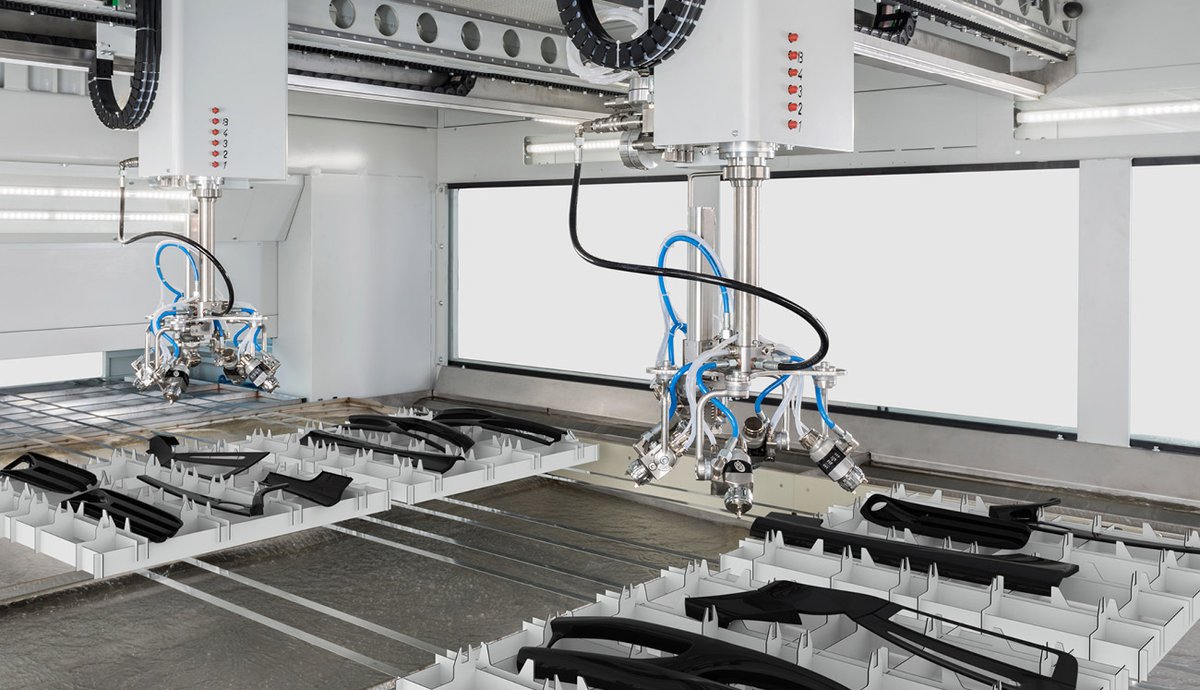
On the Cefla-designed line, in fact, the various eyeglass components are attached to a rotating support. This is positioned underneath a series of spray guns, which coat them at high speed while any overspray is controlled and minimised using water filtration. The ability to configure the machines according to specific finishing requirements ensures coating is performed efficiently without having to program special trajectories.

RENDER-Linea-Occhiali-2

All this takes place inside a pressurized, air-conditioned zone, ensuring the correct ambient conditions for the process in use. The system can also rapidly be adapted to different types of coatings. Moreover, simplified format changeover procedures guarantee greater flexibility.

By leveraging an integrated, fully automatic system, this approach improves energy/raw material management and delivers high-quality coating.

Which machines are used to coat eyeglasses? Building a high-performance line

The line designed by Cefla Finishing includes highly specialised machines. These are designed to simplify control of every step in the coating process, for eyeglasses or other objects of complex shape.

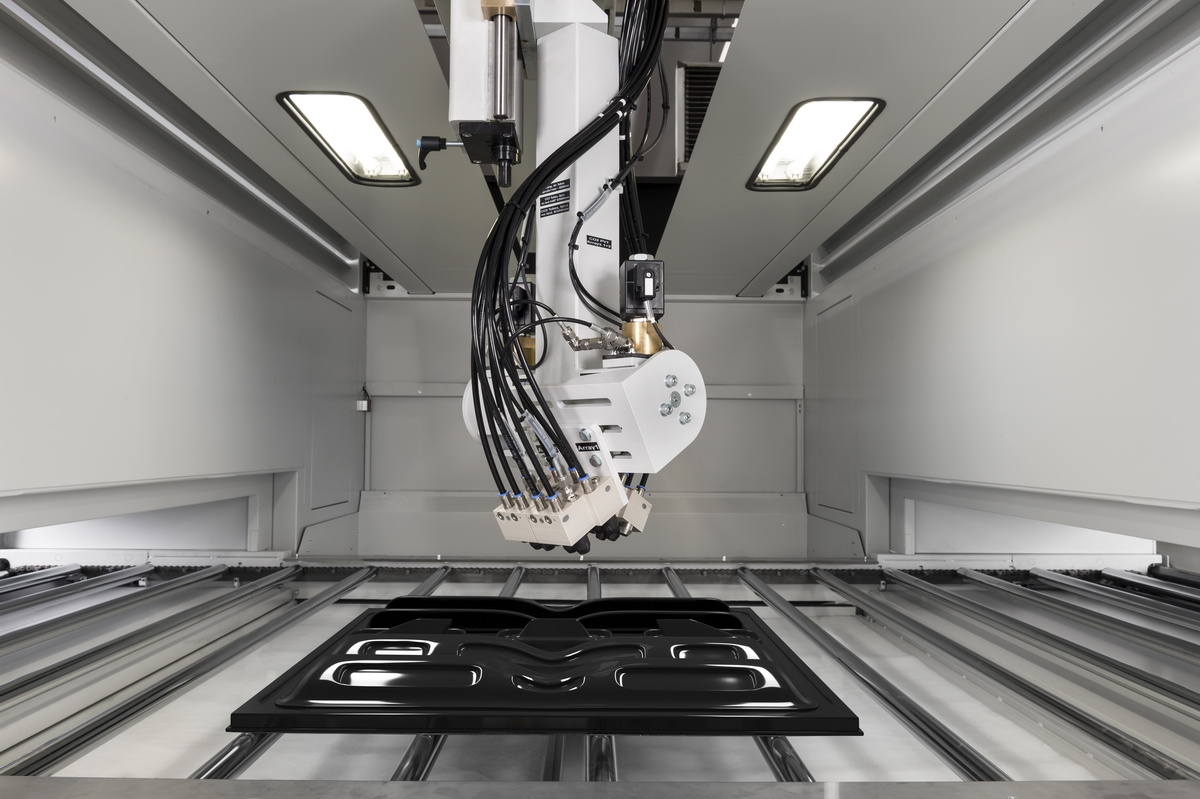
Let’s begin with iBotic, the one- or two-arm Cartesian spraying robot with interpolated axes that’s perfect for high output capacities and maximum quality. This machine stands out for its capacity to simultaneously process pieces of different shape and thickness, with the conveyor either at standstill or on the move, in tracking mode. Lastly, the passage in the oven features Aquadry technology, a combined in-line system that merges the effectiveness of high-speed hot air with the high radiant capacity of infra-red lamps. This is the most efficient acrylic coating drying method as it requires less time to evaporate the water contained in the coatings.

Cefla Finishing and tailor-made solutions to coat plastic eyeglasses and other items

The above is just one example of the potential of a dedicated metal and plastic eyeglass coating line. Thanks also to a vast selection of finishing solutions and a 3000 m2 lab facility where customers can engage in hands-on experimentation and development of customised equipment, Cefla Finishing is able to adapt each process technology to most of the market’s specific needs.

By leveraging a constantly-evolving machine range, it’s possible to use in-depth technological integration to optimise not just the coating of eyeglasses but also the finishing of wooden furnishing accessories, helmets, musical instruments, solar panels, car dashboards and ceramic slabs. In other words, the opportunities are practically limitless: all you need to do is contact one of our experts and come and see how the Cefla range can help you take your business to the next level!

LOOKING FOR THE IDEAL SOLUTION FOR YOUR COATING LINE?

Everyone involved in eyeglass coating knows perfectly well that it is, perhaps, the most decisive process when it comes to giving the final product ...

Article

How to decrease production costs in the manufacturing industry

The manufacturing world is currently investigating ways to decrease production costs and increase productivity. The integration of automation technologies has helped the industry gradually evolve over the past few decades, with the introduction of sensors and robotic technology reducing the number of human workers needed on production lines. A Moody's survey on the margins of 24 industrial giants with credit ratings of A or higher found that the average margin (before interest, taxes, depreciation and amortisation) had risen to 16.4% last year, up from 13.1% in 2013, a result achieved through targeted actions in the field of automation.

Today, however, the pace at which this transformation is occurring is accelerating, and radical changes in the way in which manufacturing plants operate are expected by the end of the decade. This is revealed by a McKinsey report. The consulting firm estimates that the industrial automation market will be globally worth 115 billion dollars (around 108 billion euro) by 2025, with a very fast growth in the segment of cloud-based software and industrial Internet of Things (IIoT)
platforms.  

What are production costs?

More specifically, what are the production processes that could be the targets of an industrial automation strategy aimed at reducing the spending? To understand how to reduce production costs, it is first of all necessary to clarify the difference between fixed costs and variable costs.

Fixed costs do not depend on production volumes - in other words, they remain constant regardless of the quantity produced and include, for example, the rent of facilities, the salaries of employees, utilities, insurance, taxes and so on.

Variable costs, on the other hand, rise and fall as a function of the production volume. In manufacturing, variable costs include raw materials, overtime, sales commissions, transportation, and the efficiency of production processes.

And it is precisely on this last aspect that we should focus in order to obtain the greatest benefits from the introduction of innovative technologies. 
We at Cefla Finishing are well aware of this, and this is why we continue to make the most of the experience gained in various segments of the manufacturing sector, in order to develop ultra-efficient finishing lines, chosen by companies world-wide to cut the costs related to some of the most delicate phases of the production process. You can find some real-life examples in our Case Studies.

THE MOST INNOVATIVE FINISHING SOLUTIONS
Discover how highly advanced finishing solutions can elevate your competitiveness.

Obviously, by investing in technology and innovation. Basically, there are four lines of action that we follow to help companies determine how to reduce production costs. Our solutions aim to:

  • how to reduce production costs. 
  • optimise production processes;
  • reduce waste;
  • increase the efficiency of the systems;
  • encourage the introduction of innovative technologies that act as catalysts for these objectives.
ordinarydesigner_industrial_plant._professional_photo._sustaina_67c4c054-c4f1-471b-acca-2b058da9f8c8

Optimise production processes

Naturally, every company that is wondering how to cut production costs must evaluate its own specific needs: the automation process should be gradual and personalised, including, for example, the introduction of machinery that can help the transition from manual operations to entirely software-managed production cycles. The implementation of semi-automated processes, with lines that minimise labour requirements, is one of the ways to make such a radical change less impacting.

Our oscillating spray coater with one or two arms Prima EVO perfectly embodies this line of thinking: it can be used as a stand-alone machine, not requiring the installation of complex systems, and managed by one or two operators for manual loading and unloading of the work pieces. But it can also be easily integrated into complete and higher-output lines.

Reduce waste

A solution like Prima EVO also allows actions to be taken in other specific areas which are critically conducive to reducing variable costs. We are referring to improved control of the materials used, with a consequent reduction of waste, especially as far as lacquer is concerned: by optimising the amount of consumables necessary to complete finishing operations, this machine allows significant savings to be obtained as early as in the medium term, with a fast return on investment. To reduce energy costs, we suggest the adoption of low-consumption techniques applied to machinery such as our UV oven UV-R. It is a compact, versatile and efficient plug & play solution, which can be easily integrated into complex finishing lines, too.  

Increase system efficiency

Optimising production processes and reducing waste is of little use if the overall efficiency of the system cannot be improved. Precisely with this in mind, at the latest edition of the Ligna show in Hannover we launched a range of solutions that help companies to carry out colour changes without having to stop production. Managed by a special software and a system which controls the equipment’s mixing valves, colour changeover requires less than 30 seconds compared to the standard 2 to 3 minutes usually needed today.

In particular, the FCS (Fast Color Switch) system installed on our Easy spray coater aroused considerable interest: visitors discovered that, if standard work shifts and colour changes are considered, FCS is able to reduce downtime by at least 30 minutes per day. This translates into a productivity increase of 2-3 hours per week.

The advantages of technology and innovation

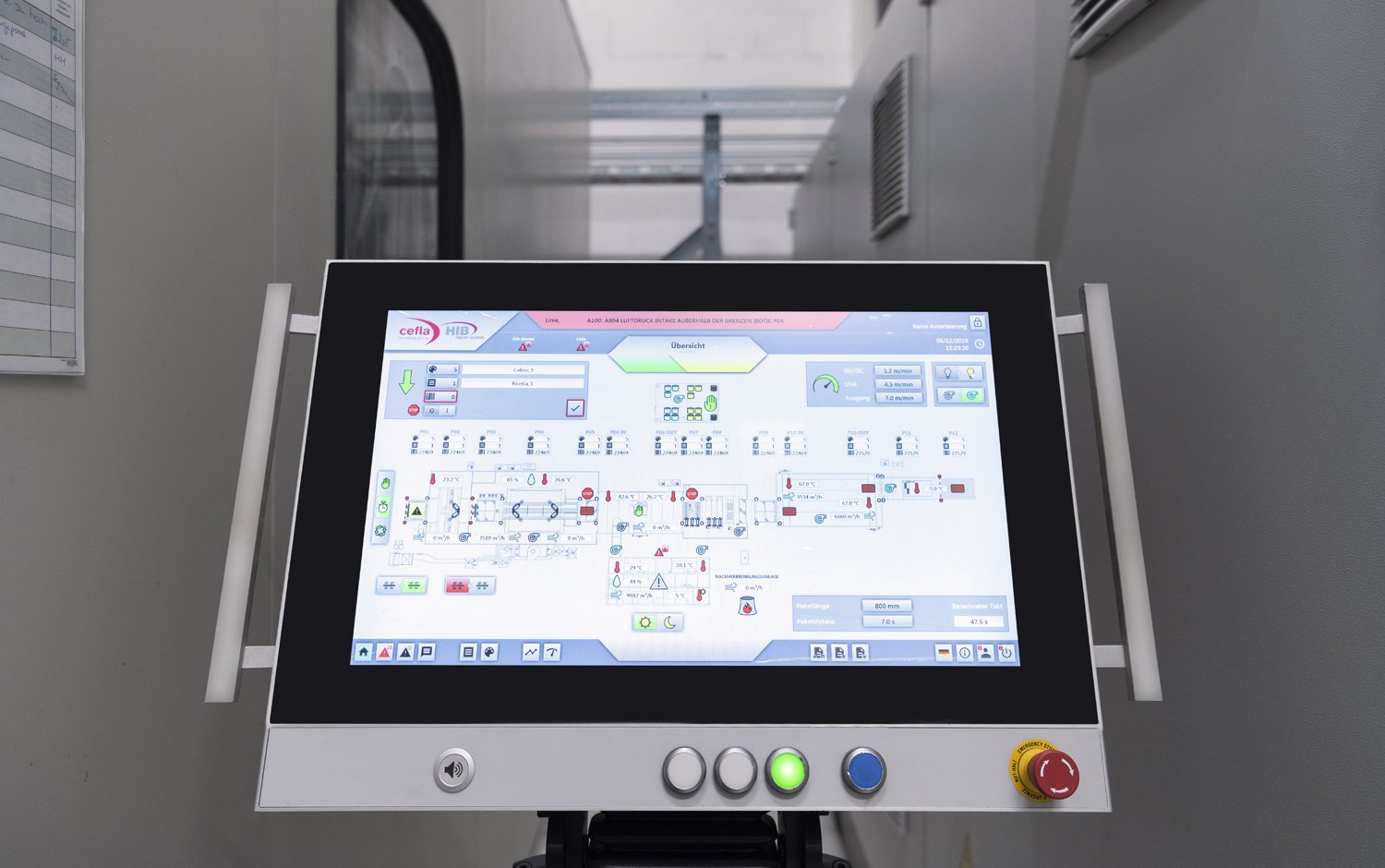
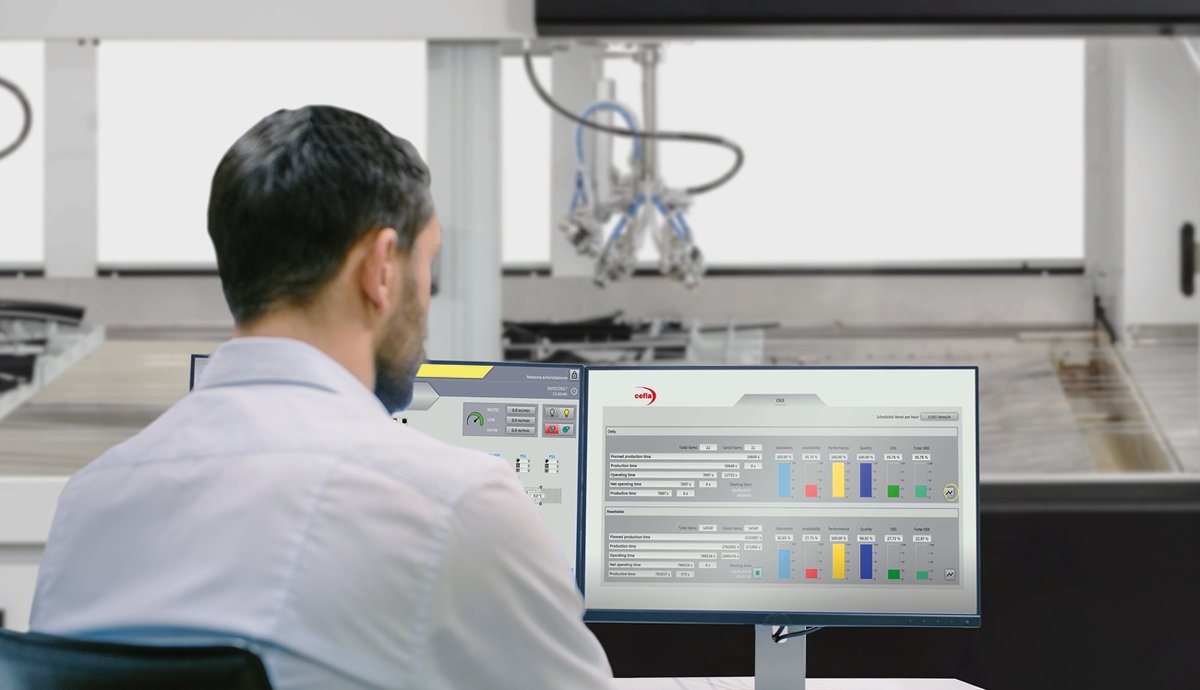
The real advantages of Industry 4.0 and 5.0, however, derive from the integration of these platforms into IoT ecosystems: our software and connectivity solutions allow to not only evaluate and enhance production performance but also work without having to stop any processes and even by receiving remote support in case of slowdowns or bottlenecks.

Leveraging this expertise, we have created a complete package of services – called for good reason Ubiquo – which combines applications for machine monitoring, technical service and consultancy, available both on site and remotely. A combination of solutions spanning the physical, digital and virtual worlds, designed to continuously maximise the productivity of Cefla lines wherever they are located.

Cefla Finishing_Panoramica LAB_19-02-2020_001-1

A laboratory to experiment with and reduce production costs

For us, moving from theory to practice means asking our customers to experience these and many other solutions first-hand at our Cefla Finishing Lab: a proper technological hub where over one hundred Cefla Finishing machines can be seen in operation and entire processes and production lines can be created and tested, sharing experiences, business objectives and new opportunities to meet specific needs. And there's more: visiting our Cefla Finishing Lab also means having a chance to identify the most suitable configuration parameters for specific cases and calculating the ROI after the investments made to support 4.0- and 5.0-oriented process evolution. 

So what are you waiting for? If you are wondering how to cut the production costs of your manufacturing company, come and find out all about the ideal machinery and services for your business: you will be able to explore all the innovative features developed by Cefla Finishing, and evaluate and customise each solution with the help of experts.

LOOKING FOR THE IDEAL SOLUTION FOR YOUR COATING LINE?

The manufacturing world is currently investigating ways to decrease production costs and increase productivity. The integration of automation ...

Load more articles

Articles: 24 / 157