Article

STEEL FOR ART: CROMATICA

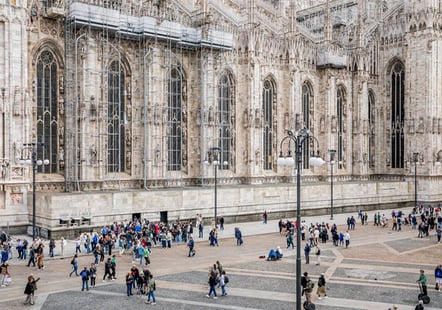
Creating a perfect synergy between history, art and innovation, CROMATICA - Marcegaglia Steel, Marcegaglia Buildtech and Veneranda Fabbrica del Duomo have given life to an extraordinary project: 

the customisation of the permanent panelling envelope built to allow ordinary maintenance of the Milan Cathedral. This project added value to a functional space - as a genuine tribute to the timeless beauty of the most iconic cathedral in Italy.

As stated by Andrea Brotini, Sales Director of CROMATICA,
«We are faced with a project that enhances the beauty of the Milan Cathedral. Thanks to the CROMATICA panels, every detail of the historic marble used for the Duomo façade comes to life before your very eyes: technology is put at the service of art to create something unique.»

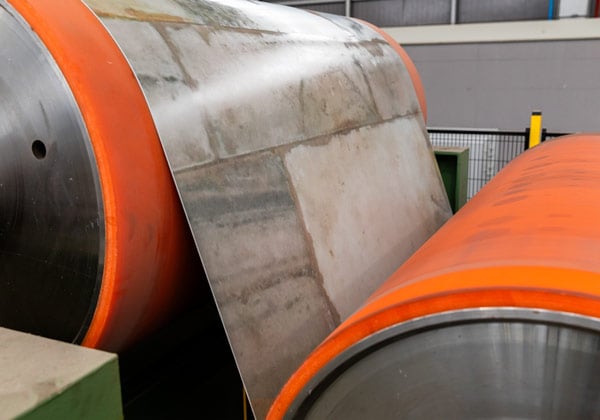
The project required the creation, at the Ravenna-based Marcegaglia factory, of 80 panels printed to become perfectly camouflaged with the wall of the Cathedral. In the words of Antonio Bonoli, Director of Coil Coating Production Marcegaglia, «The Milan Cathedral site has finally given us the opportunity to put into practice what we had thought, planned and dreamed up until then».

CromaticaMilano-IMG-2

Each panel was the result of a thorough study of the Cathedral architecture, of a faithful photographic reproduction of the technical drawings and of synergistic work involving all the players concerned. «The project began when a photoplan of the Cathedral façade was received. By using high-precision graphics tools, we divided the entire façade into smaller portions and we made samples to identify the most appropriate colour shade for the implementation of the project",explains Alessandro Borromeo, QA/QC Engineer of Marcegaglia Buildtech.

CromaticaMilano-IMG-3

With this innovative approach, CROMATICA and Marcegaglia Buildtech responded primarily to a functional need for durability and resistance to weathering. At the same time, they responded to another requirement of an aesthetic nature: to maintain the visual integrity of the Cathedral. «The Cathedral has always had temporary structures at its feet to contain and store the equipment and materials necessary for the daily maintenance of the building. – says Francesco Canali, an engineer who is the Site Director of Veneranda Fabbrica del Duomo– Making the most of a photographic reproduction of the Cathedral's façade, obtained thanks to the innovative technology made available by CROMATICA - Marcegaglia Steel, today we are able to upgrade this extremely important structure".

This project is an excellent example of how a partnership between cutting-edge companies and historic institutions can effectively lead to the enhancement of our cultural heritage and of how, in the words of Salvatore Pisani, Marketing Director of CROMATICA , «even steel has unlimited creative potential, which can be rolled out to other artistic applications to make the world a more beautiful place.»

Creating a perfect synergy between history, art and innovation, CROMATICA - Marcegaglia Steel, Marcegaglia Buildtech and Veneranda Fabbrica del Duomo ...

Article

Industrial Energy Efficiency: the key is in the finish

 
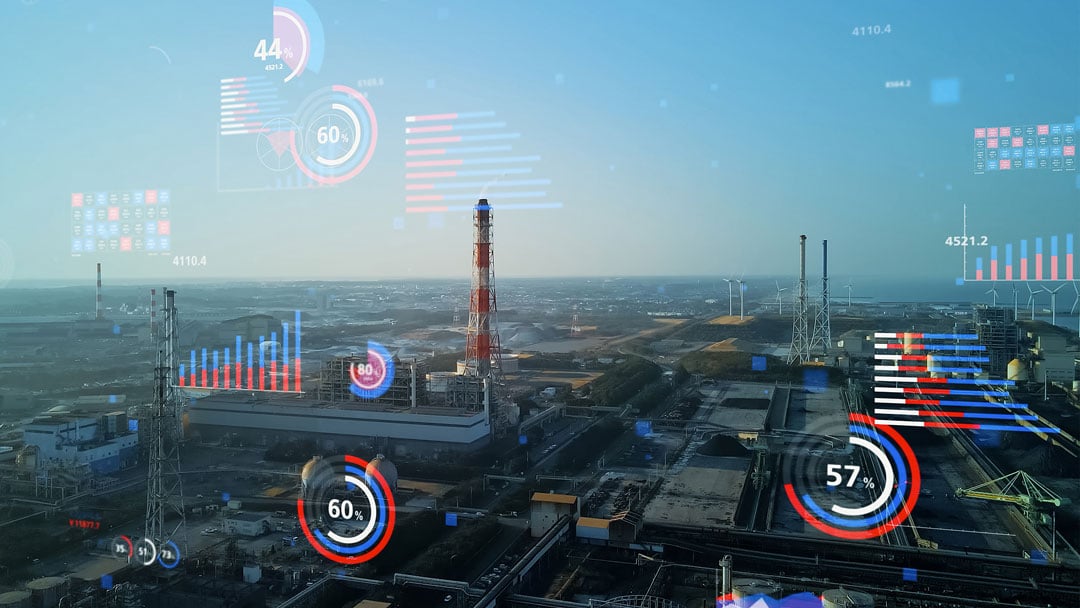
In the current industrial setting, energy efficiency has emerged as a priority in sustainable development policies.
This fact is highlighted by the Energy Efficiency Report 2023, which shows that Italy invested around 12.79 billion euros in energy efficiency in 2022. Out of this amount, 2.19 billion were allocated to the industrial sector, an increase of 13.8% compared to the previous year.
 
While this growth reflects a welcome post-pandemic recovery, the importance of pushing ahead with the adoption of innovative solutions in order to reach the 2030 energy efficiency targets cannot be overstated.
 
In this context, advanced finishing technologies have a key role to play in modernising industry. This is because they allow companies to improve their market position and comply with standards while, crucially, embracing more sustainable manufacturing practices. Cefla Finishing is a leading developer of such technologies, which not only respond to the burgeoning demand for efficiency and lessened environmental impact but also open up new opportunities for innovation and competitiveness in a range of sectors.
 
 
THE MOST INNOVATIVE FINISHING SOLUTIONS
It doesn't matter which industry you’re in: if you want to lead it, these solutions are a must.
 

Industrial energy efficiency: innovative Cefla finishing solutions can make a huge difference

Finishing processes are applied on a vast range of products: from sunglasses to saucepans, from furniture to cars. Innovative finishing techniques don't only allow companies in numerous sectors to improve their market position, respond to increasingly stringent regulations and boost profits: they also let entire industries embrace more sustainable techniques and lower their environmental impact.
 
IMG-EfficienzaEnergetica-1080x607-1
At Cefla Finishing we develop new technologies to address the energy efficiency and sustainability challenges facing manufacturing companies all over the world. We belong to an international multi-business group with 1,900 employees worldwide: the group’s mission is to create value over time via solutions that combine performance and sustainability, business- and environmental-friendliness, productivity and quality.
 
Our finishing solutions are employed in all kinds of fields, from the furniture industry to construction, from automotive to aerospace, from durable goods to packaging. These cutting-edge techniques are applicable on any type of product or surface: wood and its derivatives, glass, plastic, fibre cement, ceramic, composite materials and metal. 

Our solutions include integrated lines, stand-alone machines, industrial digital printers, plus service packages and software solutions that help companies achieve their business goals by making full use of technological innovation and unmatched finishing expertise

Finishing solutions to raise energy efficiency and productivity

The market is always evolving. Trends change all the time, as do requests from end users and the brands that delegate production. However, there’s one increasingly crucial aspect that promises to be a constant in the future: process sustainability, both in terms of economic performance and environmental impact. 
 
IMG-EfficienzaEnergetica-1080x607-2
From this perspective, cutting-edge finishing solutions offer tools that can radically transform the futures of countless companies worldwide while having a positive impact on the broader socio-economic fabric. Cefla Finishing solutions stand out for their capacity to optimise energy and production efficiency, reduce downtimes and enhance operational flexibility. Let's look at some of the most significant technologies for raising industrial efficiency.

FCS (Fast Colour Switch) system

Implemented on the Easy oscillating spray coater, the revolutionary FCS system drastically reduces colour changeover times to less than 30 seconds, as opposed to the 150-180 seconds that traditional methods require. This means significant savings in terms of time - up to 30 minutes a day or 2-3 hours a week - and energy.

Advanced Matt Finishes

Matt finishes provide added value in terms of surface durability and sustainability. Using UV products/coatings and excimer ovens with low nitrogen consumption such as the Exydry-Z, manufacturers can create super-matt finishes with soft-touch, anti-scratch and anti-fingerprint effects that are sustainable and in great demand.

Roller coating also for shaped panels

Smartcoater PRO is an ingenious roller coating machine designed to reduce coating consumption and improve energy efficiency. Finishing shaped panels would normally require greater quantities of spray-applied coating. Equipped with a soft rubber applicator roller, Smartcoater PRO can flawlessly manage panels with grooves of up to 10 mm, lowering coating consumption, reducing the required number of handling tasks and getting the product to market faster.

Technologies that reduce machine downtime

The iBotic Cartesian interpolated-axes spraying robot, with one or two arms, is just one of several solutions that reduce machine downtimes. Featuring the TIMESKIP device, iBotic enables fast, seamless colour changeovers. While one robot arm continues spraying, the other moves to a zone dedicated to colour changeovers, ensuring zero downtime. This makes it an ideal tool for achieving energy sustainability and company profitability in countless sectors.

Industrial Digital Printing

Industrial digital printing is a cutting-edge technology that’s gaining ground in a vast range of industries. It provides manufacturers with huge scope for customisation, lets them produce small batches sustainably and reduces production and energy costs significantly. CROMATICA offers a perfect example: this latest technological innovation from the Marcegaglia Group is revolutionizing the use of pre-painted metal in the construction industry.I

Industrial energy efficiency: how to rise to the challenge?

In conclusion, the challenges concerning industrial energy efficiency require commitment and targeted investment in ground-breaking technologies. Addressing this change is not merely a question of improving productivity and sustainability. It also gives companies a valuable opportunity to stand out on the market and effectively respond to the growing demand for environmental responsibility. 

The perfect innovation partner will be one that offers not just state-of-the-art solutions to achieve goals but one that also provides continuous assistance, training and targeted services. This approach ensures that the introduction of new technology will create a lasting competitive advantage. It means industry can build a successful future where energy efficiency and sustainability go hand in hand with business growth and innovation.

With an international network of finishing experts sharing skills in a vast range of industries, we’re a hive of technological excellence, a trusted supplier and a partner ready to help you achieve your energy efficiency and business goals.
 
 
ARE YOU LOOKING FOR THE IDEAL SOLUTION FOR YOUR PAINTING LINE?


In the current industrial setting, energy efficiency has emerged as a priority in sustainable development policies. This fact is highlighted by the ...

Article

Cabinet door coating: what’s the best coating cycle?

 
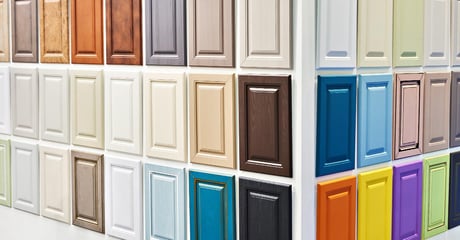
Cabinet doors may seem like simple products to finish; however, they demand a suitable process that ensures good final quality and, above all, a level of manufacturing efficiency that lets companies in the furniture industry enjoy sufficient margins. Certain distinctions also need to be made: flat panels and raised panels require different finishing techniques.


How to coat flat cabinet doors?

Cabinet door coating requires meticulous preparation and careful selection of the coating application method. The process typically begins with edge finishing, using advanced technologies such as vacuum coating, followed by coating of the panel surface. Depending on the specific requirements of the doors and their thickness, manufacturers can adopt roller, spray or hybrid coating techniques. However, for thinner doors, it’s possible to proceed directly with spray coating using automated systems such as iBotic, which also features a spray gun specifically designed for edge finishing.

IMG-Antine-1080x607-1

Edge finishing

Edge finishing is a crucial stage as it ensures doors have an impeccable appearance and long-lasting protection. This process begins with thorough sanding of the edge to prepare it for application of the primer and subsequent coatings. Cefla Finishing machines such as Smartedge allow for the application of primer and coatings in vacuum mode, ensuring even coverage. Each coating application is followed by controlled drying, which involves semi-curing in a UV oven. Summing up, the steps are:
  • Sanding: sanding the edge is the first step. This ensures proper preparation before application of the primer and edge finishes. Abrasive wheels or belts can be used.
  • Primer application: the primer is applied on the edge using roller or vacuum systems such as Smartedge, the Cefla Finishing solution for edge sanding and coating. 
  • Coating applications: this involves two or more vacuum applications of transparent or pigmented UV coating, using a total of 180 g/m2 of product. Each application is followed by a gelling or UV drying process.
  • Drying: after each coating application, a semi-curing process takes place in a UV oven; for pigmented products a gallium lamp is used. 
  • Sanding: the process ends with automatic sanding of undercoats using a sanding wheel or belt. 

Spray coating

After vacuum-technology edge finishing, the panels are spray-coated. The process stages are:
  • Spray coating: application of a quantity of primer suitable for the type and density of the substrate. This is achieved using a sprayer such as iBotic, the high-capacity Cartesian spraying robot; iBotic can also process J-Pull profiles and standard flat panels. The robot can spray both flat surfaces and edges, obtaining a high-quality finish. 
  • Drying: the doors are then dried completely in a vertical oven. Omnidry is a flexible vertical oven: with its optional FLEXPRO function, it can automatically process pieces of different size and/or thickness.

Hybrid coating

Depending on specific production requirements, manufacturers can adopt a hybrid coating cycle that combines the best available technologies. Edges can be finished with Smartedge before coating the panel with Smartcoater Pro. Where doors have contouring, the latter can be equipped with a soft roller. Subsequently, a high-quality finish can be achieved by spray coating with robot systems such as iBotic or oscillating systems such as Easy or Mito. This hybrid approach provides the advantages of both technologies, ensuring excellent results on edges and flat or raised surfaces.

Raised cabinet door coating

IMG-Antine-1080x607-2

Let's take a detailed look at how to coat cabinet doors (for kitchens or other rooms) if they are raised. Raised panels are often spray-coated. This is because, until recently, roller coating technology was unsuitable for raised doors. However, roller coating has evolved and can now be used on raised panels such as kitchen cupboard doors, or any substrate with a groove shallower than 10 mm.

Smartcoater PRO is a roller machine equipped with a soft rubber applicator roller. This special roller not only performs the intended task: combined with other exclusive features on this next-gen machine, it also guarantees an even result.

Such features include a special stabilising framework for the application head that uses 4 screw jacks. This set-up exerts considerable pressure on the panels passing over the machine and, thanks to the floating pneumatic system (another exclusive feature that can be integrated into Smartcoater PRO), the applicator head follows the irregular contours of the panel; it also compensates for panels that have been insufficiently calibrated.

The raised cabinet door coating steps can be summed up as follows:

  • Primer application: (35 g/m2) using Smartcoater PRO.
  • Drying: in UV ovens with a gallium lamp for gelling.
  • Roller coating: again, using Smartcoater PRO.
  • Second drying: carried out under 2 gallium and mercury lamps.
  • Sanding.
  • Spray coating: to apply the final finishing layer, using spray-coating machines such as Mito or iBotic. 

The advantages of coating cabinet doors with Smartcoater PRO

Coating raised panel surfaces with a machine that has a soft roller offers multiple advantages:
  • transfer is more efficient that with spray-coating.
  • the process no longer requires sanding between undercoats.
  • fewer handling tasks.
  • all this results in shorter coating times.

The process also guarantees lower costs and higher speeds:
  • less coating and solvent consumption.
  • shorter delivery times.
 
READ ALSO: The advantages of the new soft roller

The perfect cabinet door coating partner

In conclusion, coating cabinet doors is a crucial stage of the finishing process as it significantly affects the quality, appearance and durability of the final product.
At Cefla, we’re proud to offer not just machines but complete turnkey solutions, tailored to the specific needs of each customer. Our goal is to provide furniture companies with close support, helping them set up production lines in a way that best matches their processes so they can maximise efficiency and deliver excellent finishes.

Talk to one of our experts to find out how we can help you achieve your goals


Cabinet doors may seem like simple products to finish; however, they demand a suitable process that ensures good final quality and, above all, a ...

Article

Events 2024: a journey into the Cefla finishing world

2024: a year of events with Cefla Finishing

A new season of finishing industry events is just around the corner: it's time to get ready to discover the latest technologies and seek out new partnership opportunities.

Don't miss the key international events for wood and other sectors. We’ll be showcasing innovative finishing solutions by Cefla Finishing: you’ll have a valuable opportunity to discuss the different technologies with our experts and learn about the customised solutions that can benefit your business.

Where and when to get a close look at Cefla Finishing technologies

February 2024

From 22 to 26 February, we’ll be at Indiawood (hall 4 - booth nr. L107), in Bangalore, India: the 13th international furniture manufacturing and woodworking technology fair. A not-to-be-missed opportunity to discover automated wood finishing solutions, suitable for companies small and large.

March 2024

March will be an event-packed month. From 5 to 7 March, we’ll be in Dubai to take part in Woodshow Dubai (booth nr. A-21), the number one Middle East exhibition for the furniture and woodworking machinery industry.

From 19 to 22 March the city of Nuremberg is hosting Fensterbau Frontale (hall 3 - booth nr. 3-417): the world’s leading window, door and façade event. A unique opportunity to check out the finishing and coating solutions provided by our Cefla Finishing and Düspohl brands.

From 28 to 31 March, instead, we’ll be moving eastwards to China to attend CIFM Guangzhou (hall 11.1 - booth D38), the 53rd international Chinese furniture fair, to be held in the city of Canton (Guangzhou).

April 2024

From 9th to 12th April we’ll be showcasing our innovative technologies at Paintexpo, in Karlsruhe, Germany (hall 3 - booth 3530). This event is the biggest international fair for industrial coating technologies.

From 17 to 19 April, our technologies will be taking center stage at CeflaLive Charlotte: three intensive days of educational seminars and live demonstrations at our US headquarters. This year, we’ll focus on cost-effectiveness and time-saving automation, highlighting our latest innovations and state-of-the-art solutions.

May 2024

From 14 to 17 May, we look forward to seeing you in Valencia, Spain, at the international Fimma + Maderalia event (Nivel 2 Pabellón 2 Stand B23). This European fair showcases materials, technologies, components, machinery and tools for furniture, carpentry, interior design and contract projects.

July 2024

From 2 to 5 July we’ll be exhibiting at the 10th edition of the international Formobile fair (booth nr. H080), in Sao Paulo, Brazil: the event will make the city the hub for all the latest innovations in the Latin American furniture industry. 

August 2024

From 6 to 9 August, we’ll be exhibiting at IWF in Atlanta, Georgia (Hall B, Booth #6773) in the United States. The International Woodworking Fair is a top-priority event that lets you explore all the latest Cefla Finishing innovations and other new technology in the woodworking sector.

October 2024

If you’re interested in metal finishing solutions, don't miss FabTech. The biggest international metalworking, welding and finishing event, to be held from 15 to 17 October in Orlando, USA. We’ll be on the stand set up by our partner FAMIS

Plan your journey towards finishing excellence

Now that you know about all the events, you can trace a path towards a fully innovative finishing line:

  • Practical solutions that let you switch from manual to automatic coating, with higher productivity and consistent quality
  • Solutions to maximize line availability, even with frequent colour changeovers
  • Simplify process control with Industry 4.0 software
  • Manage small batches and change colour frequently without ever stopping the machines
  • Solutions to process shaped panels on a roller coating machine, save space and reduce handling requirements
  • Techniques for combining panel edge and surface coating using a single technology
  • Wrapping and coating solutions for disassembled and assembled windows
  • Solutions to maximise customisation and manufacturing flexibility by making use of digital printing and much more.

Come and meet us in person. We’ll guide you through the key stages, illustrating the solutions we’ve developed to ensure you can successfully respond to market needs. 

Talk to one of our experts to learn more.

A new season of finishing industry events is just around the corner: it's time to get ready to discover the latest technologies and seek out new ...

Article

Saving time and physical effort for better results

Certain products are still coated manually because of their inconvenient shapes or because they won’t fit easily onto a standard line. Or simply because they have always been coated manually, so the manufacturer never thinks to search for an alternative solution.

That’s why we are proactive when faced by a request to increase productivity, limit the amount of handling operations made by the operator and improve coating consistency. Our solutions especially through automation as the logical evolution to manual spray coating.

AwkwardShapes

Table legs, stairs, unassembled chairs and loudspeakers

Some products are sprayed manually, moved manually to drying booths and spend more time than necessary in production before reaching the market. Not only is time an issue, but also the physical effort needed to sustain the manual process.

Automation provides an answer by speeding up the process, ensuring quality is consistent and allowing qualified staff to dedicate time to more important tasks.

An overhead line built to handle such pieces can deal with several units at a time, 10 or 20 fixed to a transporting bar. A reciprocating overhead spray coater fitted with a whirling cup device for electrostatic atomisation ensures excellent coating quality, above all consistent, piece after piece. This reduces handling operations and maximises productivity. Automatic rotation of the pieces speeds up the coating stage, optimised by the enveloping effect of the atomised spray, which also significantly reduces lacquer consumption and saves related costs.

Pieces will then be transferred automatically to a drying oven using controlled hot air ventilation for the precise time needed to complete the surface enhancement process.

Table-1

Each product deserves a personalised approach

Not every product is the same. Our approach will examine the variables in the product (shape, weight, substrate) and take into consideration your targets (budget, productivity, quality). The resulting line concept, moving you from a manual process to automation, will also be designed to ensure maximum sustainability, based on standard technologies and customised to your specific needs.

Contact us and discuss your needs with a finishing expert.

Certain products are still coated manually because of their inconvenient shapes or because they won’t fit easily onto a standard line. Or simply ...

Article

Suspended ceiling tiles: finishing technologies


Suspended ceiling tiles: finishing technologies

In the construction industry, suspended ceiling tiles - known also as drop ceilings - are a common feature for residential or commercial buildings. They are made up of a grid framework and a series of tiles made of rock wool or similar composite material.

Types of ceiling tiles

Suspended ceiling tiles can be simple in shape, square or rectangular, with regular edges and a consistent thickness across the extent of the panel. These are commonly referred to as lay-in tiles and fit into the grid, flush with the supporting structure.

The second most common tile, often called a tegular tile, has what is called a revealed edge, so that when placed on the supporting grid, the panel protrudes downwards creating a pattern made up of several tiles with gaps between one tile and the adjacent tile.

tiles-img

Surface and edge finishing according to tile type

Coating of the visible flat tile surface is done on any spray coating machine, whereas the edge is processed using vacuum coating. Our integrated solution enables manufacturers of the ceiling tiles to process the edges in a fast cycle.

When dealing with tegular type profiles, our technological solutions – such as Talent, the patented vacuum system for the sealing of edges - enable you to apply different paint grammage with the same vacuum application head to different sections of the edge. This means you can use more coating on the exposed edge and less coating on the unexposed edge, saving money on the sealing substance where it is less necessary.

Furthermore, there is no risk of overspray on the panel surface, drying using infrared lamps is a rapid step in this single-pass process, and colour changes, if needed, are fast.

If you are interested in examining our solutions for drop ceilings, please contact us for more details.

Suspended ceiling tiles: finishing technologies In the construction industry, suspended ceiling tiles - known also as drop ceilings - are a common ...

Load more articles

Articles: 36 / 157