Article

Don’t let photoinitiators get in the way of your curing process.

Don’t let photoinitiators get in the way of your curing process.

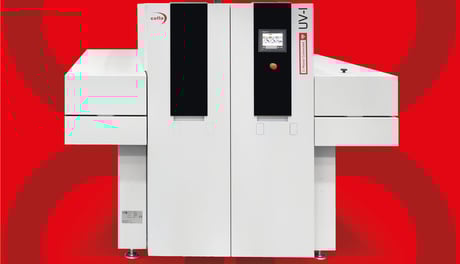
UV-I oven Cefla Live

Inherent to a roller coating process when using 100% UV lacquers, the curing stages are subject to conditions regarding time and the amount of photoinitiators present in the lacquer. Today’s increasingly difficult procurement issues and the rising costs of photoinitiators is something we can ignore with an appropriate innovation that will depend far less on these ingredients. Besides, the presence if photoinitiators in the lacquer has a side effect which gives a yellowish colour to the cured lacquer. Even worse, these ingredients are harmful to the environment, so the less we use a photoinitiator, the less we spend and the less we pollute.

Inert atmosphere for UV curing

The way to get around being dependent on photoinitiators is to accomplish the curing process in an oven which is deprived of oxygen. Our latest innovation does exactly this. The UV-I inert curing oven is designed to cure using far fewer photoinitiators. Curing performance is even improved, the yellow effect is reduced and companies are no longer dependent on costly supplies of a substance which is harmful to the environment. Sustainable technology positively impacting lacquer costs, curing quality and the environment.

What happens if you maintain the quantity of photoinitiators in such an oven?

This will not lead to lower lacquer costs, but the fact you will be curing the product inside an inert atmosphere, the entire curing process is speeded up, so your productivity will increase and operating costs will decrease. Moreover, there is no benefit for the environment when there is no reduction in the consumption of photoinitiators.

How does it work?

Using nitrogen to create an inert atmosphere is not a new technology. Already used in our excimer matting ovens, we have adapted the technique to a new UV oven. Consumption is relatively low and implementation is simple and has many benefits, not least the reduction between 40 and 70% of photoinitiatiors.


Cristian Giovannini

Product Manager | Spray Coating and Drying Technologies

Product development, technologies and machines for spray coating

https://www.linkedin.com/in/cristian-giovannini-9a62271b1/

Inherent to a roller coating process when using 100% UV lacquers, the curing stages are subject to conditions regarding time and the amount of ...

Article

Which is the cost you would most want to reduce on your spray coating line?

Which is the cost you would most want to reduce on your spray coating line?

Cost reduction in spray coating line

Which is the cost you would most want to reduce on your spray coating line?
Tempted to find ways of cutting operating costs by lowering your kWh?
Ever opted for the cheapest solution from "low-cost" manufacturers or even second-hand equipment to minimise your investment?

We have a more effective answer, and it’s all about transfer efficiency and drastically reducing your lacquer consumption.
Our patented spray cleaning system can be fitted to our oscillating spray coaters.
You will save in so many ways: increased paint recovery, much less detergent, fewer stoppages to replace belts, minimal end-of-session cleaning times.
Less costs, greater efficiency.

Download our white paper entitled Spraying Machine Paint Recovery & Cleaning System and learn more.

Which is the cost you would most want to reduce on your spray coating line? Tempted to find ways of cutting operating costs by lowering your kWh? ...

Article

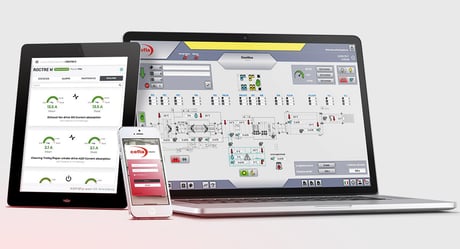
UBIQUO software solutions

UBIQUO software solutions

Solutions software UBIQUO industry 4.0

Remember the Road Atlas in the car’s glove compartment? Pages and pages of maps in a strange sequence. Driving from page 58 to page 104 was logical only to the person who printed the maps and assembled them. Then someone used a GPS satellite to help us navigate from A to B without stopping to read the map. And today, the SatNav even tells you where the traffic issues are and how to avoid them.

UBIQUO does not map the entire planet, but it is the equivalent digital support tool for your production areas and business universe. Once you try the software solutions available, it will be like driving from A to B almost with your eyes shut.

Our software solutions

Even before you install a new finishing line, UBIQUO provides the functions of cCloner, a simulator which establishes the ideal layout and line configuration based on objective data. Operational simulation goes a step further by foreseeing problems, downtimes and avoiding them. Accurate simulation of productivity and consumption enables realistic forecasting to evaluate costs and productivity. Such a degree of simulation is at an advanced stage in our development programme and will undoubtedly be unique within the finishing industry today.

Supervision of a line or a single piece transiting production is also possible from one location with cTracker. This minimises the risk of bottlenecks, downtime and any factors generating inefficiency. Data is channelled into one tracking point, analysed and actions are taken to adjust parameters in real time, enhancing production efficiency on the fly.

Monitoring production line status, any time of day, anywhere in the world, is possible with our web-based tool, cMaster. All you need is an internet connection and connected device to monitor one or more plants or production lines, providing real-time data or broader statistics for preventive maintenance. The difference between cMaster and similar software solutions is that we have developed it around our own equipment and technologies. It is designed to advise actions aimed at improving quality and efficiency, for coating, finishing and digital printing, that commercial software is not prepared for.

Our software solutions undergo regular updates and evolve in line with the needs of our customers. In the future, our focus will be on optimising lacquer and energy consumption, elaborating meaningful ROI calculations, and we will embrace new technologies only when they can benefit the end-user.

Quality comes from quality

UBIQUO software solutions are designed to ensure quality. If your equipment is able to provide you with quality feedback on each process, you can count on implementing quality actions which will lead to top-quality results.


Remember the Road Atlas in the car’s glove compartment? Pages and pages of maps in a strange sequence. Driving from page 58 to page 104 was logical ...

Article

Automatic Spray Coating Line: What Are the Advantages?

An automatic spray coating line created as a brand new design effectively implemented within a pre-existing working plant can truly revolutionise most finishing processes. How? By offering a number of tangible (and measurable) advantages compared to traditional techniques (especially manual processes) and ensuring a fast return on investment. In this feature, we will review the parts that make up an automatic spray coating line and explain how this type of solution improves end product quality and reduces operating costs.

Automatic spray-coating line set-up

By working in synergy, automatic spray coating machines can create simple or complex lines, with flat and vertical configurations, including elliptical designs and sophisticated anthropomorphic robots. The whole system is equipped with advanced software to ensure total control over the process and, consequently, the best possible performance in any use condition.

An automatic spray coating line can be used for finishing surfaces made of different materials, such as wood, ceramic, metal, glass, fibre cement and plastic. Depending on the application, specific process parameters and interchangeable tools are required.

AutomSpray-IMG-1

Without going into too much detail, we analyze the types of available spray machines:

  • Oscillating spray coaters, with one or two arms: these machines meet the needs of manufacturers who need to process small-, medium- and also large-sized production volumes.
  • Rotary or elliptical spray coaters: perfect for customers looking for maximum performance in terms of productivity and speed, without ever compromising on quality. The high number of guns in these spray coaters allows for uniformity of application.
  • Coating robots: these automation solutions guarantee high outout and at the same time very high finishing quality. In particular, robots that work horizontally ensure flexibility, speed and precision. Configurations with one or two robots operating in stationary load or oscillating mode are possible. Thanks to computer technology and tracking functions, two robots are able to work simultaneously on the same item, dramatically reducing processing times.

For further details on the make-up of a spray coating line, find out about the dedicated Cefla solutions for this technology.

Advantages of an automatic spray-coating line

Let's now review the advantages of installing an automated spray coating line, especially when compared to using manual methods.

As can be easily understood, the automated spray coating technique in itself guarantees greater transfer efficiency and consequently - lower paint consumption (and related costs). In addition, it improves the quality of the end product, not to mention the level of homogeneity that can be achieved even on complex surface designs and the possibility of always processing deliveries in predictable times.

AutomSpray-IMG-3

Automation adds extra benefits to spray coating techniques: just think that even by employing qualified personnel, it will not always be possible to achieve the coating quality standards required by customers. There are too many variables that could affect the performance of a finishing line based on manual workmanship. An employer's most experienced operators, for example, could become ill and be temporarily replaced by less skilled personnel. All of this often leads not only to inferior results but also to wasted paint, time and substrates (therefore, to a waste of money).

These potential critical issues could all be resolved by introducing automated spraying equipment.AutomSpray-IMG-2ENG

Why switch from manual to automatic coating?

Find out how to optimise your paint coating process


Results and benefits of automated spray coating

Regardless of the industry you operate in (automotive, furniture or consumer durables), choosing equipment to create an automated spray coating line can lead to several benefits also in terms of output:

  • Guaranteed high quality finishes and consistency, also based on specific customer requests;
  • Flexibility in every phase of the process: possibility of processing small batches efficiently, including customisations and special processes;
  • Transfer efficiency and productivity: essential for securing good margins. This is thanks to software solutions and the IoT (Internet of Things), which help monitor processes and optimise every step, while patented technologies increase productivity;
  • Constant innovation, thanks to the development and integration of increasingly high performance and effective tools and methods into automatic spray coating lines.

These factors ensure greater competitiveness in a market that requires shorter delivery times, lower costs and better quality.

Why choose Cefla for your first automatic spray coating line?

What do companies wishing to make a leap in quality, evolving from small-scale businesses to more industrialised organisations, really need?

Clearly, an initial investment is required. Enough space is then needed to install the new machinery and at least one suitably trained operator is required to supervise the process and load and unload the workpieces.

AutomSpray-IMG-4

Cefla Finishing specialises in the design and creation of solutions capable of responding to any need expressed by companies throughout their upgrading process. For organisations that are taking their first steps in the world of automatic spray coating, we recommend Prima EVO, our one- or two-arm oscillating spray coater, which can be used as a “stand alone” machine, i.e. not requiring the installation of complex systems, and operated by one or two workers for manual loading and unloading of workpieces. This machine can also be easily integrated into complete and higher-output lines.

Perfect for enabling quick colour change-over and managing small production batches, the machine stands out for its extreme user-friendliness and, thanks also to its affordable cost, it is an ideal solution for a successful transition from manual to automatic spray coating in a simple and intuitive way.

Prima EVO is only one item out of the wide range of products and services that make of Cefla Finishing the go-to partner for not only larger companies, but also smaller players who are aiming to grow and become more structured. Would you like to know more? Contact one of our experts and find out about all the technologies and expertise that we can make available to you for your business! 

LOOKING FOR THE IDEAL SOLUTION
FOR YOUR COATING LINE?

None


An automatic spray coating line created as a brand new design effectively implemented within a pre-existing working plant can truly revolutionise ...

Article

Real sealing goes deeper than the surface

Real sealing goes deeper than the surface

Sides sealing

A sealed edge may look sealed when you observe the surface, but what happens beneath the surface is what makes the difference. Cefla Finishing has submitted a patent for a new solution to a critical problem using vacuum application technology to protect edges from external elements such as humidity.

Hybrid implements dual cure edge-sealing. Edges are hardened and impregnated with a special UV polyurethane glue, which penetrates beneath the surface so as to resist the test of time and guarantee the overall quality of your product.

Tomorrow the technology should be extended to chipboard items, thus covering a broader range of applications.

Contact us and discuss your needs with a finishing expert.

A sealed edge may look sealed when you observe the surface, but what happens beneath the surface is what makes the difference. Cefla Finishing has ...

Article

How the texturing process works: technologies and applications

The texturing process: technologies and applications for the décor market

In the décor market, manufacturers are increasingly focused on the texturing process as it allows them to create hyper-realistic patterns inspired by natural materials on any type of surface. With this approach, for example, a PVC shelf can take on the appearance of a marble slab or a wooden board, making it adaptable to any furnishing style.

It’s a technique that lets producers alter both the visual and tactile qualities of surfaces via a process that can create dense relief patterns or tiny marks. This results in - thanks also to skilful finishing - an expanded sensory experience, making products even more pleasing and giving them added value.

What is the texturing process?

In the industrial finishing field, the texturing process leverages various techniques - in combination or individually - to create a surface layer or a pattern on otherwise smooth, plain panels.

Regardless of the techniques used, the goal is to transform products in a way that improves their practical and aesthetic properties.

The texturing process is particularly widespread on the woodworking production lines that are primarily seen in the furniture industry. However, it’s also gaining ground in the metallurgy and textile sectors.

Why is texturing important on the décor market?

In the décor industry - especially the furniture sector - the texturing process involves the creation of patterns or surface finishes on panels in a range of materials (usually wood, metal or synthetics). This makes furniture more appealing to both the eye and to the touch.

Surfaces are modified via sanding, embossing and engraving techniques, or by applying coatings that create an intricate finish.

The thus-created texture adds visual appeal and depth to furniture and furnishing items, making them stand out. It also makes them suitable for a wide range of architectural styles, from rustic to modern. Well-textured surfaces also create a more engaging, inviting tactile experience, increasing the impact and appeal of the product. On a market saturated with often-indistinguishable goods, this is essential as it lets furniture manufacturers differentiate their products with unique texturing techniques that - if properly promoted - can become the hallmark of a brand. That said, it should be remembered that texturing also has a practical function. For example, it improves grip, makes scratches less visible and boosts product durability.

THE MOST INNOVATIVE FINISHING SOLUTIONS
Discover how highly advanced finishing solutions can sharpen your competitiveness.


Advantages of texturing for manufacturers and consumers

The texturing process also plays a pivotal role in marketing strategies, especially when it comes to aligning production with consumer preferences or market trends. Trends, on the other hand, change ever-more frenetically: they are constantly diversifying and stratifying, with styles spanning from minimalism to the bohemian or industrial.

Lastly, in an era in which consumers want one-of-a-kind, personalised products, texturing provides vast scope for customisation. Digital solutions give customers the opportunity to select and transfer specific motifs or patterns onto the furniture they purchase, reflecting their own styles or evoking unique designs, making products more personal and meaningful.

The main texturing technologies available today

So which machines enable the texturing process? What solutions are needed to combine precision and efficiency?

At present, there are essentially two technologies available on the market:

  • 3D digital printing (subtractive texturing)
  • Additive printing

3D digital printing may well be the most versatile technology as it allows fast implementation of a texturing process, even on production lines that are already operational.

Cefla Finishing offers its customers the new J-PRINT TD single-pass printer, a machine capable of printing ‘relief’ tactile effects (digilogico technology by ZEETREE).

More specifically, the J-PRINT TD can print at resolutions of up to 400 dpi at rates of up to 50 m/min. It recreates relief effects with maximum realism using a reliable, economical process.

The solution is usually configured with a standard print station but can accommodate a second. The graphics management software enables high-definition, grey-scale images to be printed using ultra-high-quality print heads. DOD (Drop on Demand) grey-scale technology is seen as a winner on the digital printing market, so its incorporation on the J-PRINT MP comes as no surprise.

Special shaping of the ink reservoirs and automatic management of all critical parameters such as temperature, flow rate and circuit pressure ensure optimal fluid control. Furthermore, a special system that circulates the ink through the print heads ensures the machine does not require frequent cleaning.

Versatility and applications of additive manufacturing in texturing

Additive manufacturing can be applied in two ways: creating textures on individual products through direct additive manufacturing or creating molds that are later used to texture individual products via presses or calenders using those molds.

Direct additive manufacturing

Direct additive manufacturing can be executed with both Single-pass and Multi-pass machines. Compared to the "digilogico by zeetree" solution, direct additive manufacturing has the disadvantage of a higher processing cost (cost of consumables used).

Additionally, this finishing process offers less surface resistance, making it suitable for vertical walls but not for high-traffic horizontal surfaces. On the other hand, direct printing allows for potentially deeper textures—especially in multi-pass mode—with greater detail.

Additive manufacturing for mold creation

Additive manufacturing for mold creation is carried out with specific multi-pass machines. This method can produce textures with depths of several millimeters, with resistance characteristics dependent on the fluid/ink used, which in turn determines the application area of the resulting molds.

LOOKING FOR THE IDEAL COATING LINE SOLUTION?

Industrial digital printing texturing process


The texturing process: technologies and applications for the décor market In the décor market, manufacturers are increasingly focused on the ...

Load more articles

Articles: 96 / 157