Article

Basic Course in profile wrapping

Basic Course in profile wrapping

Profiles covering

What’s so special about profile wrapping?

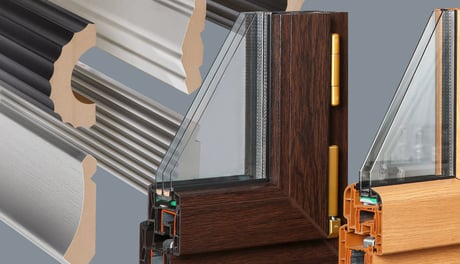
Profile wrapping is not only a relatively economic process, it also allows for high output and enables you to offer products with a large range of surfaces including veneer and high-gloss decorations. Running your own profile wrapping line instead of buying ready-made bars offers you a lot of flexibility.

What do you need to start profile wrapping?

Obviously you need a profile wrapping line, but also skilled staff and consumable products like adhesive, foil and maybe primer. The length and width of the line – and thus the space it will occupy - depend on the dimensions and shapes of the work pieces you would like to wrap. Also, the machine will need electric energy and compressed air.

What does a profile wrapping line look like?

Usually, a profile wrapping line consists of an entry zone, a glue application and a wrapping zone. Then, there are additional components like in- and outfeed systems, premelters and separating systems.


Where do I find further information?

We recommend reading the White Paper which gives a comprehensive overview of technical terms and the composition of a profile wrapping line. Any questions left? Contact us. Our Sales Engineers will be happy to help you.


What’s so special about profile wrapping? Profile wrapping is not only a relatively economic process, it also allows for high output and enables you ...

Article

Strategies for saving on paint and detergent also save money

Strategies for saving on paint and detergent also save money

None

Who knows a company that won’t want to cut costs wherever possible, saving money directly from lower consumption and indirectly by saving time on repetitive procedures?

A patented paint recovery system which cleans your equipment reduces the amount of paint wasted and also the quantity of detergent needed to clean. It also saves time when changing from one production run to the next when colour changeovers are involved.

A wider belt under the painting surface collects excess paint during spraying, thereby protecting the machine's filters. A counter-rotating roller also recovers paint while the machine is working, so no downtime is necessary. Better belt condition leads to longer belt life and fewer stoppages to replace them.

The amount of detergent needed is reduced to a minimum. Less than 50 litres of detergent per shift are required on average to perform cleaning operations.

Take a look at this short video to see how the system works and contact us if you desire more detailed information. Our spray coating machines can be equipped with this device.

Who knows a company that won’t want to cut costs wherever possible, saving money directly from lower consumption and indirectly by saving time on ...

Article

Can quality really cost 30% less?

Can quality really cost 30% less?

This is a question that comes and goes, usually getting a negative response because saving money inevitably means a compromise which reduces quality.

iBotic Cefla Finishing

This is a question that comes and goes, usually getting a negative response because saving money inevitably means a compromise which reduces quality. But if your business profits rely on cutting overheads, especially in the form of electricity, or if you can obtain incentives by implementing sustainable technologies, you cannot stand still, you need to make a choice. When you’ve already opted for quality, you will be using a spraying robot such as iBotic. Thinking of saving money would probably lead you to consider reverting to an oscillating spray coater or even hand-coating the pieces in a spraying booth. Neither options will conserve the finished quality of the spraying robot, so where do you look?

Introducing the PowerBack System

So far, no one building spraying robots has succeeded in developing a special hardware and software architecture to enable energy savings on a Cartesian spraying robot. Energy retrieval generated through deceleration of the spraying arms is used to help power the outlet fan. This new technology is the key feature of iBotic’s PowerBack System and saves between 15 and 30% on energy costs compared to the iBotic without PowerBack.

Contact us to find out more about the PowerBack System

This is a question that comes and goes, usually getting a negative response because saving money inevitably means a compromise which reduces quality. ...

Article

cTracker and the gift of ubiquity

cTracker and the gift of ubiquity

Ubiquo

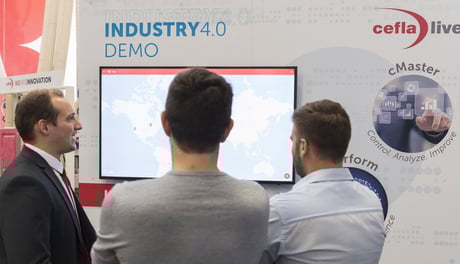
An integrated finishing line needs to be managed in an integrated way to make it as efficient as possible. This is one of the reasons we developed cTracker, a powerful software tool which allows companies to manage complex processes involving multiple machines from one single point.

Now featuring standard, off-the-shelf components (CPU for each machine, 5” and 12” HMI, six 3-fase inverter types) which can be replaced immediately if necessary, our machines and most 3rd party equipment can be connected via an Ethernet network to a PLC and an industrial PC with a 21” multitouch screen enabling immediate intervention anywhere on the line.

Exactly what can be done with cTracker?

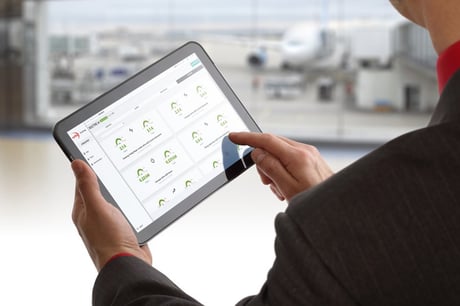
First of all, you can enter and adjust all recipes from a single monitor. Secondly, you can manage individual machine parameters from that same monitor and any alarms coming from the machines on your finishing line will appear on the monitor. Basically you won’t need to move from machine to machine or run up and down the line to keep track of production and maintain the highest efficiency on your line.

Single piece tracking capabilities will help speed up production. Each time a tracked piece from a batch is identified at a certain point on the line (usually when the colour or thickness changes) the machine automatically implements the dedicated parameters without needing to re-program or stop the line.

Featuring cLink, the data collected by cTracker can be fed into your ERP, stored and used to improve processing efficiencies or to forecast production schedules.

cTracker also enables remote support services, using a VPN tunnel which is certified IEC 62443 for additional cybersecurity.

If you need more information about cTracker or any of our cutting-edge software and Industry 4.0 solutions, please contact us.

An integrated finishing line needs to be managed in an integrated way to make it as efficient as possible. This is one of the reasons we developed ...

Article

Our LAB Experience

Our LAB Experience

LAB Finishing experiences

✓ 25 years of LAB experience
✓ 3000 square metres of space
✓ 85 machines


Let us start right here with the first chapter of the experience gathered by our team of finishing professionals in the Laboratory where our technicians, customers and paint suppliers carry out the tests, pre-empting industrial tests, on the solutions we provide to the market, trying out the processes and experimenting with new technologies.

Over the coming weeks, LAB Manager Eduard Raffini who has been in charge of the LAB team since 1995 and handles both the machines and the lines, will tell us the best ways to run tests.

We will take a close look at the phases of each process, from the preparation of the substrates (sanding, rusticating, brushing), to the adhesion treatments (flaming or primers, impregnations and base coats, sanding), up to the glossy, opaque or textured finishes, with a porous effect or deep matt.

There is a constant made up of variables:
▷ Each customer has specific needs
▷ Each customer has their own products
▷ Each customer has their own processes

Everyone wants to improve the business, evaluating finishing technologies, different machines, more efficient processes. It is the passion that drives time and time again to reach the best solution.

Contact us and arrange a visit to the LAB. 

Eduard Raffini

LAB Application Manager

Test specialist and Coordinator of the Cefla Finishing HQ LAB

https://www.linkedin.com/in/eduard-raffini/

✓ 25 years of LAB experience ✓ 3000 square metres of space ✓ 85 machines Let us start right here with the first chapter of the experience gathered by ...

Article

Spray coating techniques for three-dimensional products

In a scenario of relentless evolution of the manufacturing industry, the use of advanced spray coating technologies is becoming a must, especially when it comes to manufacturing doors, windows and other 3D items.

We are referring, more specifically, to automatic techniques which do not only increase the productivity and profitability of finishing lines. They also ensure, for the companies that implement them, a leading position in terms of innovation and sustainability within their respective markets.

The greater system efficiency ensured by automatic spray coating results in other advantages including improved production quality and a significant reduction in waste. And there's more: the levels of performance control and worker safety that can be achieved thanks to real-time monitoring of the manufacturing processes and machinery condition were simply unthinkable until recently.

What is Spray Coating?

Spray coating is one of the most popular surface finishing techniques, particularly among manufacturers of window frames and exterior doors; this technique is also widely used by manufacturers of three-dimensional items (such as helmets, musical instruments and furnishing accessories).

According to this method, lacquer can be applied both manually and through the use of specific machines that work automatically.

When spray coating is carried out automatically, a few important distinctions should be made: the range of machinery currently available commercially varies significantly in terms of complexity and functionality. It includes plain or composite lines, flat lines, vertical lines, elliptical solutions as well as sophisticated spray coating robots which leverage specially designed software to guarantee top performance in any condition of use.

THE MOST INNOVATIVE FINISHING SOLUTIONS
Discover how highly advanced finishing solutions can sharpen your competitiveness.

Benefits of automated spray coating

Below is a review of spray coating techniques and, in particular, of the advantages they offer compared to traditional approaches. There are essentially five advantages guaranteed by these methods:

1) Improved efficiency and productivity

Automatic spray coating systems can first of all significantly increase production speed. By eliminating manually controlled steps, especially when it comes to changing the workpieces to process, these systems can coat multiple items at once, allowing manufacturers to meet tight deadlines and efficiently manage large-volume orders and small batches alike. The robotic arms featured by the most advanced automated systems also allow for consistent and repeatable results, minimising downtime and optimising the production line.

2) Improved quality and homogeneity

Another plus of automatic spray coating is the enhanced-quality, more homogeneous finish that can be obtained. Automatic systems apply even coats of lacquer, guaranteeing homogeneous thickness and coverage without the streaks or imperfections typical of manual techniques. This level of homogeneity is essential in the industries where product aesthetics and durability are key, such as door and window manufacturing.

The technology underlying automatic processes allows for precise control of parameters such as spray range, angle and pressure, which allows for superior results and reduces the number of rejects, i.e. items that fail quality checks.

3) Waste reduction and cost efficiency

In traditional hand coating applications, a significant amount of lacquer can be wasted due to overspray and uneven application. Automatic spray coating systems are instead designed to minimise material losses - which in turn reduces overall production costs.

 4) Greater compliance with environmental regulations

Most modern spray coating machines have built-in systems to reduce emissions of volatile organic compounds and filtration systems that capture overspray and recycle unused paint. These features not only help manufacturers ensure that their production processes comply with environmental regulations, but also improve the company's brand positioning among sustainability-conscious consumers.

 5) Optimal safety and ergonomics

Last but not least, safety and ergonomics play a key role in the workplace. Traditionally, manual coating often exposes workers to hazardous materials, noxious fumes, and in some cases, to the risk of repetitive strain injuries. Automated spray coating systems, on the other hand, reduce direct worker exposure to potentially harmful substances by minimising physical actions throughout the finishing process.

Main spray coating applications

Thanks to automation, modern spray coating solutions are able to handle a wide range of materials and finishes.

The machines are extremely versatile and, as mentioned, can be integrated into dedicated lines for the production of a number of three-dimensional items, from wooden doors to windows and window frames, panels and furnishing accessories.

This is all thanks to easily programmable systems, whose modules are suitable for different types of lacquer, colours and finishes. This allows manufacturers to streamline all their processes, including those that require extensive customisation, and to quickly respond to different types of order (without having to resort to total line reconfiguration). It is precisely this degree of flexibility that helps companies stay competitive in a market characterised by ever-changing trends.

The following are a few Case Studies regarding companies that have successfully used the most innovative spray coating techniques:

Spray coating, a solution for every need

There are several lines of machinery and of hardware and software architectures that allow vertical solutions to be built - able to meet the needs of specific fields of use. Automating spray coating processes in order to maximise investments essentially means choosing the right combinations, integrating different approaches according to the type of result required.

We at Cefla Finishing know this well and this is why we have developed a complete and modular range, with specialised and complementary functions that can be integrated to implement virtually any type of finishing line. The main line types are listed below.

Overhead lines

Simplifying the spray coating process is one of the main requirements of manufacturers interested in automating their operations. In this respect, overhead lines are the ideal solution for market players whose primary objective is to manage large production volumes while maintaining the right level of flexibility: only in this way can specific requests be met in terms of the type of substrate to be used and the requirements to be fulfilled by the end products. Overhead lines are in fact characterised by a high level of control over the finishing process, thanks to the use of limited amounts of lacquer and to precise movements performed to obtain a homogeneous finish even on three-dimensional surfaces with complex shapes.

Ground level lines

Spray coating robots applied to ground lines allow products to be coated as they are fed on - supported by a tray or workpiece holder. This process leads directly to the next process step i.e. drying.

This approach to spray coating automation delivers a better finish and higher quality end products, while ensuring greater production efficiency and shorter lead times. The reduced lacquer consumption goes hand in hand with the minimised use of manpower for coating and handling operations, which results in significant savings as early as in the medium term.

Anthropomorphic robots

The anthropomorphic spraying robots work at constant speed while ensuring an exact distance between the gun and the workpiece. In this way they optimise the consumption and homogeneity of the applied lacquer coating. Cefla created its own anthropomorphic robot iGiotto, a complete coating system for water or solvent-based lacquers, which can be integrated with appropriate software to manage every aspect of the spraying process.

Automation Software

Finally, the most advanced automatic spray coating systems are equipped with data collection and analysis tools. These solutions provide insights into production efficiency, paint consumption and overall process performance, enabling manufacturers to make informed decisions based on real-time data. However, the software analytical capabilities don't stop there: they enable continuous process improvement resulting in more careful resource allocation and better cost management over time.

THE MOST INNOVATIVE FINISHING SOLUTIONS
Discover how highly advanced finishing solutions can sharpen your competitiveness.

In a scenario of relentless evolution of the manufacturing industry, the use of advanced spray coating technologies is becoming a must, especially ...

Load more articles

Articles: 108 / 157