Article

Wrapping vs lamination: differences and innovations

How can simple materials be transformed into elegant, functional and customised creations? This is one of the most fascinating challenges in the furniture and construction industries. In this article, we will explore two of the key technologies in the decorative finishing sector: wrapping and lamination. These techniques are not only fundamental for aesthetics, but also represent a turning point for operators in the sector, in terms of efficiency and sustainability. So let's find out how the two techniques differ and what the latest technological innovations are that are redefining the possibilities for the industry.

What is wrapping?

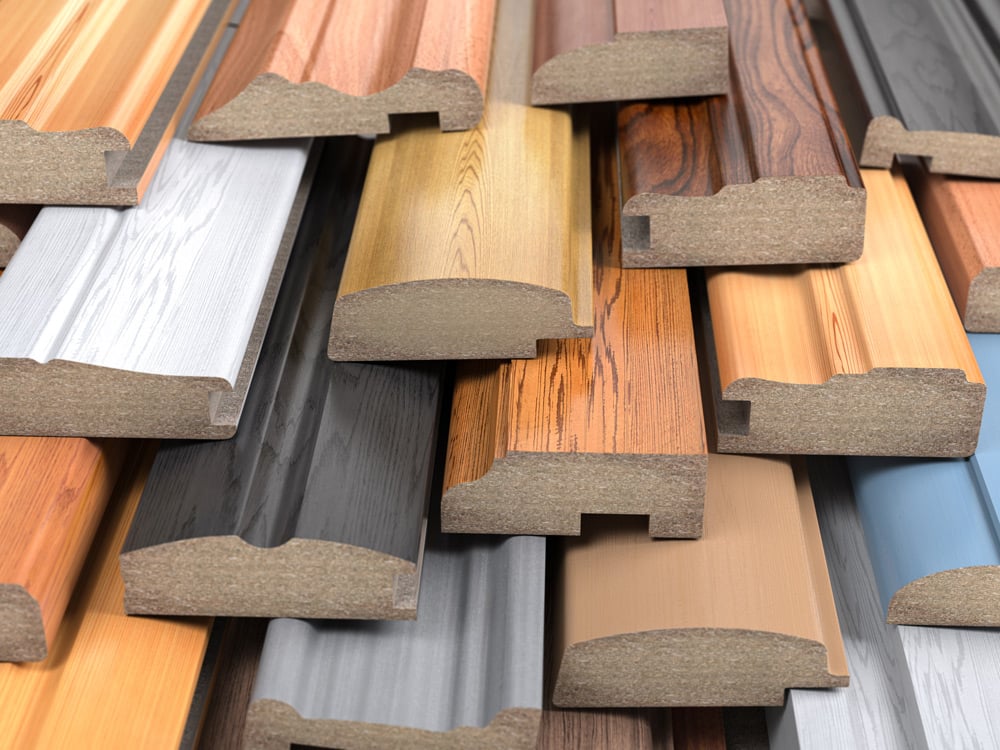
Wrapping, or profile covering, is a technique that has revolutionised the way we think about decorative finishes. Imagine being able to coat linear profiles such as wood, PVC or aluminium with high-quality decorative materials. This process, carried out with specialised machines, applies the coating material to the substrate using hot-melt adhesives.

But what are the real advantages that wrapping brings to companies? In addition to cost-effectiveness (coating less valuable materials allows for an excellent aesthetic and functional result at a lower cost), wrapping offers a degree of production flexibility that allows for the application of a wide range of finishes and decorations. Furthermore, modern wrapping lines can reach incredible speeds, up to 110 m/min, ensuring high productivity. And with automation, set-up and format change times are drastically reduced, adapting perfectly even to smaller and customised production batches. It goes without saying that these aspects also affect production costs, and therefore we can define wrapping as a technique capable of perfectly combining quality, flexibility and production efficiency.
WRAP

The role of profile wrapping in customised finishes

Have you ever wondered how some manufacturers manage to respond so quickly to the market's just-in-time demands? Profile wrapping is one of the answers. This technology, as mentioned, makes it possible to create components with a unique and elegant appearance, while maintaining high quality standards and low costs.

The real magic happens thanks to automated systems like RoboWrap from Düspohl - the Cefla brand specialising in wrapping technologies - which allow for very rapid format changes. And this means having a wide range of finishes and customisations, without compromising production efficiency. In short, in a world where customisation is increasingly in demand, modern wrapping technologies guarantee the necessary flexibility, without compromising on quality and durability over time.

A SHORT GUIDE TO PROFILE WRAPPING

What is lamination?

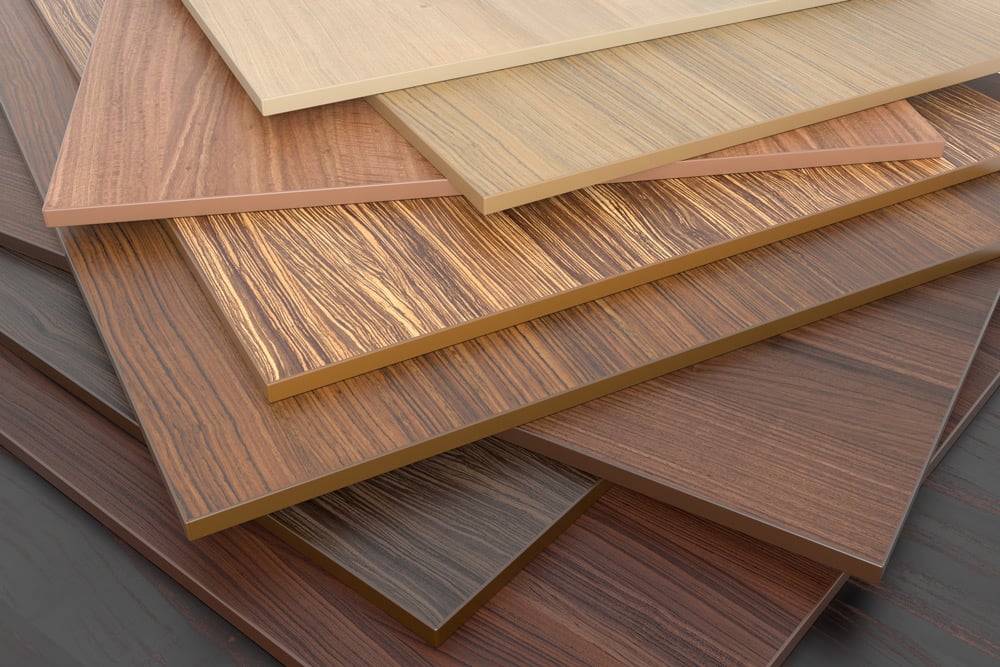
Let's now move on to explore another fundamental technology: lamination. But what is it exactly? Imagine applying a decorative sheet to a flat substrate, using presses or rollers that exert pressure and heat. This, in simple terms, is the process called lamination.

This technique is ideal for treating large flat surfaces. Commonly used materials include melamine sheets, PVC and high-pressure laminates (HPL). Lamination is widely used in the production of furniture and building components, thanks to its ability to ensure uniformity and resistance.
LAMIN

Flat lamination for large-scale production

What is the advantage of flat lamination in large-scale production? This technology is fundamental for managing large production volumes, often exceeding 50 m/min. But it is not just a question of speed.

Flat lamination makes it possible to obtain extremely resistant and durable finishes, which are essential in high-traffic environments or those subject to intense wear. Thanks to advanced pressure and temperature control systems, the entire finishing process becomes fluid and perfectly synchronised, improving efficiency and reducing waste.

Wrapping vs lamination: key applications in manufacturing

A question naturally arises: which of the two technologies should you choose? Wrapping and lamination, while sharing the goal of decorating substrates, are distinguished by their applications and processes.

  • Wrapping is the technique used for finishing linear profiles and components with complex geometries, also adapting to small batches and frequent changes.
  • On the other hand, lamination is used for treating flat and regular surfaces, ideal for mass production of large elements.

Both technologies play a fundamental role in customisation and efficient production.

Feature

Wrapping

Lamination

Material compatibility

PVC, foil, veneer

HPL, melamine, acrylic

Applications

Profiles, decorative panels

Flat panels, large surfaces

Productivity

High flexibility

High-volume production

Cost-effectiveness

Cost-effective for small batches

Ideal for mass production

Materials used in wrapping and lamination

In both wrapping and lamination, the range of materials is vast and varied. Profiles in solid wood, MDF, PVC and aluminium are commonly used as substrates in wrapping, while chipboard and MDF panels prevail in lamination.

And for the coatings? PVC foils, decorated papers and CPL laminates in wrapping; HPL laminates and melamine foils in lamination. Every choice of material or adhesive has a direct impact on the quality and longevity of the finished product.

Innovations in wrapping and lamination

If the choice of materials is important and must be calibrated according to various factors, the choice of machines in the processes is essential and determines not only the quality of production, but the very business success of companies in the sector.

What are the most important innovations in the sector? Systems like Düspohl's RoboWrap in wrapping and the PowerWrap Wide in lamination are redefining the standards of efficiency and versatility. With the integration of AI and machine learning, these technologies not only improve the quality of the work, but also optimise energy consumption, reducing waste.

Sustainability in wrapping and lamination

It is no coincidence that innovations in wrapping and lamination are guiding the industry towards more green practices. In line with this global trend, Cefla Finishing and Düspohl solutions integrate systems aimed at reducing the environmental impact of production processes.

In the field of wrapping, new technologies are allowing for a more efficient use of materials. The precision of adhesive application systems, such as those used in RoboWrap, makes it possible to significantly reduce glue and coating material waste, with a reduction in waste of up to 30% compared to traditional systems. Furthermore, the optimisation of profile change processes reduces downtime and the associated energy consumption.

In the lamination sector, the PowerWrap Wide introduces technologies that allow the use of eco-sustainable materials. These include coatings based on recycled or biodegradable materials and adhesives with low VOC (Volatile Organic Compounds) content. And the impact on sustainability is far from marginal: the adoption of these materials can reduce the process's carbon footprint by up to 40%.

Another area of focus is energy efficiency: new AI-based control systems optimise energy consumption in real time, adapting process parameters to the specific needs of each job. This optimisation can lead to energy savings of up to 25%.

The durability of finished products is another aspect closely linked to sustainability. Advanced wrapping and lamination techniques are producing surfaces that are increasingly resistant to wear and tear, extending the useful life of products and reducing the need for replacement. This translates into lower resource consumption in the long term.

In short, the main focus is on the entire product life cycle: from production, to end-of-life recycling solutions, thanks to techniques that facilitate the separation of materials for recycling. This leads us to reflect on the need to adopt a circular economy approach, collaborating with suppliers and customers to implement systems for the recovery and reuse of waste materials.

These initiatives, promoted by Cefla Finishing through innovative solutions, not only reduce the environmental impact, but also offer economic advantages, demonstrating that sustainability and efficiency can go hand in hand in the manufacturing sector.

Looking to the future

Wrapping and lamination are undoubtedly technologies that are constantly evolving to respond to market challenges and sustainability needs. Looking ahead, a further integration of these technologies with Industry 4.0 is expected, with the incorporation of smart elements in finished products and an ever-increasing digitalisation of production processes.

LOOKING FOR THE IDEAL SOLUTION FOR YOUR COATING LINE?

How can simple materials be transformed into elegant, functional and customised creations? This is one of the most fascinating challenges in the ...

Article

Cleaning carriage in spray coaters. Patented savings

Cleaning carriage in spray coaters. Patented savings

Spray machines' carriage cleaning

Thanks to our constant investment in innovation and research, we have managed to patent products, technologies and processes, through different approaches adopted by our human resources based on cooperation of the different business profiles involved.

Let's take a closer look at some of the concrete advantages afforded to you by our patented solutions - starting with considerable savings in terms of time, money and long-term production efficiency, obtained thanks to our patented recovery and cleaning system available in spray coating machines.

Thanks to our numerous patents filed for this system, the following savings are now possible:
➊ paint consumption, as any overspray on the belt can be recovered and re-used tanks to our numerous patents filed for this system, the following savings are now possible
➋ detergent consumption: from over 100 litres/work shift to 40 litres/work shift
➌ shorter downtime and cleaning time requirements

Go here for more general information on our range of spray coating solutions.

Thanks to our constant investment in innovation and research, we have managed to patent products, technologies and processes, through different ...

Article

Why not make sure everything is under full control and thereby reduce your operating costs?

Why not make sure everything is under full control and thereby reduce your operating costs?

That is precisely why we released our cMaster web-based monitoring tool. It allows operators to keep an eye on both output and production line status, any time of day, anywhere in the world. With an internet connection, all you need is a smartphone or a tablet. With a user-friendly interface and intuitive functions, you do not require any specific software or hardware. It’s as simple as that.

None

That is precisely why we released our cMaster web-based monitoring tool. It allows operators to keep an eye on both output and production line status, any time of day, anywhere in the world. With an internet connection, all you need is a smartphone or a tablet. With a user-friendly interface and intuitive functions, you do not require any specific software or hardware. It’s as simple as that.

So cMaster opens your eyes onto one or more plants or production lines, giving you real-time data or selected information and statistics for period-focused research and preventive maintenance. 
Further opportunities based around Virtual Reality and other Industry 4.0 solutions can be seen at our LAB. 

Contact us and arrange a visit to the LAB.

That is precisely why we released our cMaster web-based monitoring tool. It allows operators to keep an eye on both output and production line ...

Article

Have you ever worried all day long whether you locked your car?

Have you ever worried all day long whether you locked your car?

Something like this may happen once or twice. Park your car, walk away and when you suddenly start to doubt, you are so far away there’s nothing you can do about it.

Supervision software Cefla Finishing cMaster UBIQUO

Something like this may happen once or twice. Park your car, walk away and when you suddenly start to doubt, you are so far away there’s nothing you can do about it. Of course, it is common to be away from the factory and have no information regarding your production line. Most of us will accept this as a matter of fact, but what if you could keep an eye on both output and production line status, any time of day, anywhere in the world? A complicated interface, costly software designed especially for your smartphone, giving you limited machine data. And whoever designed the software unfortunately has no idea how to interpret the data. And if you change smartphone? Not a great scenario.

cMaster simply changes that scenario
Ideally, you just need your smartphone or tablet, an internet connection and a web-based tool with a user-friendly interface. No specific software or hardware, just the range of functions you need to stay in touch with production wherever you are. Our cMaster monitoring solution enables you to connect to one or more plants or production lines, giving you real-time data or selected information and statistics for period-focused research and preventive maintenance.

Learn more about our digital tools and software solutions.

Something like this may happen once or twice. Park your car, walk away and when you suddenly start to doubt, you are so far away there’s nothing you ...

Article

How to solve some problem thanks to digitization

How to solve some problem thanks to digitization

Transforming digital solutions into tangible benefits is my job

ubiquo-software-tools

We may not ring the doorbell 9 minutes and 37 seconds after you call us, but UBIQUO software solutions are a powerful selection of software tools designed to solve a cluster of issues many customers encounter at different stages of their production. And once you begin using them, you won’t need to call for extra help, but we will always be by your side when you need us.

Digital technologies open the doors to countless opportunities

You may want to evaluate the ROI before defining your purchase of production equipment. We make that possible with cCloner, by simulating your production, configuring your line correctly and evaluating lacquer, thermal and electrical energy consumption. This is much more than a static layout of your production line. cCloner will assess processing times, calculate the overall coated surface area of a single line, enabling you to invest with fewer risks than ever before.

Avoiding bottlenecks, downtime and minimising all factors that will generate inefficiency is an issue our customers are faced with regularly. One tool to track and control production from one single point, gathering all data and feeding them to and from the company’s management software is what our cTracker and cLink solutions take care of. cTracker also allows you to adapt production parameters to handle new thicknesses and colours on the fly, and enables tracking of a single production batch on the line or even single pieces.

When you want to keep an eye on both output and production line status, any time of day, anywhere in the world, our cMaster web-based tool allows you to do so as long as you have an internet connection, a smartphone or a tablet. cMaster opens your eyes onto one or more plants or production lines, giving you real-time data or selected information and statistics for period-focused research and preventive maintenance. Our service teams will also be able to monitor the state of the equipment and proactively support you only when you need assistance. The difference between cMaster and similar software solutions is that cMaster is developed around Cefla Finishing equipment and technologies. It is not a commercial software based on a shared platform, excluding potential for targeted data analysis and for actions aimed at improving quality and efficiency in the future.

Learn more about our digital tools and software solutions.

Transforming digital solutions into tangible benefits is my job We may not ring the doorbell 9 minutes and 37 seconds after you call us, but UBIQUO ...

Article

3 reasons to move from a manual to an automated spray coating process

3 reasons to move from a manual to an automated spray coating process

3 reasons to move from a manual to an automated spray coating process

This is a question most often asked by smaller companies employing no more than a dozen staff. As the market becomes more demanding in terms of lead times and quality standards, manual spray coating techniques have a number of drawbacks.
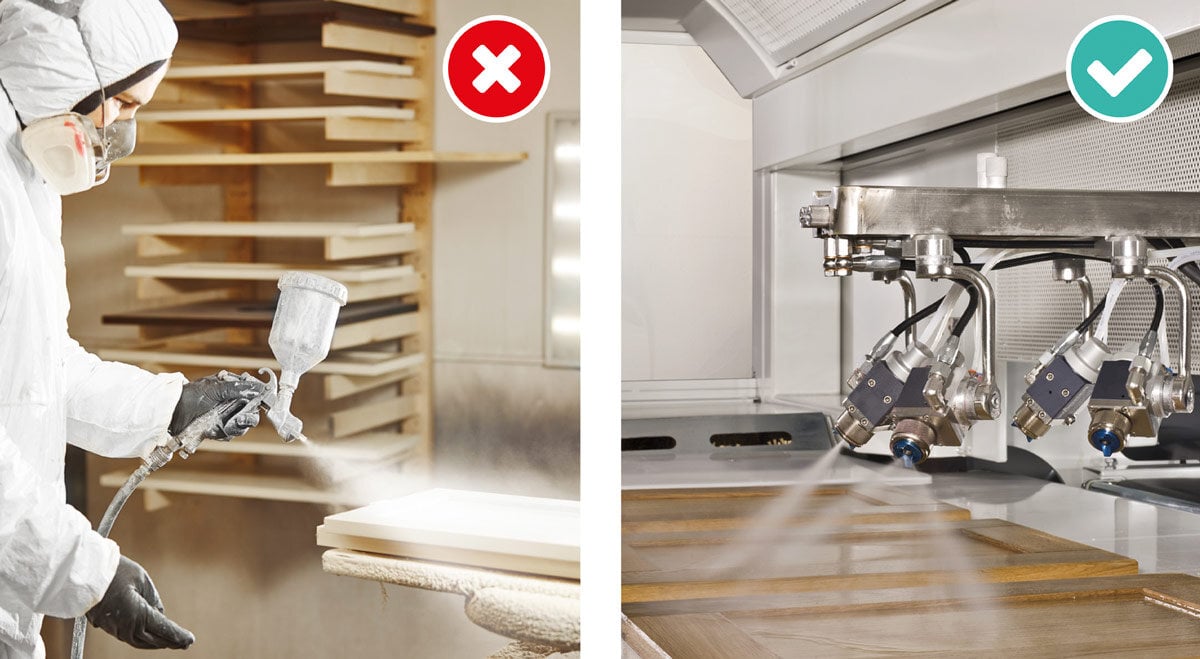
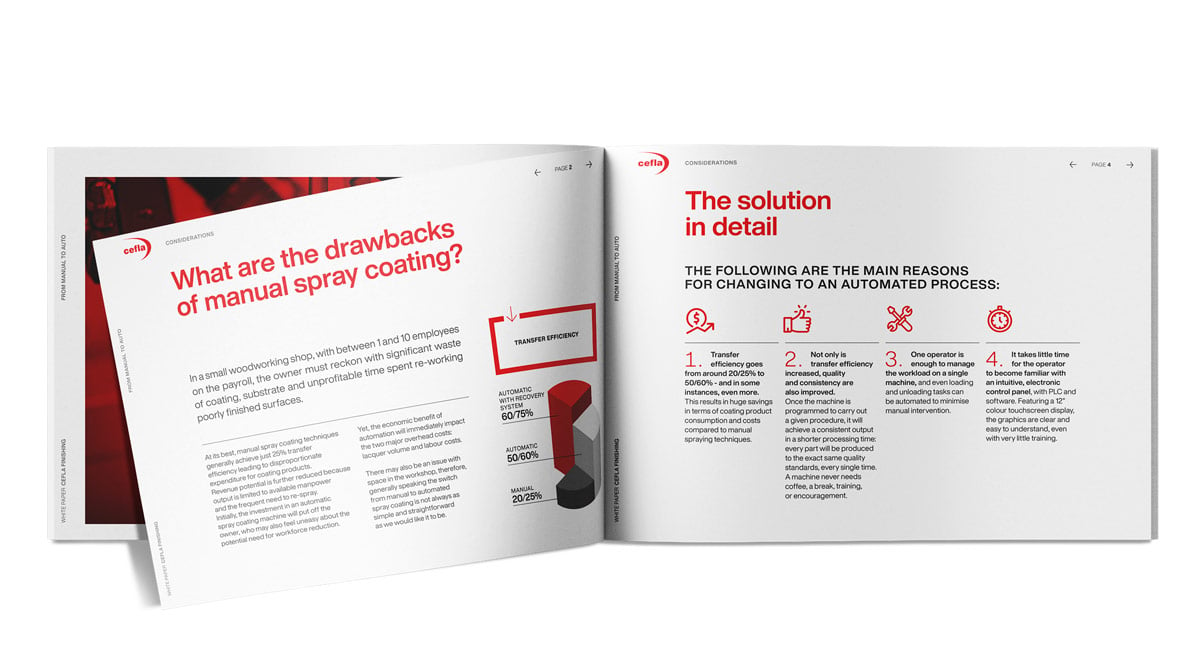
You may not realise, but transfer efficiency is no higher than 25% and often the pieces need to be re-sprayed when the quality achieved is not in line with the customer’s expectations. Such issues are putting pressure on small outfits using manual labour and the pressure is felt not only by the owners, but also by the operators themselves.
Reworking products also takes time, not to mention the cost of extra lacquer and labour, and it leads to inevitably longer delivery times, something your customers will not appreciate. Reworks can be avoided.
Switching from manual to automated spray coating may seem like a step into the unknown for some companies, but the return on investment will soon be felt. An initial investment with some reorganisation of floorspace will be necessary. One or two operators will need to learn a few basics before being able to program the equipment, but once this is done, they will only need to oversee the process, load and unload workpieces and keep to schedule. What you will notice is that coating quality consistency will no longer depend on which operator is spraying, how much coffee he had or whether he is spraying well at 9 a.m. or spraying as best he can at 5 p.m. – it makes a difference!

How will an automatic spray coating machine improve all this?

  • Firstly, you will obtain the same quality without any variations, so once it is satisfactory, you just need to push a button and let the machine accomplish the rest.
  • Secondly, you will save on lacquer because transfer efficiency will increase significantly, in some instances reaching more than twice as much compared to manual spray coating.
  • Thirdly, your production efficiency will increase and consequently delivery times will be reduced, so you can accept more business and maybe extend your customer base.
  • Fourthly, labour costs can be cut because you only need one operator to manage the programming and supervision of the equipment, as well as loading and unloading the pieces.

So what are the 3 reasons?

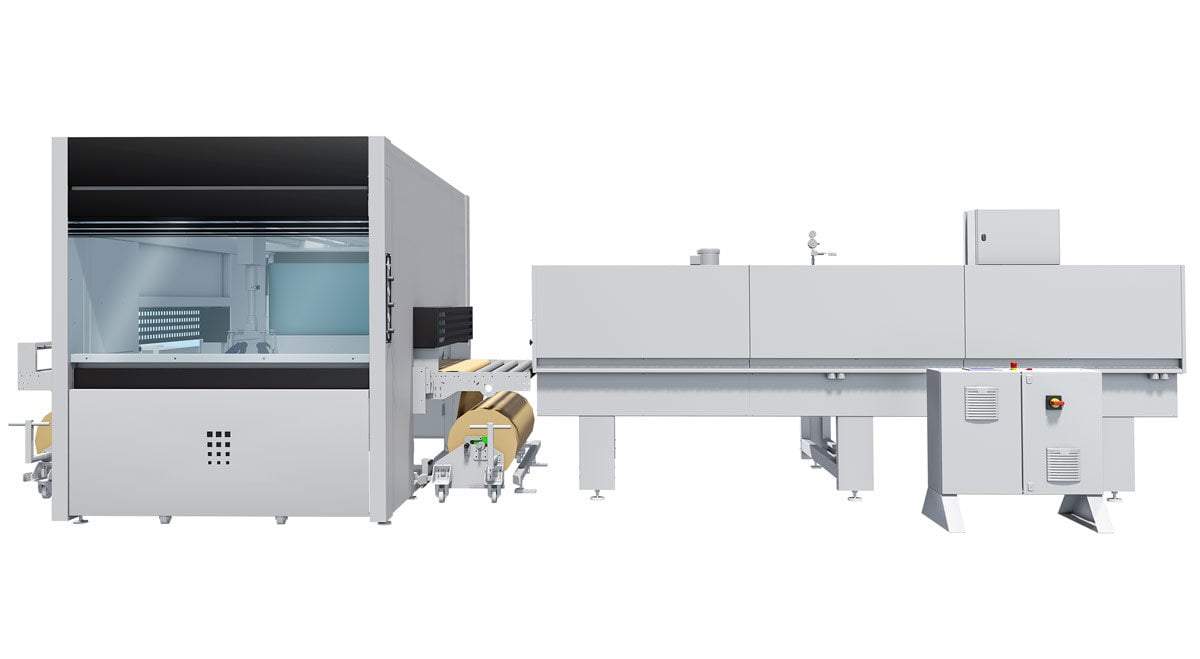
Simple, we have created several spray coating solutions, but many of these are sophisticated machines handling complex geometries, processing on flatbed or overhead lines and using special anthropomorphic robots.
But there are 3 solutions which represent a perfect first step into the world of automated spray coating:

Before you make a choice, there are a few things to consider. Base your decision on the goals you aim to achieve, not on your current capacity. Consider your need to make frequent colour changes; in this case you should opt for Prima, an excellent solution when dealing with frequent colour changes or several small batches. Mito can be fitted with one central or two lateral arms, and is good for small to medium outputs. Easy will be suitable for handling medium to large volumes and can be fitted with a number of optional features.

If you are keen to learn more about moving from manual to automated spray coating, our experts will be happy to personalise the solution according to your real needs.
So if you are ready to explore the new potential awaiting you and your business, contact us for more details.


Cristian Giovannini

Product Manager | Spray Coating and Drying Technologies

Product development, technologies and machines for spray coating

https://www.linkedin.com/in/cristian-giovannini-9a62271b1/

3 reasons to move from a manual to an automated spray coating process This is a question most often asked by smaller companies employing no more than ...

Load more articles

Articles: 102 / 157