Magazine

Spray coating

Article

Spray Coating Process. Doing it well? Want to do it better?

Spray Coating Process. Doing it well? Want to do it better?

Technologies and processes of spray coating

Your company has been performing surface finishing for producers of furniture components, the automotive industry or manufacturers of windows and doors, and you’ve been doing it for years.
Today you need to become more efficient, more flexible and ultimately more competitive? Probably your future prospects depend on that. 

Becoming more competitive depends on factors like these:

Productivity is all about handling whatever the market wants in the quantities it demands. You can increase flexibility by integrating an oven which accepts totally different shapes and sizes one after the other without stopping

Flexibility also means being able to coat different pieces simultaneously in the same machine using a Cartesian robot

Transfer efficiency is a key issue. Our experience and our technologies enable us to find the best solution, leading to potentially huge annual savings in terms of lacquer consumption.
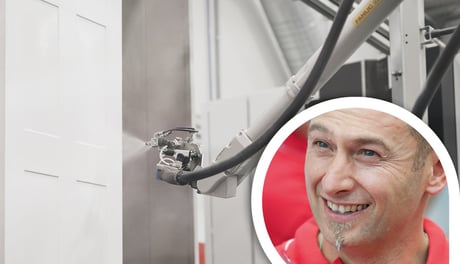
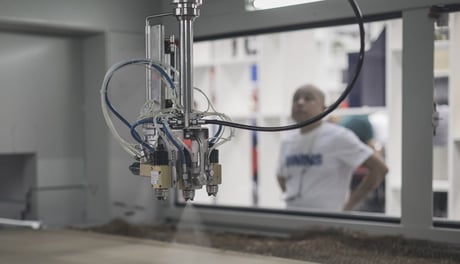
Here, a new concept of elliptical sprayer, Elispray, which combines extremely high work rates with high quality transfer efficiency, comes into play.

Product differentiation. How does your product differ compared to that of the competition? The answer, in this sense, has much to do with the integration of digital printing technologies with relief effects on the coating line, allowing for uniqueness and personalisation that - thanks to flexible, competitive processes - can respond quickly to market trends.

Training. Having trained staff is certainly a key strength for a company that aims to be competitive on the market. In this regard, the Italian Finishing School provides essential support by teaching a combination of coating theory and coating practice.


Eduard Raffini

LAB Application Manager

Test specialist and Coordinator of the Cefla Finishing HQ LAB

https://www.linkedin.com/in/eduard-raffini/

Your company has been performing surface finishing for producers of furniture components, the automotive industry or manufacturers of windows and ...

Article

What are the standard settings on spray coating machines, with anthropomorphic robots, at high output capacities?

What are the standard settings on spray coating machines, with anthropomorphic robots, at high output capacities?

Spray coating machines setting

The main difference concerns piece management.

If, on the one hand, certain start-up concepts remain valid (e.g. spray gun positioning, loading the coating, cleaning procedures as with oscillating sprayers), on the other there is a substantial difference in the way the parts are coated as it's possible to spray three-dimensional objects of various kinds.

With oscillating spray coating machines, just turning a selector switch may be sufficient; with robot spray coating machines, instead, the operator creates a specific job recipe for the product to be processed on the machine control PC. Today, this task is made simple by several optional systems, scanners and classifiers that ensure the machine can recognise the piece and automatically activate the correct work sequence.

Let's talk about 2D and 3D systems: what's the difference?

The 2D system allows for calculation of piece thickness, longitudinal tilt and vertical tilt so that the most suitable coating programme can be selected. This system ensures homogeneous coating quantities over the entire product.

The latest-generation, automatic 3D reading system (cVision) allows acquisition of the position, size and shape of transiting pieces with unprecedented precision.

What are the advantages?

Time savings, coating savings, quality and flexibility. The combined action of laser and ultra-high resolution cameras lets iGiotto, for example, completely and automatically generate precise work trajectories based on the object "families" in its database.


Eduard Raffini

LAB Application Manager

Test specialist and Coordinator of the Cefla Finishing HQ LAB

https://www.linkedin.com/in/eduard-raffini/

The main difference concerns piece management. If, on the one hand, certain start-up concepts remain valid (e.g. spray gun positioning, loading the ...

Article

Finishing Lab test day

Finishing Lab test day

Spray coating tests LAB

Test day in the LAB.
Substrate: CABINET DOOR, shaped, FOR LAMINATED PVC KITCHEN               
Machines used: SmartSand - iBotic - Aquadry - UV-R

Preparation

LAB tests have been exciting, challenging events for over 20 years. There is a lot of preparation involved, both due to customer expectations and to make sure that the same line conditions requested by the customer are actually recreated. On the actual day of the test with the customer - an activity that we hope to be able to resume in a live format as soon as possible, and with which we have already experimented digitally earlier year - these operations will be preceded by a short briefing session, upon the customer's arrival at Cefla Finishing, to bring all the professionals involved up to speed, from sales to technical experts.
We bring all the equipment that will be needed for finishing checks near the machine - including scales and various instruments such as a pyrometer, cross cut, UV Map and glossmeter, to name just the main ones.
After setting up the work area near the machines, with all the necessary precautions and considering the layout of the line, it is time to decide how the test will be carried out. From starting up the machine, to defining the various manual operations on the machine - such as movement of the axes and opening of the guns. Some customers love to watch these operations and, intrigued by the skilful, knowledgeable actions of us technicians, already ask their first questions, while others prefer to patiently wait instead for the first coated piece out of the line.

Working recipe for shaped door cabinet

Then it's time to choose the work recipe, that is, the programming of a sequence of tasks and activities: how the robot must operate, and what it will have perform on the workpieces.
This is where experience comes into play and the following steps, among others, are decided:

  1. processing of the piece edge, working speed, required nozzle distance from the edge
  2. embossed part machining, speed, distance
  3. flat panel machining, type of working trajectory (x or y), distance

Each recipe created refers to a specific product and, to use the recipe, it is enough to activate it before starting the cycle and feeding the workpiece. The different configurable recipes are always linked to the type of workpiece or to the coating cycle (primer or finish).

An overview

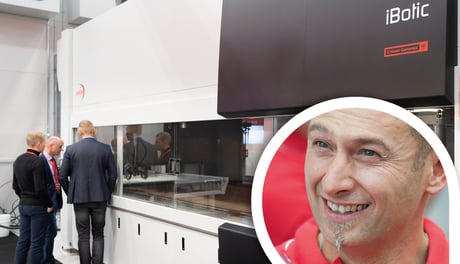
It is not time to start yet: first, the machine as a whole must be examined. In the case of iBotic, we are faced with a high-performing system of considerable industrial complexity, starting with the filtration system with water curtains and a turret for the removal of paint particles, called the "Scrubber", and ending with the "Skimmer Big Bag" , where the separation of solid residues from water takes place (aided by flocculating additives), all the way to the spraying equipment, including spray-gun support arms, with live testing of how easy it is to replace the arm, the type of guns and the number of circuits etc.. We then install the nozzles and prepare the paint for loading to the machine.

Start of sanding operations

We are ready for the first sanding operation of our shaped cabinet door with Smartsand, to then go back to iBotic and carry out our first UV White Primer application. After the usual weight check (130 gr/m2) a test door is fed through.

The right coverage

It is now time for the first inspection by the customer who checks the right coating coverage and, as far as the edges are concerned, also checks the quantity. Edges are vertical, therefore the biggest risk is dripping - a defect mainly linked to the thickness of the paint coat applied, or, in certain cases, also to the product formulation.

Flash-off and drying

The whole cycle is run and supervised starting from the very first shaped door: the workpiece now enters the oven (Aquadry) for flash-off, i.e. the evaporation of the solvent component.
These products require approximately 8 minutes.
The next step is the UV-R oven and since this is a pigmented coat, a first gallium lamp followed by a second mercury lamp are needed for drying.

Visual assessment and tactile inspection

At the outlet from the UV-R oven, a first (visual) assessment of the workpiece is carried out, looking for any pitting, edge pulling and halos.
The next step is a tactile inspection to verify drying. I am sure you are aware of the typical gesture of tapping the coat film with your fingernail to check its hardness and adhesion? I am referring to exactly that.

Action parameters as may be required

If problems are encountered, appropriate corrections are made by adjusting the various parameters involved:

  • changing the product formulation
  • changing machine parameters such as speed, product/air pressures, gun height, number or type of strokes,
  • adjustment of flash-off parameters (air speed, air temperature, hold times)
  • changing drying parameters (number of lamps, lamp power).

Successful outcome of the checks: all the pieces can be coated

All OK! We can now coat all the workpieces with the primer, before moving on to the next phase of mixed (automatic an manual) sanding, typical of shaped items.
The customer has several different types of paint and shades. Once mixed, we load them to the machine following the same procedures used for the primer.

Other evaluations

At the outlet from the UV-R oven, other evaluations are performed, such as an appreciation of the degree of finish in all its parts (flat part, embossed part and edges) and checks with the glossmeter to verify that the degree of opacity is in line with the customer's brief.

Machine cleanness is also a plus

Once paint finishing is completed, we usually clean the machine, showing the right procedure to the customer.

Final debriefing and test report

The test often ends with a final debrief meeting to discuss the results obtained and any changes to be introduced, for example, in the initial layout. At the end of the day, everything is duly reported in a report compiled by us technicians and in which we describe in detail the work performed, to ensure the most efficient task sharing between the Sales Manager, Sales Engineering, Lay out adjustment, and Service (which will use it mainly during the start-up phase).


 

Eduard Raffini

LAB Application Manager

Test specialist and Coordinator of the Cefla Finishing HQ LAB

https://www.linkedin.com/in/eduard-raffini/

Test day in the LAB. Substrate: CABINET DOOR, shaped, FOR LAMINATED PVC KITCHEN Machines used: SmartSand - iBotic - Aquadry - UV-R Preparation LAB ...

Article

How to decorate sidings with a simple process that does the entire job

How to decorate sidings with a simple process that does the entire job

Siding spray coating

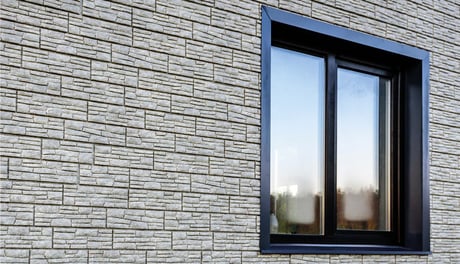
The exterior of a building can be embellished with any number of techniques. Sidings represent a simple solution, easily applied and a way of protecting the structure itself. The sidings might just be rectangular slats, but the more creative you get, the more you need to set up a finishing process with the appropriate equipment. We at Cefla Finishing have responded to many requests and the knowledge and experience gathered around the world enables us to tailor each integrated line we design to best suit a customer’s needs. This is one of many line set-ups using spray coating equipment and a vertical oven for additional flexibility.

After initial surface coating at a rate of 90-100 g/sqm in a spray coater such as Easy, a pigmented, bi-component, water-based topcoat can be applied before drying in a vertical oven Omnidry for 45  min. at 60°C. Where required, the grout lines, which add a special visual effect to a decorative siding, can be coated in a darker tone using an anthropomorphic painting robot iGiottoApp. This coat of single-component, water-based varnish can be applied at a rate of 35-40 g/sqm prior to a seven-minute drying stage in Aquadry.

This is just one way of approaching the task of decorating sidings. Let us know what your specific needs are and our process engineers will research a tailored solution to bring you added efficiency, ensure improved surface enhancement quality and keep a close eye on your paint consumption.

Contact us and discuss your needs with a finishing expert!

The exterior of a building can be embellished with any number of techniques. Sidings represent a simple solution, easily applied and a way of ...

Article

Spray coating line, medium size system

Spray coating line, medium size system

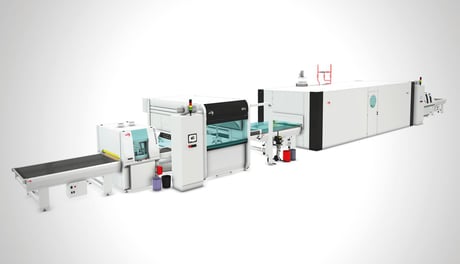
When looking for a spray-coating line for raised or flat panels, in wood or its derivatives, we at Cefla Finishing have an integrated solution. You may be thinking of using it to decorate furniture elements, stairs, noise barriers or other finished products with similar characteristics.

This system enables a high degree of flexibility to handle varying production needs. It is comprised of different machines for brushing/cleaning, spraying, flash-off and curing and because of its overall compact design, requires no more than 125 sqm of floorspace.

Contact us and discuss your needs with a finishing expert!

When looking for a spray-coating line for raised or flat panels, in wood or its derivatives, we at Cefla Finishing have an integrated solution. You ...

Article

Coating Technologies

Coating Technologies

We have been designing spray-coating equipment since 1960. Today’s innovative solutions cover all current market requirements, can be tailored within an integrated production context and are geared up to tomorrow’s market scenario.

Cefla Finishing iBotic coating

We design and project spray-coating equipment since 1960. Today’s innovative solutions cover all current market requirements, can be tailored within an integrated production context and are geared up to tomorrow’s market scenario.

We believe technological research and continuous innovation to be essential for the achievement of rewarding results. First and foremost, our goal is to be a consultant and partner.

Go here for more general information on our range of spray coating solutions

 
How many ways can you think of to perform spray coating?

We have been designing spray-coating equipment since 1960. Today’s innovative solutions cover all current market requirements, can be tailored within ...

Load more articles

Articles: 12 / 25