Magazine

Spray coating

Article

Need a simple spray-coating solution?

Need a simple spray-coating solution?

Furniture spray coating

Never done it? Want to start? 

If your company is manufacturing semi-finished products in wood or derivatives of wood, and outsourcing the finishing process, but wants to start coating those panels in-house, you may need a simple spray-coating solution, which you can integrate into your production line. 

Consider the following: 
Quantity - how many pieces per hour/day/shift will you need to process? 
Size - minimum, maximum and average size of the pieces. 
Quality - what expectations do you have? It will usually depend on the type of product you are coating. 
Substrate – what is the piece made of and what kind of lacquer will you be applying? 

Never done it? Want to start? If your company is manufacturing semi-finished products in wood or derivatives of wood, and outsourcing the finishing ...

Article

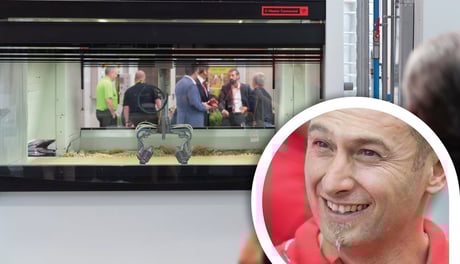
Let's see with Eduard Raffini how to perform a "simple cycle"

Let's see with Eduard Raffini how to perform a "simple cycle"

Spray coating simple cycle

(Cycle on spraying machine one arm – paper belt)

Substrate: solid wooden panel

Lacquer: catalysed acrylic primer and finishing coat

The phases of the cycle:

➀ Rough sanding
➁ Coating application: transparent acrylic primer (80-100 g/sqm)
➂ Air drying time 1 hour; in a hot room or vertical oven 35°C for 30 min.
➃ Manual sanding for the edges and automatic sanding for the flat surface
➄ Coating application: transparent acrylic finish (80-100 g/sqm)
➅ Air drying 1.5h - 2h; in a hot room or vertical oven for 60 min.

What's the purpose of sanding the rough piece?

Machine start-up is generally preceded by preparation of the substrate. This consists of sanding the rough piece, a process that can be done manually or by machine. Pre-sanding of rough pieces is performed in almost all coating cycles, on both wooden and non-wooden materials (e.g. fibre cement and some plastics), and its purpose depends on the specific substrate.
In the case of wooden materials, sanding is designed to smooth and remove wood fibres that have been lifted by damp. On non-wooden materials, it is generally designed to aid adhesion of the first coating layer.
Once the machine start-up procedures and relative pre-wash cycles have been completed, the nozzles are mounted on the spray guns. These are selected according to:
- the type of coating product (water/solvent-based)
- the g/m2 of product to be deposited on the product
- line speed in m/min

What's the best configuration for coating 80% of products?

For 80% of products (maximum thickness 35 mm) the ideal coating configuration is to set the two angles of each gun at 45° and set the height at 160 mm (as measured from nozzle tip to piece surface).

How do I prepare the coating?

Coatings are prepared in the proportions normally shown on the packaging or according to personal experience. As a rule, each customer has a customised blend.
The coating is loaded by running the pump, inserting the dip tube in the pre-readied coating tin and performing all the tasks needed to ensure the product reaches the spray guns and the machine is ready for production.

The purpose of the first sample: checking the weight.

The first sample, normally the weight verification one, is now fed through in order to calculate the amount of coating needed per square metre. Pressure is then adjusted as desired.

At this point the operator can start coating the doors.

Keyword: cleaning Whatever the coating cycle, even the simplest, operators must take meticulous care of the machine. They must clean the spray guns, avoid rejects caused by accidental dust falls and, the following day, thoroughly clean the nozzles, pump, circuit and product or suction filters. 

What does "end of shift cleaning" mean? And how much time does it take?
End of shift cleaning can be completed in 15 minutes and involves the following:

  1. Flushing of the multi-gun circuit
  2. Nozzle removal and subsequent manual cleaning
  3. Cleaning of the spray gun arm with solvent and brush
  4. Dusting of internal booth walls

Key word: quality. ◁

For each coating cycle, even the simplest, the machine and the operator determine the outcome. The machine must deliver in terms of performance, speed and coating uniformity, and the operator needs to keep it efficient, especially as regards the guns and nozzles (improves application quality), cleanliness, filters and air recirculation (ensures it stays dust-free).

This procedure considerably reduces end-of-shift cleaning times and significantly increases Transfer Efficiency, which means less coating consumption.


 

Eduard Raffini

LAB Application Manager

Test specialist and Coordinator of the Cefla Finishing HQ LAB

https://www.linkedin.com/in/eduard-raffini/

(Cycle on spraying machine one arm – paper belt) ▹ Substrate: solid wooden panel ▹ Lacquer: catalysed acrylic primer and finishing coat The phases of ...

Article

Do you know how much it costs you to work with a paint recovery system?

Do you know how much it costs you to work with a paint recovery system?

Cost of spray painting recycling system

Today, we focus on spraying machine paint recovery and cleaning system.

Less detergent means lower operating costs, it safeguards your equipment and ensures a healthier environment.

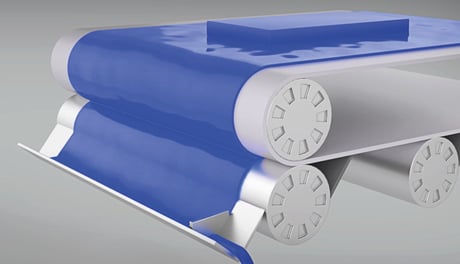
Working with a sprayer or a robot with a belt that allows paint recovery means cleaning the belt regularly to remove any trace of the applied product. If your spray cleaning system is conventional, you will not only throw away a lot of paint, but you will also use a significant amount of detergent. Conventional systems also lead to rapid belt deterioration, either through the abrasion from belt cleaner blades or aggressive solvents. You will benefit from:

  • increased paint recovery
  • detergent consumption which drops to around 50 litres per shift
  • fewer production stoppages to replace belts
  • minimal end-of-session cleaning times
  • enhanced production efficiency

Our simplified patented system allows you to reduce machine recovery times and detergent costs, even when changing colour.

Read the White Paper to learn more about this system.

Today, we focus on spraying machine paint recovery and cleaning system. Less detergent means lower operating costs, it safeguards your equipment and ...

Article

Raised doors: spray coating line

Raised doors: spray coating line

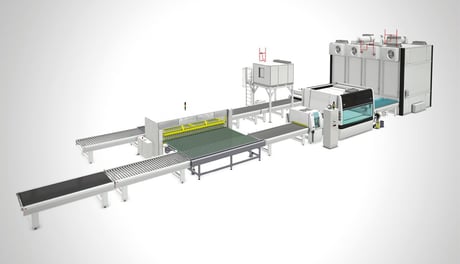
If you are evaluating a spray-coating line for wooden panels, raised or flat, maybe for furniture elements, stairs, noise barriers or several other finished products with similar characteristics, we at Cefla Finishing have an integrated solution.

This system enables a high degree of flexibility to handle varying production needs. It is comprised of different machines for brushing/cleaning, spraying, curing and drying and is specially conceived to offer maximum productivity, requiring more or less 200 sqm of floorspace.

Go here for more general information on our range of spray coating solutions

If you are evaluating a spray-coating line for wooden panels, raised or flat, maybe for furniture elements, stairs, noise barriers or several other ...

Article

An articulated process for a straightforward product – veneered skirting boards

An articulated process for a straightforward product – veneered skirting boards

Baseboard spray painting

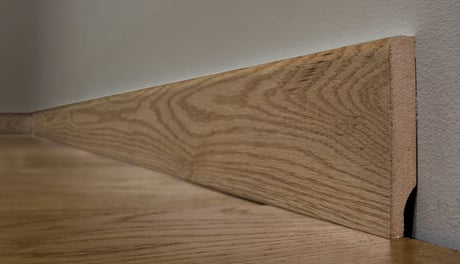
One look at a skirting board and the finishing process it undergoes does not immediately come to mind, yet there is a lot to consider when defining an integrated finishing line for this product. One of the many possible solutions serves simply as an example. Each customer we have dealt with has a slightly different objective, so we like to evaluate each case separately. Standard solutions never seem to give more than standard satisfaction, whereas we at Cefla Finishing want to be sure we exceed the customer’s expectations, so we conceive the solution carefully, adapting a feature to solve a problem or adding a function to deliver a better result.

Starting with a brushing machine, we would then move on through a linear spraying machine. The first coat will probably be UV polyacrylic and Performa will apply it at 100 g/sqm. A seven-minute flash off in a Cross oven will then be needed, followed by a UV curing stage. The top side of the profiles will then be sanded on the brushing machine, a topcoat will be applied on the Performa and the flash off repeated for 7 minutes in the Cross oven. Running at speeds between 3000 and nearly 5000 pieces/shift, this is just one approach to finishing veneered skirting boards.

Contact us and discuss your needs with a finishing expert!

One look at a skirting board and the finishing process it undergoes does not immediately come to mind, yet there is a lot to consider when defining ...

Article

How can overspray be reduced in coating systems? Cefla Finishing answers

In the coating systems industry, process efficiency is now an increasingly strategic priority, both from an economic standpoint and in terms of sustainability. Managing paint consumption is one of the most critical aspects, as it directly affects operating costs, the quality of the final result, and the environmental impact of the entire process.

In this article, we at Cefla Finishing provide an overview of overspray and the latest solutions for improving the performance of coating systems and reducing waste.

What is overspray in coating systems and how does it affect performance?

In coating systems, overspray refers to the portion of the coating material that, during the spraying phase, fails to adhere properly to the surface of the workpiece and is dispersed within the booth or the exhaust system. 

From a physical standpoint, this phenomenon is linked to the dynamics of atomized particles: the paint is sprayed in droplets of varying sizes which, due to the exit velocity, air turbulence, and the distance between the spray gun and the surface, may deviate from the ideal trajectory and fail to reach the target.

Among the main factors contributing to overspray formation are excessive atomization energy, suboptimal airflow distribution within the system, and application parameters that are not perfectly balanced with respect to the type of paint and the workpiece being treated. The result is a reduction in transfer efficiency – that is, the amount of paint actually transferred to the substrate – which directly impacts system performance in terms of material consumption, finish quality, and process stability.

For this reason, overspray control is a key factor in the design and optimization of industrial coating systems.

Overspray control system: the solution from Cefla Finishing

In coating plants, overspray control also involves the use of systems designed to effectively manage the behavior of the coating material during the spraying phase.

This is where the “Airsphere” air diffusion plenum comes in, a solution developed and patented by us at Cefla Finishing to optimize operating conditions inside the machine. The system is designed to ensure uniform and controlled air distribution, reducing turbulence and creating a stable environment for paint application. This improves spray quality, promotes more uniform coating on the workpiece, and increases transfer efficiency.

Integrating such solutions into coating systems therefore allows for a structural approach to addressing overspray, improving overall process performance and reducing material waste.

How to reduce overspray: some operational tips

In addition to implementing advanced equipment solutions, reducing overspray also requires proper management of application parameters and operating conditions. In fact, certain measures can help optimize the spraying process and improve overall efficiency:

  • Selecting the nozzle size: it is essential to choose the most appropriate size based on the type of paint and the desired application result. In many cases, a larger nozzle size allows for operation at lower working pressures, thereby reducing product waste.
  • Adjusting the atomizing air flow: keeping the atomizing air flow at the minimum necessary level helps limit the energy imparted to the paint particles, thereby reducing the risk of them veering off course and minimizing overspray.
  • Optimization of ventilation parameters: it is recommended to minimize the plenum and exhaust air flow rates to prevent excessive turbulence inside the cabin.
  • Setting the spray area: it is important to configure the spray area precisely via the machine’s display, limiting it to only what is strictly necessary for the part being painted to avoid unnecessary overspray.
  • Spray gun positioning: keeping the spray guns as close as possible to the surface of the workpiece improves paint transfer and reduces the amount of paint lost to the environment.
  • Spray mode: whenever possible, it is preferable to use the “all” mode (back-and-forth) rather than the “front” mode (one-way), as it ensures more uniform distribution and greater control over the deposit.

Conclusion and Cefla Finishing's key role

Reducing overspray is now a key strategy for improving the efficiency of coating systems, optimizing material consumption, and ensuring consistently high quality standards over time. Addressing this issue involves not only adjusting process parameters but also adopting advanced technological solutions and an integrated design approach capable of balancing all the factors that influence the application phase.

This is precisely the direction we at Cefla Finishing are taking, designing and manufacturing turnkey coating and finishing systems for the international market, with customized solutions that combine technological innovation, efficiency, and sustainability. 

Contact us to find out how to optimize your coating system!

In the coating systems industry, process efficiency is now an increasingly strategic priority, both from an economic standpoint and in terms of ...

Load more articles

Articles: 24 / 25