Magazine

Industrial digital printing

Article

See it, like it, scan it, print it

Instant replicas with digital printing technology

Imagine finding exactly the pattern you want for a series of panels or flooring. Until now, there were two good ways of reproducing a pattern such as that of natural stones, marble or wood grain.

Cefla Finishing Industrial Digital Printing

Once you had identified the pattern you wished to print, either analogically or digitally, you could get a professional photographer to capture the image or employ a large-sized scanner to generate a file which served as the blueprint for your creation.
Now imagine needing to replace a panel with a pattern you simply don’t have in your archives. Again, you’re faced with two options that do not offer an immediate solution. It takes time to go from identifying the pattern, creating the necessary data, to subsequently printing. Because acquisition and reproduction are two distinct processes and between them lies a need to correctly elaborate the data acquired.
All that for just one panel? And even if it’s for more than one panel, each requirement generates a multi-step process before obtaining the end result. Ideally, you should be able to go from scan to print in one quick step.

Instant results with new Scan to Print technology, even in 3D
Of course, we never stop at the problem. Our philosophy is driven by a commitment to find the solution and increase the opportunities your business deserves. With a sophisticated range of digital printers, Cefla Finishing allows you to scan and directly print on a single piece or batch of pieces, reproducing as faithfully as possible the original pattern. Moreover, this includes the tactile effects which are generated on the J-Print TD equipment. In close partnership with industry specialists, Cefla Finishing has developed Scan to Print technology which lets you go from scanning to printing without all the intermediate steps. Streamlining the process means you can respond to impromptu requests or replace damaged pieces with much less effort and in a much shorter time than before.

Learn more about our Industrial Digital Printing solutions

Imagine finding exactly the pattern you want for a series of panels or flooring. Until now, there were two good ways of reproducing a pattern such as ...

Article

Would you like to learn more about industrial digital printing processes?

Would you like to learn more about industrial digital printing processes?

Everyone can start amused, amazed or a mess, we make sure the finish is amazing.
The innovation is about an amazing effect on all material with a high definition finish both in terms of sight and touch. 

Cefla Finishing Industrial Digital Printing White Paper

In the décor market, the goal is to obtain prints that reproduce natural materials in a true-to-life manner. Industrial digital printing solutions are increasingly popular in response to rapidly evolving market demands, especially for furniture, packaging and flooring specialists.

Suited to all floor surfaces, furniture and skirting to glass, laminates or plastics, digital printing techniques enable exciting alternatives. Whether it’s wood, MDF or cork, you can digitally print and emboss with exceptional 3D quality. 

We are ready to show you the solutions will make the difference.

Learn more about our Industrial Digital Printing solutions?

Everyone can start amused, amazed or a mess, we make sure the finish is amazing. The innovation is about an amazing effect on all material with a ...

Article

What makes a digital print good or bad? Well, it’s not just a question of chemistry.

What makes a digital print good or bad? Well, it’s not just a question of chemistry.

Quality industrial digital printing

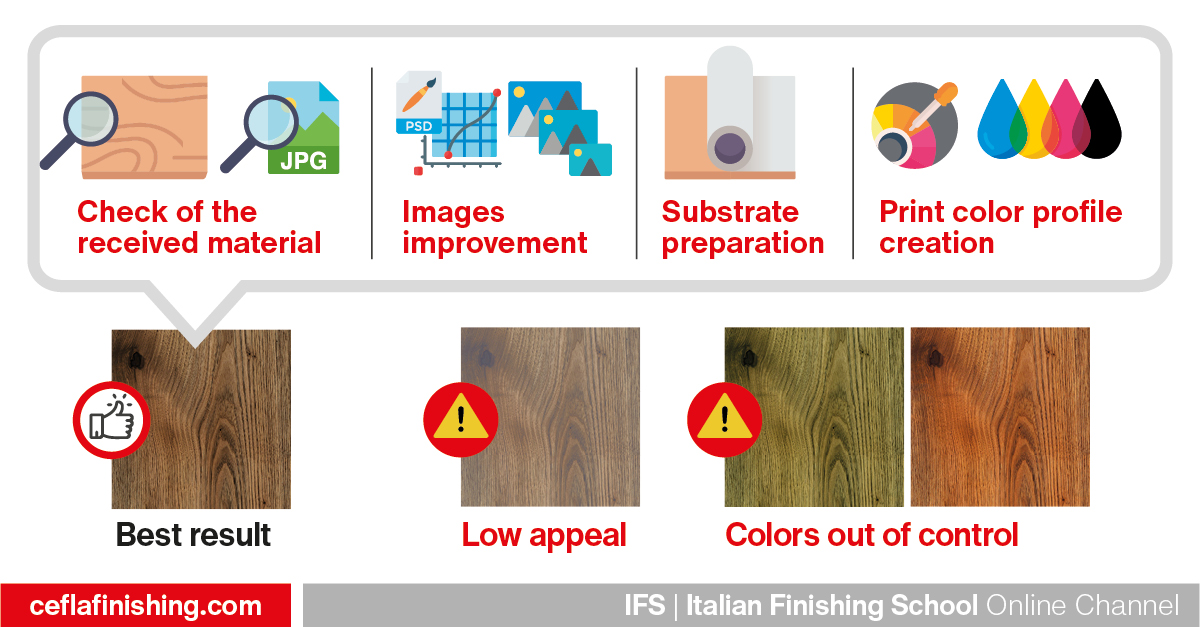
Throughout the digital print process, between the cycles and tests we’ve performed in our LAB while expecting the next customer to come along and test the print quality, amongst the many factors that exist, we have optimised the key phases which ultimately lead to a top quality print.

What is required to produce the desired outcome?

There’s a huge difference between those who have no time to prepare things properly and those who take the time to organise each step’ of the process correctly. Let’s take a look at these steps:

  1. Check your materials, both the image and the substrate which we will need to prepare, print on and texturize.
  2. Process the image, either digital or acquired via a scan, so as to set the appropriate characteristics we wish to obtain with the print and texture operations.
  3. Check the substrate by testing the most practical cycle for digital printing in view of customer expectations. This step is critical and depends on our expertise and professional approach. This represents a key step for Cefla Finishing and is a team effort comprising the competence and experience of our LAB Manager, the skills of our Product Manager, our partnering lacquer suppliers and the customer’s own knowledge in view of their consolidated processes.
  4. Create the right colour profile by carrying out the entire process including texturization. This is the only way to achieve effective printer calibration and obtain faithful reproduction of the desired colours. This step does not avoid the need for the right image preparation expertise, but it’s a perfect starting point for the fine-tuning that will be needed further on.

This sequence enables us to obtain a product thanks to a specific cycle, prepared and developed, knowing precisely what the attainable outcome will be.
This becomes the basis for all further fine tuning and any adjustments we wish to make.

For more about the digital printing process download the White Paper

None
Throughout the digital print process, between the cycles and tests we’ve performed in our LAB while expecting the next customer to come along and ...

Article

The response to our clients’ specific needs on digital printing is based on 4 pillars.

The response to our clients’ specific needs on digital printing is based on 4 pillars.

Opportunities with industrial digital printing machines

Our response to our clients’ specific needs is based on 4 pillars. In fact, seizing the opportunities of digital printing now will make you highly competitive, because

  1. You are flexible in relation to changes in aesthetic trends and fashion
  2. You save time, reduce stocks of semi-finished goods and reduce the necessary equipment in your production line
  3. You can set up a line quickly and respond rapidly to market demands
  4. You offer a product that is highly customized, high-quality and durable.

Why choose Cefla? 

Because:
✓ we supply a complete line, from preparation of the substrate to the decorated and finished product
✓ we support the fine-tuning of the entire technological process, from reception of the original samples to be reproduced
✓ we support the customer in the acquisition of the necessary knowledge and experience for the preparation of final print files

Learn more about our Industrial Digital Printing solutions

Our response to our clients’ specific needs is based on 4 pillars. In fact, seizing the opportunities of digital printing now will make you highly ...

Article

Decoration and coating of panels and edges: digital printing offers a new alternative

These days, maximising the flexibility of the panel/edge decorating and coating process means making use of digital printing technologies. When properly integrated into coating systems, such solutions don’t just improve the quality of the final products, ensuring a perfect match between surfaces and edges: they also reduce the environmental impact of the process.

First of all, let’s examine the needs of companies that perform panel/edge decoration and coating and explain why digital printing - still, all too often, underestimated by the market - provides an excellent response to those needs.

Why is digital printing useful in a routine panel/edge decorating and coating process?

Most of the companies that finish panel surfaces, especially furniture manufacturers, tend to overlook the opportunities offered by digital printing. Generally speaking, this isn't just due to a certain lack of experience with the technology. There are also historical reasons: over the years, the majority of manufacturers have focused on large output volumes, for which traditional coating techniques have always ensured a good cost/benefit ratio.

On today's market, however, there’s growing demand for customised items, with an ever-increasing number of orders involving small batches and short delivery times.
In this scenario, the ability to match the edge finish with the flat surface finish, in terms of both colour and pattern, offers a crucial competitive advantage. And the technology that lets manufacturers make this developmental leap, instantly and definitively, is none other than digital printing.
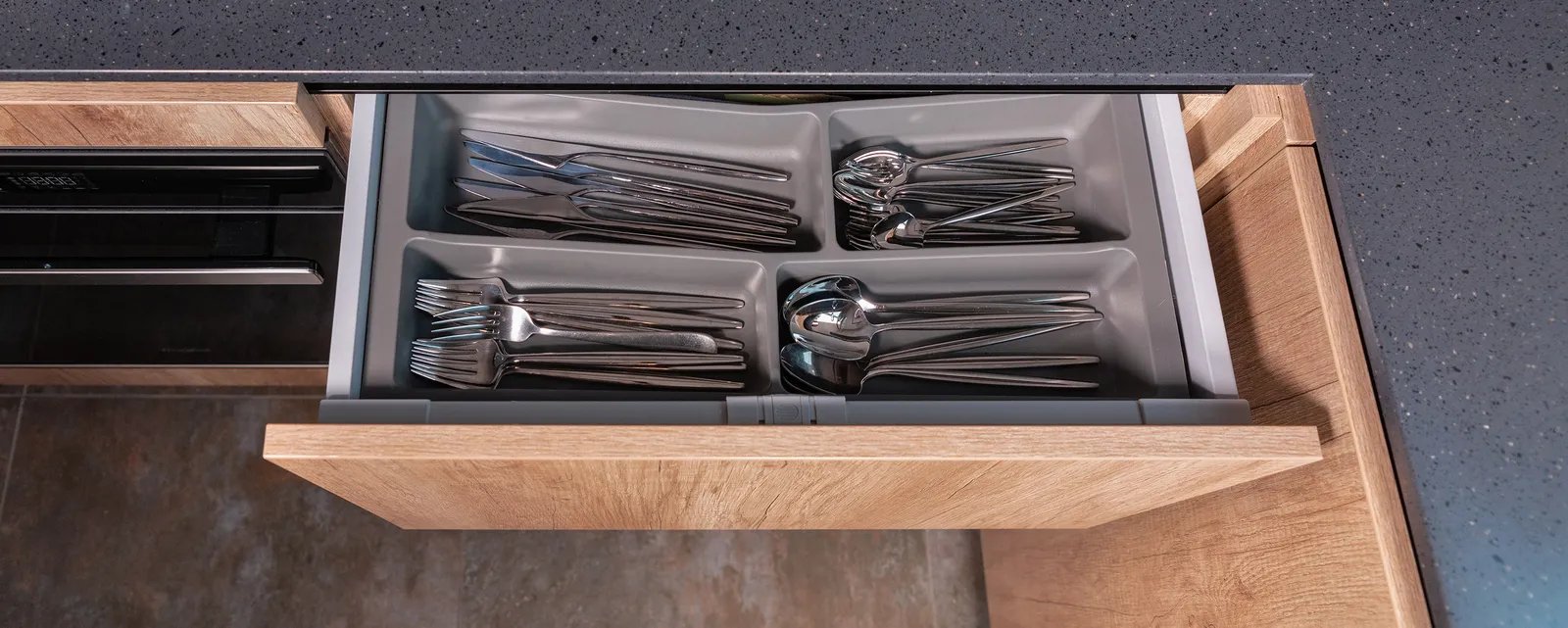
kitchen drawer

Flawless and uniform surfaces and edges. Discover the power of digital printing in panel finishing.
Download the white paper.

Benefits of digital printing for finishing panels and edges

But what advantages does switching from traditional techniques to digital printing actually yield when it comes to decorating and coating panels and edges? To begin with, it can be stated that, by starting with a digital image file, it’s now possible to do virtually anything. And, because patterns are developed from a single source, both surface and edge can be finished with practically unlimited flexibility.

But the benefits don’t end here. When properly implemented as part of a coating system, a digital printing solution also lets you:

  • maximise product customisation
  • manage extremely small production batches (<100 m2)
  • deliver products quickly (a few hours or days)
  • reduce inventory requirements
  • minimise warehousing space


Developing a unified procedure from a single digital image

Digital printing allows you to obtain a perfect match between the surface of the panel and the edge, even when the process has several stages and even when it’s managed by two different companies. This is because it’s possible to process a single digital image, which will then be used for both the edge and the surface tasks; where possible, these tasks can also adopt the same inks to maximise uniformity of both surface and edge decoration.

Moreover, these options make it easier to overcome the problem of metamerism (the phenomenon by which different light sources modify, to a greater or lesser extent, the perceived colour of the decorations).

More flexibility means more creativity

Industrial digital printing also ensures outstanding flexibility: integrating it into a finishing line as a complementary technology helps the plant respond to customer requests for small batches with personalised, high-quality decoration.

All said and done, the only limits are those posed by creativity: after sanding and applying the primer, a digital printer can be used to decorate the flat surface with any pattern desired. And after applying a transparent base coat you can, when necessary, create a matt, gloss or, again with a digital printer, textured finish with a ‘haptic’ relief effect (this is discussed in greater detail in the White Paper on Industrial Digital Printing.

Shorter lead times and no minimum quantities

In the edge decoration and coating field, industrial digital printing offers a response to the need to progress from the creative idea to its practical realization in the shortest time possible. It also allows companies to process orders even for just a single panel decoration reel without having to invest in materials (engraved rollers, decorative paper, dedicated inks etc.) as would be the case with traditional techniques.
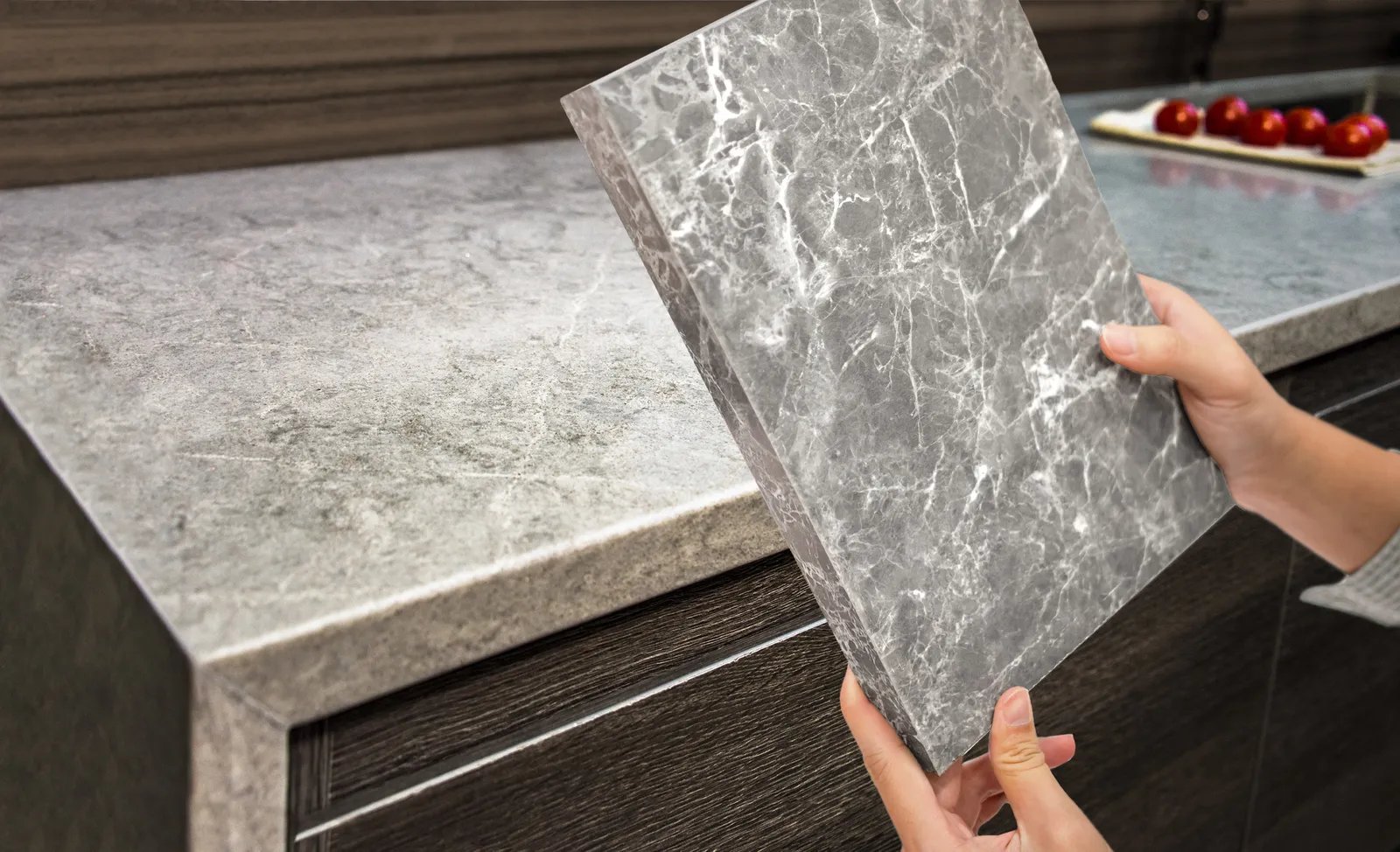
kitchen top


Comparison between digital printing and traditional decoration and coating techniques

At this point it should be clear why digital printing solutions are - and will increasingly be - valuable allies for manufacturers who have set themselves the dual goal of improving panel decoration/coating processes and expanding the range of products in their catalogue, with increasingly sophisticated customisation options.

Adopting digital printing ensures precision control of colour and details, making it a must-have on projects that require complex patterns and intricate graphics. Furthermore, digital printing lets you maintain the same degree of artistic freedom and creativity as manual decoration techniques while significantly increasing the attainable level of detail, ensuring more precise, homogeneous, consistent finishes on all types of surface. 
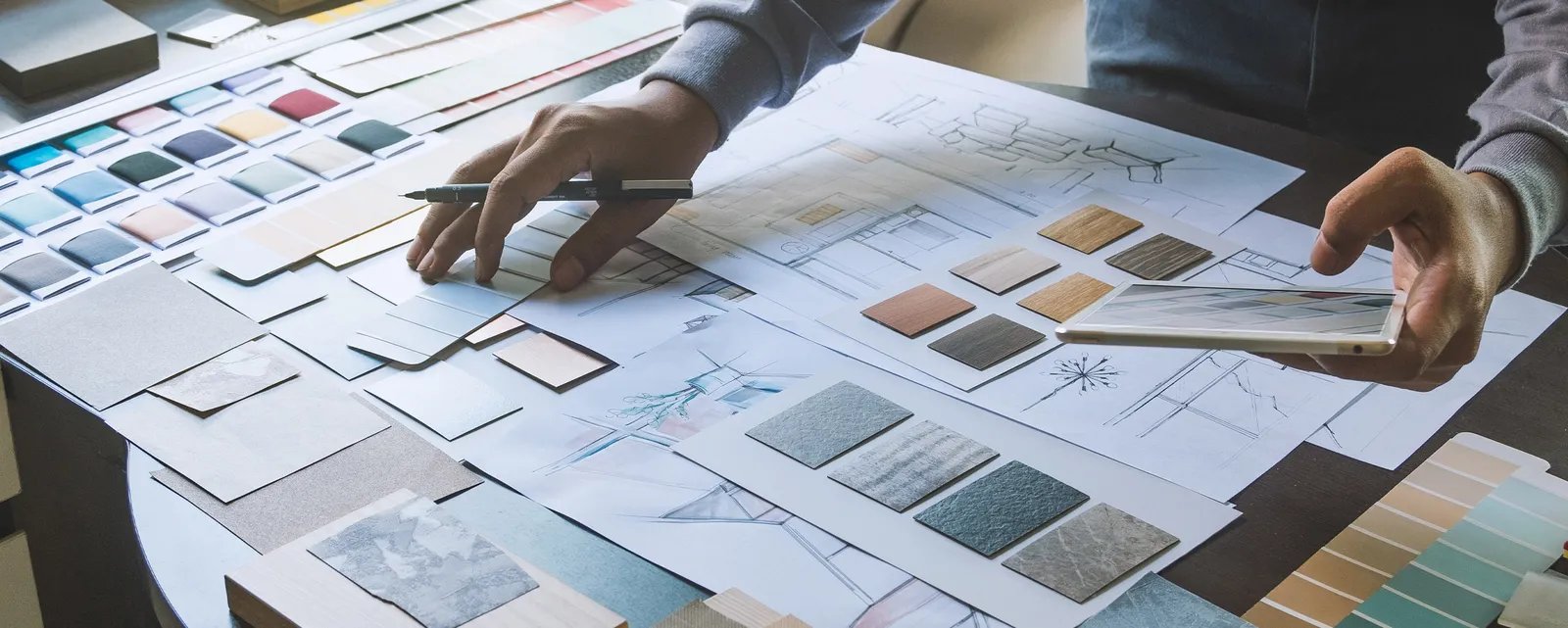
surface samples

Another fundamental difference compared to traditional techniques concerns the time, the stock of papers needed to offer a variety of products and the labour costs of perfecting each process. For orders that involve customisation work on small batches, decorating and coating edges and surfaces using traditional methods can require considerable resources, above all in relation to the quantity of finished products leaving the factory. With digital printing, however, manufacturers can optimise the required time, cost and workers’ tasks thanks to the total control provided by user-friendly dashboards. Furthermore, being able to the reduce paper stocks significantly lowers both the cost of purchasing any minimum batches and the need for space inside company facilities.

Last but not least, digital printing tends to be more environment-friendly than traditional edge/panel decorating and coating techniques: latest-generation solutions use fewer resources and minimise waste, making them a decidedly more sustainable option for companies looking to reduce their carbon footprint.

LOOKING FOR THE IDEAL COATING LINE SOLUTION?

These days, maximising the flexibility of the panel/edge decorating and coating process means making use of digital printing technologies. When ...
Articles: 17 / 17